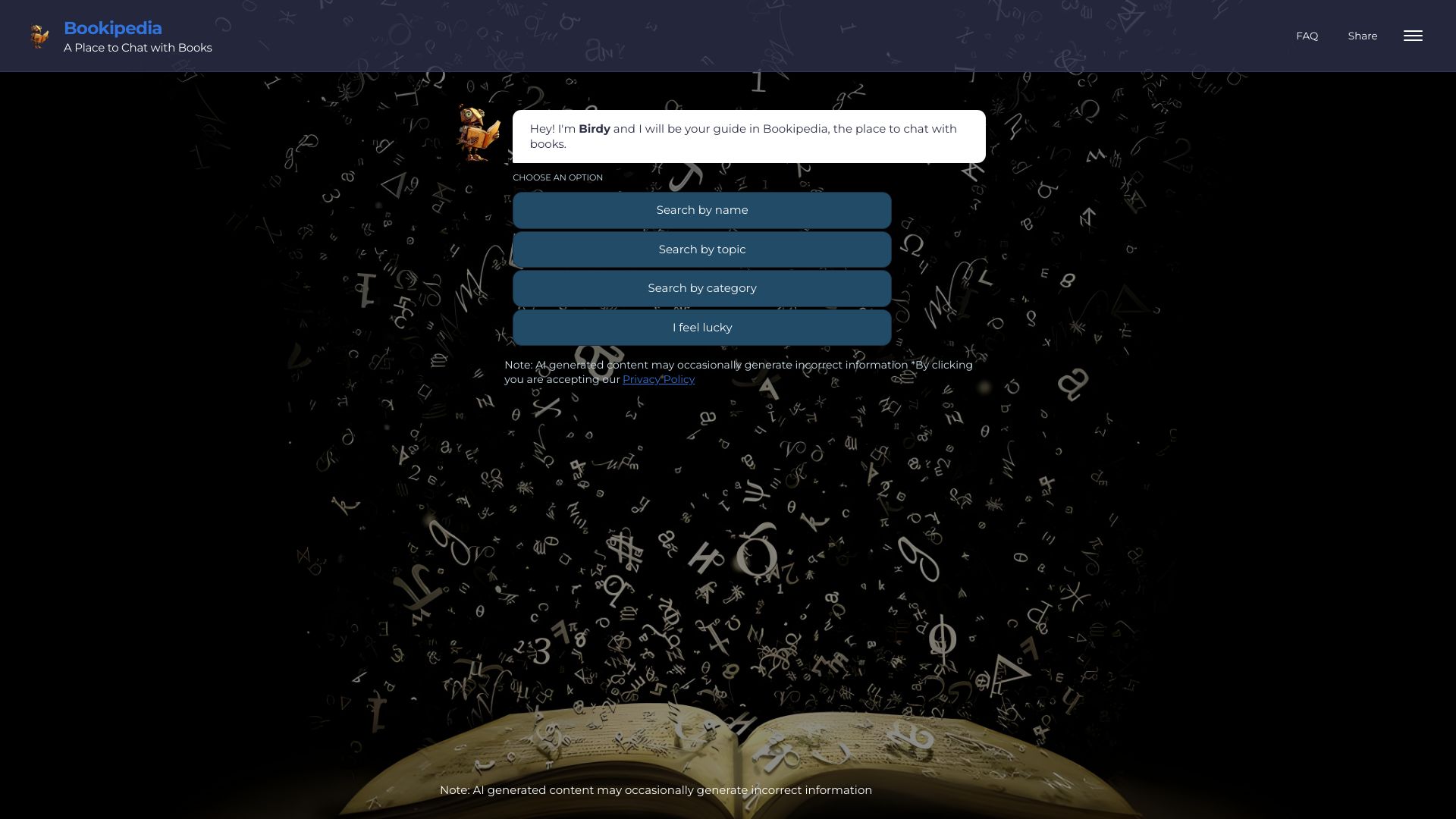
```It looks like you've shared some HTML content that describes how to use Bookipedia, a platform for sharing and discussing books. Here’s a summary of the key points mentioned in the text:
### How to Use Bookipedia
- **Account Creation**: To use Bookipedia, you need to register for an account on their website.
- **Personalization**: Once you have an account, you can select your favorite genres and books to tailor your experience.
- **Interaction**: Users can ask questions, participate in discussions, and share their thoughts and insights on various books.
### Core Features of Bookipedia
- The text seems to indicate that there are several core functionalities of Bookipedia, but the specific features are not fully visible in the provided content.
If you have more specific questions or need further information about Bookipedia's features or functionalities, feel free to ask!It looks like you've shared some HTML code snippets that include sections with headings in Chinese. The headings seem to relate to themes about books, reading experiences, and interactions with literature. Here’s a translation of the headings:
1. **基于人工智能的书籍交流** - "Book exchange based on artificial intelligence"
2. **增强的阅读体验** - "Enhanced reading experience"
3. **与书籍进行互动对话** - "Interactive dialogue with books"
The last part mentions "Bookipedia," which appears to be a title or a platform related to books.
If you need help with something specific regarding this content—like further translation, context, or development—please let me know!看起来您分享了一段关于“Bookipedia”的文本,描述了这一平台的用户群体及其使用目的。根据内容,这段文字主要强调了Bookipedia适合那些热爱阅读的用户,特别是那些希望深入分析和研究自己喜欢作品的学生和读者。
如果您有特定的问题或者想要讨论的主题,欢迎告诉我!It seems like you've shared some HTML code related to a frequently asked questions section from a website called Bookipedia. The specific question included in the code is "Bookipedia如何与书籍进行交流?", which translates to "How does Bookipedia interact with books?"
If you have any specific questions or need further assistance related to this content or anything else, please let me know!It looks like you've shared a snippet of HTML code, possibly from a website or application. The content appears to be part of a user interface, featuring a question in Chinese that translates to "Can I use Bookipedia to conduct any book-related transactions?" The structure includes elements like headings, SVG icons, and CSS classes for styling.
If you have a specific question or need assistance regarding this code, such as how to modify it, interpret its functionality, or integrate it into a web project, feel free to ask!The provided snippet appears to be a part of an HTML structure, likely from a web application or a component of a user interface. It contains several elements styled with utility classes, possibly from a CSS framework like Tailwind CSS, which is commonly used for building responsive and modern UIs.
### Breakdown of the Code Snippet:
1. **Structure**:
- The structure consists of `
` and `
` elements, with a `` containing an SVG icon. This indicates that the content is likely part of a list or card component, often used to display items or sections of information.
2. **Styling**:
- **Classes**: The `justify-between`, `text-left`, `text-xl`, `leading-6`, `font-semibold`, and `text-gray-1000` classes suggest that the text is styled to be prominent and legible. The use of `hover:text-purple-1300` indicates a visual change on hover, enhancing user interactivity.
- **Cursor**: The `cursor-pointer` class implies that the element is clickable, suggesting that it may trigger an action (like opening an application or navigating to another page).
3. **Content**:
- The heading (`
`) reads "Bookipedia有移动应用程序吗?", which translates to "Does Bookipedia have a mobile application?" This indicates that the content is likely related to an inquiry about the availability of a mobile app for a service or product named Bookipedia.
- The SVG icon represents a plus sign, suggesting that it might be used for adding new content or expanding on the section.
4. **Accessibility**:
- The `aria-hidden="true"` attribute in the SVG indicates that the icon is purely decorative and does not convey any additional information that needs to be communicated to assistive technologies, which is good for accessibility practices.
### Conclusion:
This snippet is a well-structured component of a user interface designed to engage users with questions or options related to a mobile application. The thoughtful use of styling and interactivity enhances user experience while ensuring that the content is accessible and visually appealing.Bookipedia 似乎是一个允许作家和读者进行互动的平台。如果您有兴趣了解更多关于它的功能或订阅计划,建议您直接访问其官方网站或相关社交媒体页面,以获取最新的信息和更新。通常,这类平台会提供用户注册、书籍推荐、评论区等功能,以促进作家与读者之间的交流。It looks like you've shared a snippet of an SVG (Scalable Vector Graphics) image along with some HTML markup. The SVG in your snippet represents a simple icon consisting of a plus sign, which is commonly used to indicate actions like "add" or "create".
Here’s a breakdown of the elements in the SVG:
1. **SVG Element**: `