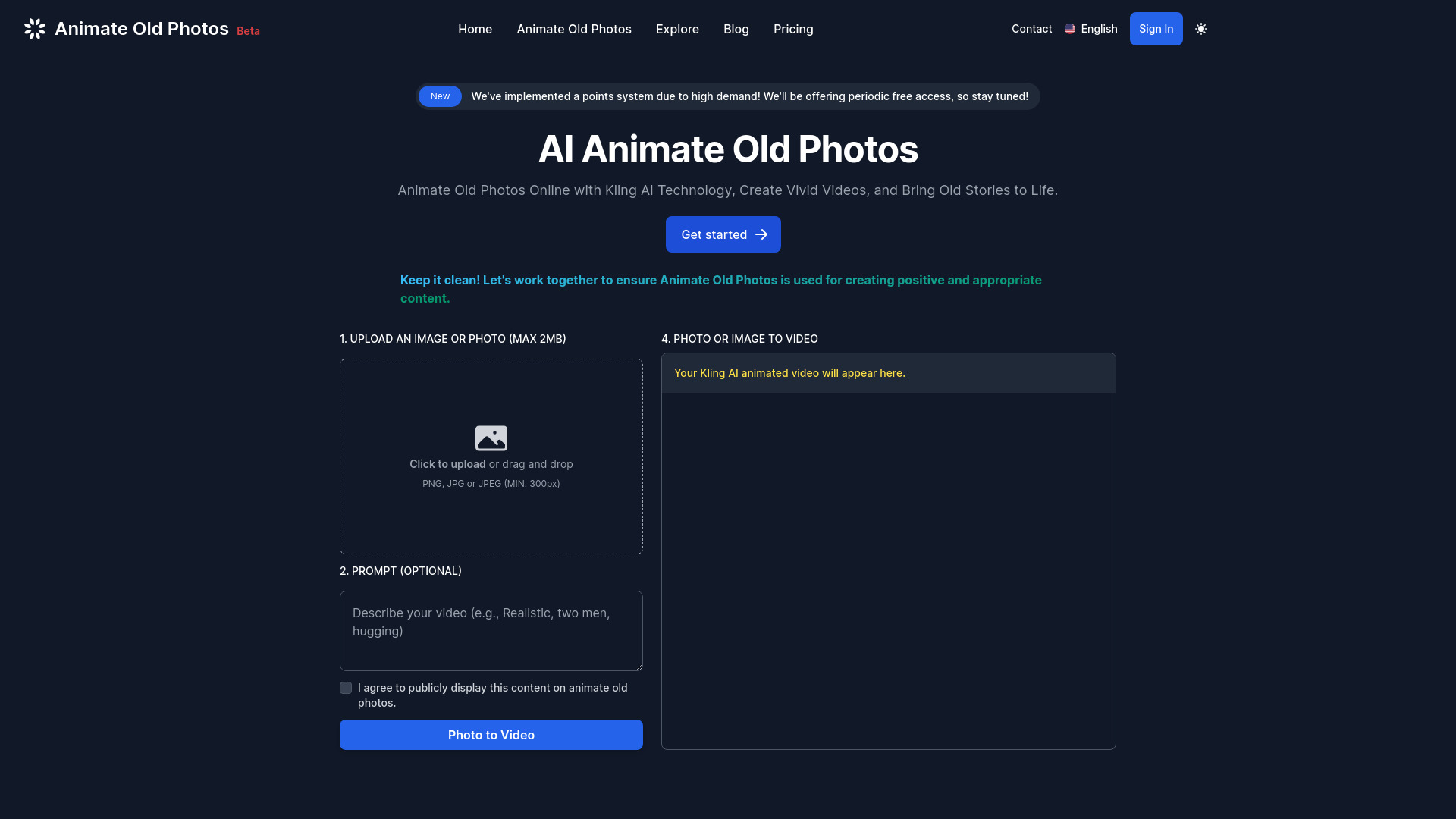
Kling AI 是一款創新的工具,專門用於將舊照片轉換成動態影像。這項技術利用人工智慧,讓靜止的影像變得栩栩如生。無論是家庭聚會的舊照,還是歷史名人的黑白照片,Kling AI Animate Old Photos 都能使其重現活力,讓觀眾感受到過去的情感和故事。
Kling AI 的功能特點
智能化照片動畫處理
支持多種格式的舊照片
用戶友好的界面,易於操作
快速生成高質量的動態影像
使用Kling AI Animate Old Photos,您可以輕鬆將珍貴的回憶轉化為生動的視覺體驗,這不僅適合個人使用,也非常適合教育和展示場合。立即探索這款革命性的工具,讓您的舊照片煥發新生!
```Kling AI Animate Old Photos 是一款利用先進的人工智慧技術,將舊照片轉換為生動動畫的工具。使用者只需上傳照片,並可選擇添加提示,便能在短短幾秒鐘內生成動畫效果。這項技術不僅能夠重現過去的瞬間,還能為照片中的人物賦予生命,令舊日記憶重新活躍於眼前。
### 如何使用 Kling AI Animate Old Photos?
1. **上傳照片**:使用者可以輕鬆地將舊照片上傳到平台。
2. **添加提示**(可選):根據需要,使用者可以添加一些提示來指導動畫的生成方向。
3. **生成動畫**:點擊生成按鈕,系統將自動處理並在幾秒鐘內提供動畫結果。
4. **分享與保存**:使用者可以將生成的動畫保存到設備中,或通過社交媒體與他人分享。
這個工具不僅適合個人使用,也可以用於創造性項目,讓人們以全新的方式體驗他們的歷史與記憶。It looks like you're sharing a snippet of text that discusses the functionality of an AI tool, specifically "Kling AI Animate Old Photos." This tool seems capable of transforming old photos into 5-second animated videos, bringing historical images to life in a dynamic way.
Here's a brief summary of the key points mentioned in your text:
1. **Functionality**: The AI tool can animate old photos by generating 5-second videos.
2. **Technology**: The tool leverages artificial intelligence to analyze the uploaded images and produce animations that portray the subjects in a more lifelike manner.
3. **User Interaction**: It seems that users can upload images and then utilize buttons or options to initiate the animation process.
If you have any specific questions or need further information about the topic, feel free to ask!It seems like you've posted a snippet of HTML code that includes some Chinese text and possibly a structure for a web page. The content appears to discuss the application of Kling AI in animating old photos and may also touch on the benefits of using artificial intelligence techniques in various fields.
If you need help with a specific aspect of this code or want to know more about the topic, please provide more context or specify your question!It seems you have provided a snippet of HTML code containing some text in Chinese. The text discusses an AI tool called "Kling AI" that animates old photos. It appears to be part of a FAQ or informational section about the tool's capabilities, specifically addressing common questions.
If you need assistance with anything specific related to this content, like translating, summarizing, or explaining, please let me know!It seems like you're sharing a snippet of HTML code that includes some SVG icons and potentially a question related to animation or image processing. The question in Chinese translates to "How long does it take to create an animated image?"
If you need assistance with this topic, here are some points to consider:
1. **Type of Animation**: The time required to create an animated image (such as a GIF, video, or CSS animation) can vary greatly depending on the complexity of the animation, the tools used, and the skill level of the animator.
2. **Software Used**: Different software can affect the time it takes to create animations. Popular tools include Adobe After Effects, Blender, and online GIF makers. Each has its own learning curve and capabilities.
3. **Experience Level**: An experienced animator might create a simple animation in a matter of hours, while a beginner might take several days to achieve the same result.
4. **Assets Preparation**: If you need to create or gather assets (like images, audio, etc.), this can add additional time to the project.
5. **Rendering and Exporting**: Once the animation is created, rendering and exporting can also take time, especially for high-quality outputs.
If you have a more specific question or need help with something related to this code snippet, feel free to ask!It looks like you've shared a snippet of SVG code along with some HTML structure, likely for a UI component that discusses a question or issue related to image motion graphics. The question appears to be in Chinese, asking "What should I do if my animated image fails?"
If you need assistance with troubleshooting animated images or graphics, here are a few general steps you can take:
1. **Check File Format**: Ensure that the animated image is in a supported format (like GIF, APNG, or SVG) depending on where you're trying to display it.
2. **Browser Compatibility**: Make sure the browser or application you're using supports the animation format. Some browsers may require specific settings or extensions to display certain animations.
3. **File Size and Loading Issues**: Large file sizes can cause loading issues. Consider optimizing the image to reduce its size.
4. **Check Code for Errors**: If you're embedding the image in code (like HTML or SVG), ensure there are no errors in the code that might prevent the image from displaying.
5. **Look for Console Errors**: If you're using a web application, open the browser's developer console to check for any errors related to the image or its loading.
6. **Test on Different Devices/Browsers**: Sometimes, the issue may be device or browser-specific. Testing on multiple platforms can help isolate the problem.
If you have a specific issue or need further clarification, feel free to provide more details!It looks like you've shared a snippet of HTML code, which includes a part of a user interface likely related to a section about "Kling AI" and its future plans or developments. The code includes various HTML elements such as `
`, `
`, and `
It looks like you're sharing a snippet of HTML code that includes a link and some text related to "Kling AI Animate Old Photos." The text appears to discuss support for email communications and customer service related to this service.
If you need assistance with something specific, such as formatting the HTML, translating it, or understanding its content, please let me know!It looks like you've shared a snippet of HTML code containing some text about a service called "Kling AI Animate Old Photos." The content includes links for contacting the service and signing in. If you have any specific questions or need assistance with this text or topic, please let me know!It looks like you've provided a snippet of HTML code related to "Kling AI Animate Old Photos." This snippet includes headings and links to a website and a Twitter account associated with the service.
Here's a brief breakdown of the content:
1. **Service Name**: Kling AI Animate Old Photos
2. **Description**: It appears to be a service that animates old photographs.
3. **Website Link**: The link provided is [https://animateoldphotos.org/paddle](https://animateoldphotos.org/paddle), which likely directs users to the main service or application.
4. **Twitter Link**: There is also a Twitter account link [https://twitter.com/imgdesgen](https://twitter.com/imgdesgen) for updates or more information.
If you need help with anything specific regarding this HTML snippet, such as modifications or explanations, feel free to ask!It looks like you've shared a snippet of HTML code that appears to be part of a larger web page structure. The code includes closing tags for a list item (``), an unordered list (``), and several `div` elements. However, it seems to be incomplete or lacking context.
If you have a specific question or need help with something related to this HTML snippet—such as debugging it, understanding its purpose, or how to modify it—please provide more detai