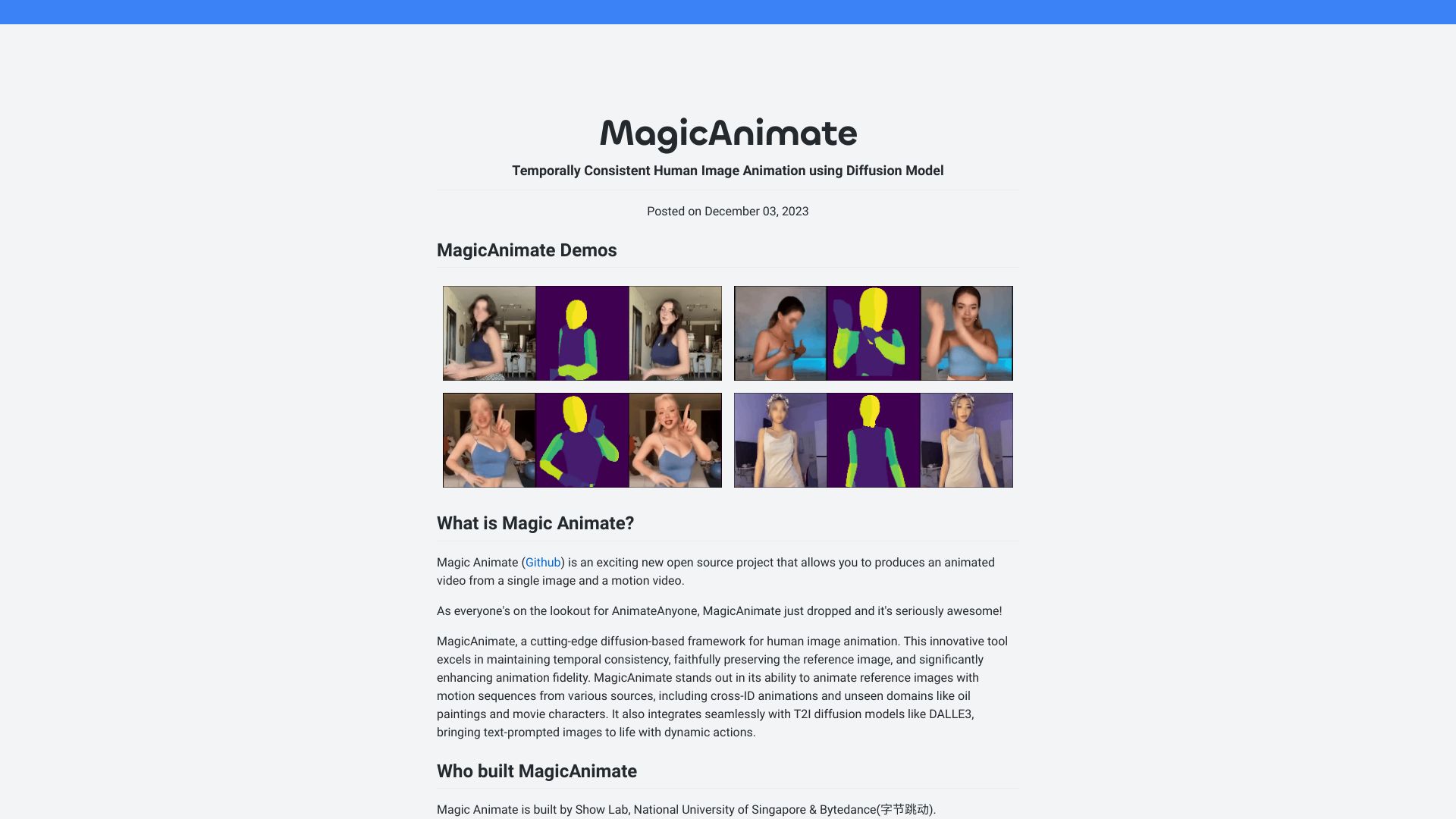
```MagicAnimateは、単一の画像や動画像からアニメーションを生成する革新的なオープンソースプロジェクトです。このプロジェクトでは、Stable Diffusionなどの先進的な技術を利用して、静止画を動的なコンテンツに変換することが可能です。
### MagicAnimateの使い方
1. **インストール**: MagicAnimateを使用するには、まず必要なソフトウェアやライブラリをインストールする必要があります。通常はGitHubなどのリポジトリからダウンロードします。
2. **画像の準備**: アニメーションに使用する画像を用意します。選択する画像は、アニメーションの内容に応じて適切なものを選ぶことが重要です。
3. **設定の調整**: MagicAnimateには、アニメーションのスタイルや動きに関するさまざまな設定が用意されています。これらを調整することで、希望するアニメーションの効果を得ることができます。
4. **アニメーションの生成**: 設定が完了したら、アニメーションを生成します。生成プロセスが完了すると、動画ファイルが出力されます。
5. **結果の確認**: 生成されたアニメーションを確認し、必要に応じて再度設定を調整して再生成します。
### 注意点
- **ライセンス**: MagicAnimateの使用にあたっては、ライセンス条件をよく理解しておくことが重要です。
- **システム要件**: 高品質なアニメーションを生成するためには、強力なコンピュータやGPUが必要な場合があります。
MagicAnimateを活用することで、クリエイティブなプロジェクトやコンテンツ制作に新たな可能性を広げることができるでしょう。申し訳ありませんが、提供されたテキストは一部が不完全で、具体的な文脈や詳細が不足しています。ただし、VAE(Variational Autoencoder)やMSE(Mean Squared Error)に関する話題のようですので、以下の内容が関連するかもしれません。
VAEは生成モデルの一種であり、データの潜在変数を学習し、データを生成する能力を持っています。MSEは、モデルの予測と実際のデータとの誤差を測定するために使用される指標です。
学習のためには、以下のような手順が考えられます:
1. **必要な依存関係のインストール**:
Conda環境を使用して、必要なライブラリやパッケージ(例:TensorFlow、PyTorchなど)をインストールします。
2. **データの準備**:
トレーニングに使用するデータセットを準備します。
3. **モデルの構築**:
VAEのアーキテクチャを定義し、MSEを損失関数として使用するように設定します。
4. **トレーニング**:
データを用いてモデルをトレーニングします。
5. **生成と評価**:
トレーニング後、生成したデータを評価し、必要に応じて調整を行います。
また、Hugging FaceやReplicateなどのプラットフォームを利用することで、より手軽にモデルを試すことができます。
具体的な質問やトピックがあれば、それに基づいてさらに詳しい情報を提供できますので、お知らせください。It looks like you've shared a snippet of HTML code, possibly from a webpage that discusses features of a tool or software called "MagicAnimate." The text included in the HTML is in Japanese and outlines some functionalities of the tool. Here's a brief translation of the features mentioned:
1. **Creating animations from still images and moving images** - This suggests that the tool allows users to generate animations based on static images as well as video content.
2. **Temporal consistency** - This likely refers to the ability of the animations to maintain consistency over time, which is important for creating smooth and coherent visual effects.
3. **Preservation of reference images** - This feature might allow users to keep and reference original images while working on their animations.
If you have any specific questions about this code snippet or need assistance with something related to it, feel free to ask!It looks like you've pasted a snippet of HTML code that contains headings in Japanese. Here’s a summary of the content based on the headings provided:
1. **アニメーションの精度向上**: This translates to "Improvement of Animation Accuracy". It suggests a focus on enhancing the quality of animations, possibly in the context of digital art or software.
2. **DALLE3などのT2I統合モデルとの統合**: This translates to "Integration with T2I models like DALLE3". This seems to refer to the integration of text-to-image models, particularly DALLE3, which is likely related to advancements in AI-generated imagery.
3. **クロスIDアニメーションと未知らのドメインからのアニメーション**: This translates to "Cross-ID Animation and Animation from Unknown Domains". This might discuss the concept of animation that transcends traditional identifiers or categories and explores new, unknown domains.
If you have any specific questions or need further information about any of these topics, feel free to ask!It looks like you've pasted a snippet of HTML code that appears to be from a webpage or web application. The content includes headings and potentially some FAQ (Frequently Asked Questions) sections related to "MagicAnimate," which seems to be a product or service.
Here’s a brief breakdown of the content you provided:
1. **Headings**: There are two headings in Japanese:
- テキストによる画像アニメーション (Image Animation through Text)
- ダンスビデオシリーズ間の高い一貫性 (High Consistency Between Dance Video Series)
2. **Separator**: There is a horizontal line (styled with `bg-gray-2000`) indicating a separation in the content.
3. **FAQ Section**: There is an FAQ section titled "MagicAnimateのFAQ" (MagicAnimate FAQ), which suggests that the following content might address common questions or issues related to MagicAnimate.
If you need assistance with a specific part of this code or if you have any questions about how to use it, feel free to ask!It looks like you've pasted a snippet of HTML code that likely represents a component of a user interface, possibly from a web application. This snippet includes elements such as headings, icons, and a structure suggesting a question and answer format.
The text within the `
` tag appears to be in Japanese, asking, "What is 'Magic Animation'?" The SVG icon next to it seems to represent a plus sign, which is commonly used to denote an expandable section where more information can be revealed upon interaction (like clicking).
If you need assistance with this code—whether it's further modifications, explanations of specific parts, or context about its functionality—please let me know!The provided code snippet appears to be part of a Vue.js or similar component that represents a user interface element, likely a question or a clickable header in a FAQ section. Here's a breakdown of the code and its purpose:
1. **Structure**: The element uses a combination of HTML and Vue directives for styling and layout. It employs utility classes from a CSS framework (like Tailwind CSS) to handle spacing, text alignment, font size, and color.
2. **Text Content**: The main text (`
`) is in Japanese and translates to "Who developed the Magic Animation?" This indicates that the UI element is likely part of a section that answers questions about a specific topic, possibly related to animation or software.
3. **SVG Icon**: The `` element contains an SVG icon that likely serves as a visual cue for interaction (e.g., indicating an expandable section or a button). The icon consists of a simple plus sign, suggesting that clicking it might reveal more information or answers related to the question posed.
4. **Interactive Features**: The classes `hover:text-purple-1300` and `cursor-pointer` indicate that the text changes color when hovered over, providing visual feedback that the element is interactive.
5. **Accessibility**: The `aria-hidden="true"` attribute on the SVG ensures that screen readers ignore the icon, which is appropriate if the visual element is purely decorative.
6. **Overall Purpose**: This component seems to be designed for a FAQ or help section, where users can click on questions to expand and view answers. The combination of styling and structure suggests a user-friendly interface aimed at enhancing user experience by making information easily accessible and visually appealing.
In summary, the code snippet represents a well-structured and styled interactive question element that would likely be part of a larger FAQ or help section, providing users with information in an accessible and visually engaging manner.It looks like you've provided a snippet of HTML code, which includes some Japanese text about the benefits of a "magic animation". However, it seems to be incomplete. Would you like me to help you with something specific regarding this code, such as explaining its content, helping you format it, or translating the Japanese text? Please let me know how I can assist you!「マジックアニメーション」のデメリットについてお話ししましょう。
**1. 技術的な制約**:
マジックアニメーションは高度な技術を必要とするため、初心者には扱いが難しい場合があります。特に、アニメーションの制作には専門的な知識が求められることがあります。
**2. 時間とリソースの消費**:
高品質なアニメーションを作成するには多くの時間とリソースがかかります。特に、詳細なアニメーションや特別な効果を追加する場合、制作時間が長くなることがあります。
**3. ソフトウェアのコスト**:
アニメーションソフトウェアは高価であることが多く、特にプロフェッショナル向けのツールは初心者には手が出しづらい場合があります。
**4. 学習曲線**:
アニメーション制作には多くの技術的な要素が含まれるため、習得には時間がかかることがあります。特に、3Dアニメーションや複雑なエフェクトの制作には多くの学習が必要です。
これらのデメリットを考慮しながら、マジックアニメーションの導入や利用を検討することが重要です。It seems you've shared a snippet of HTML code that contains an SVG (Scalable Vector Graphics) icon. This particular SVG appears to be a plus sign, likely used for adding or creating something in a user interface.
Here's a breakdown of the key elements in the code:
1. **Flexbox Container**: The outer `` element uses utility classes (likely from a CSS framework like Tailwind CSS) to center the icon and apply some margin styling.
2. **SVG Element**: The `