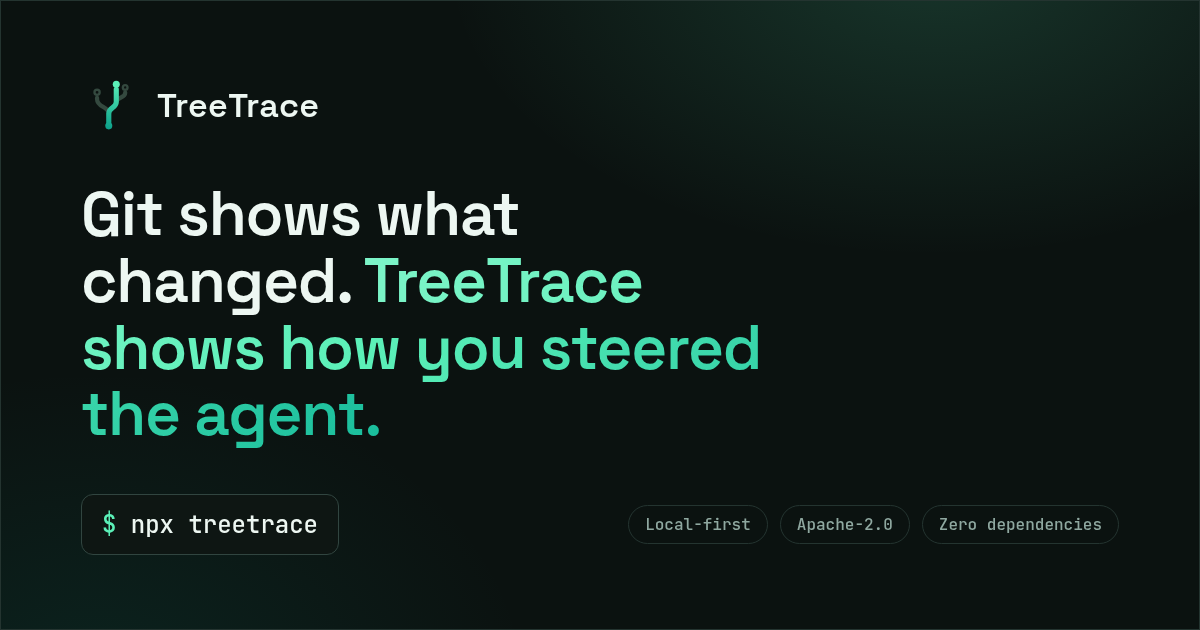
TreeTrace
Local-first session analysis tool that turns coding-agent transcripts into steering history, lessons, handoff memory, and deterministic regression or eval artifacts.
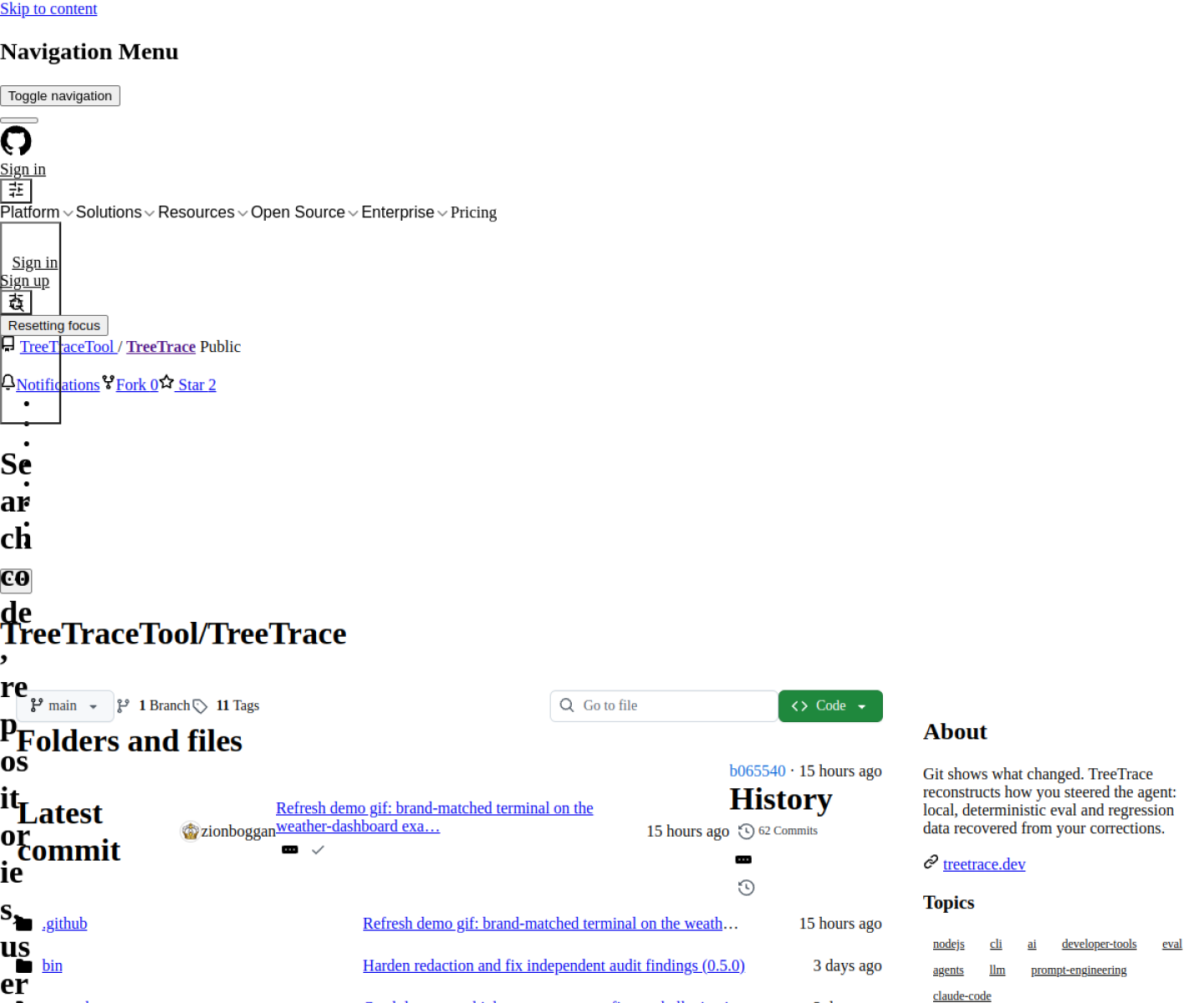
AI Project Details
TreeTrace review: Local-first session analysis tool that turns coding-agent transcripts into steering history, lessons, handoff memory, and deterministic regression or eval artifacts.
TreeTrace is aimed at teams that are already using coding agents often enough to care about keeping the human corrections instead of losing them after each session. The current product materials describe a workflow built around run treetrace against a project or transcript, generate the prompt tree and related artifacts locally, then reuse the produced lessons, eval cases, or handoff memory in later agent sessions and ci. That makes the page easier to read as an operating model, not just a brand claim.
Why it is timely
TreeTrace treats human corrections as the highest-signal training and eval data in the session instead of disposable chat residue. The README is concrete about report outputs, security-focused analysis, and the local-only promise. Its deterministic eval export and read-only MCP mode make it useful across more than one agent client.
How the workflow works in practice
A sensible first pass is to start from the product's main entry point and test the shortest path to value. For TreeTrace, that means users should run treetrace against a project or transcript, generate the prompt tree and related artifacts locally, then reuse the produced lessons, eval cases, or handoff memory in later agent sessions and ci. If that loop reduces review drag, coordination, or governance work, the product is doing something real.
Where TreeTrace stands out
| Evaluation angle | Fit | Why it matters | | --- | --- | --- | | Best-fit user | High | Teams that are already using coding agents often enough to care about keeping the human corrections instead of losing them after each session. | | Core workflow clarity | High | Run TreeTrace against a project or transcript, generate the prompt tree and related artifacts locally, then reuse the produced lessons, eval cases, or handoff memory in later agent sessions and CI. | | Switching cost reducer | Medium to high | TreeTrace treats human corrections as the highest-signal training and eval data in the session instead of disposable chat residue. | | Adoption risk | Medium | The product matters most when a team already has enough transcript volume to justify another analysis layer. |
Practical use cases
- Turning agent-session corrections into reusable eval and regression data
- Generating a handoff memory pack for the next coding agent session
- Auditing how a human had to steer an agent on risky or confusing tasks
Limits and buying notes
The product matters most when a team already has enough transcript volume to justify another analysis layer. It tracks what happened in the session well, but it is not a substitute for full AST-based source-code review. Pricing status today: TreeTrace is distributed as a local-first open-source Node tool, and the reviewed sources did not show a paid hosted tier.
FAQ
What is TreeTrace best for?
TreeTrace is strongest when turning agent-session corrections into reusable eval and regression data matters more than a generic AI demo. The official product materials position it around a concrete workflow rather than a blank chatbot shell.
Who should try TreeTrace first?
Teams that are already using coding agents often enough to care about keeping the human corrections instead of losing them after each session. Teams with a real workflow match will get value faster than general curiosity users.
What should buyers verify before adopting TreeTrace?
The product matters most when a team already has enough transcript volume to justify another analysis layer. It tracks what happened in the session well, but it is not a substitute for full AST-based source-code review. Pricing, privacy, and workflow fit should be checked directly on the current product before rollout.
Reviewed sources
- https://github.com/TreeTraceTool/TreeTrace
- https://raw.githubusercontent.com/TreeTraceTool/TreeTrace/main/README.md
- https://news.ycombinator.com/item?id=48557624
FAQ
What is TreeTrace best for?
TreeTrace is strongest when turning agent-session corrections into reusable eval and regression data matters more than a generic AI demo. The official product materials position it around a concrete workflow rather than a blank chatbot shell.
Who should try TreeTrace first?
Teams that are already using coding agents often enough to care about keeping the human corrections instead of losing them after each session. Teams with a real workflow match will get value faster than general curiosity users.
What should buyers verify before adopting TreeTrace?
The product matters most when a team already has enough transcript volume to justify another analysis layer. It tracks what happened in the session well, but it is not a substitute for full AST-based source-code review. Pricing, privacy, and workflow fit should be checked directly on the current product before rollout.