Tokenwise
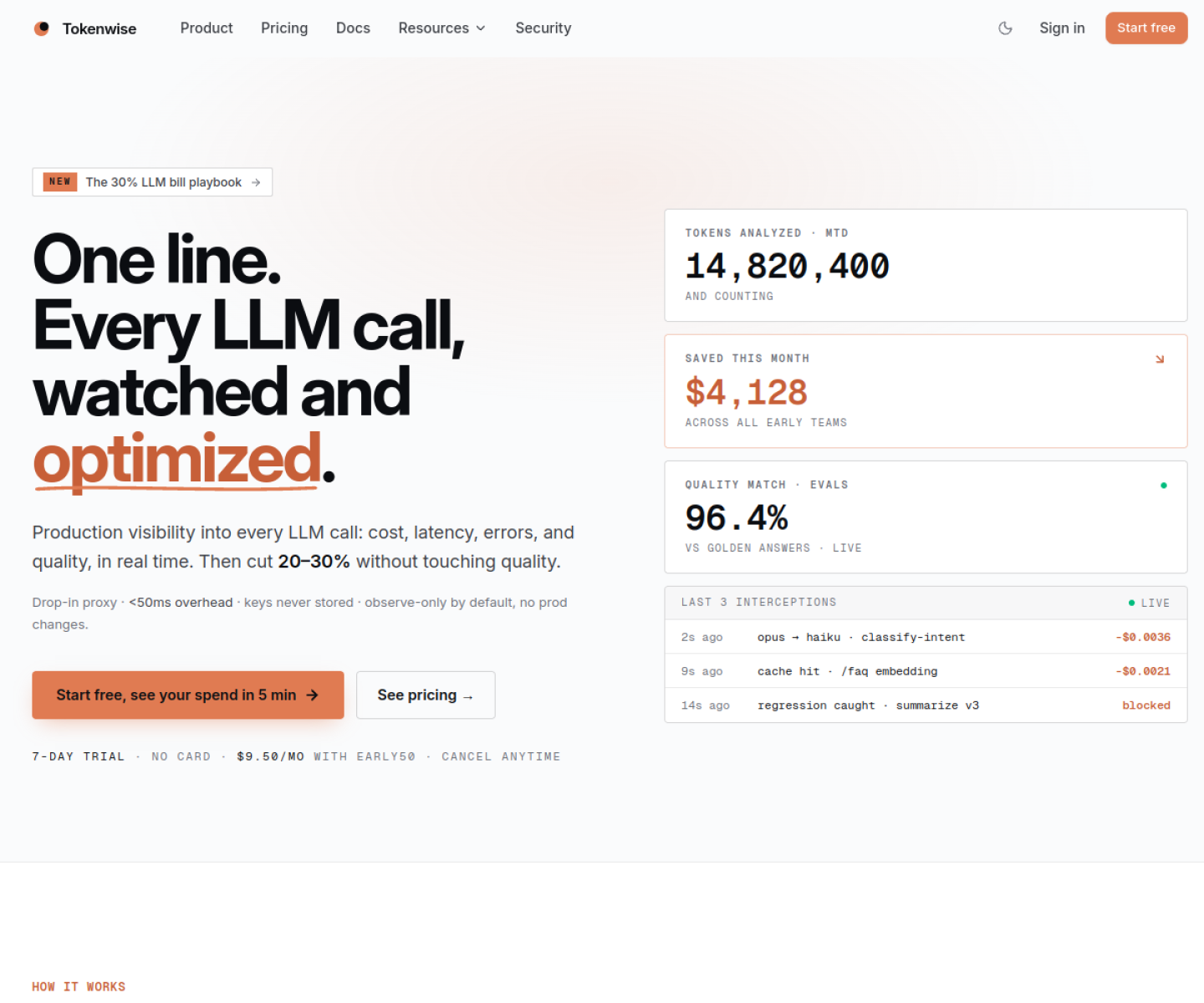
OpenAI-compatible LLM proxy for makers and small teams that adds per-session cost visibility, prompt clustering, and spend analysis across model providers.
AI Project Details
Tokenwise review: OpenAI-compatible LLM proxy for makers and small teams that adds per-session cost visibility, prompt clustering, and spend analysis across model providers.
Tokenwise is aimed at developers shipping llm features who need clearer cost attribution than raw provider invoices provide. The current product materials describe a workflow built around route model calls through the tokenwise base url, tag requests by session or workflow, then inspect aggregated spend and usage patterns across runs and models. That framing matters because many new AI launches still stop at a broad promise. Tokenwise has a clearer job to do.
The stronger reason to care is operational fit. It tackles a practical production problem for small teams: understanding where LLM bills are actually coming from. The product keeps the integration surface small by behaving like an OpenAI-compatible proxy instead of asking teams to rewrite app logic. Its session-tagging model is especially relevant for agent and workflow analysis where one task spans many requests.
How the workflow works
A sensible first pass is simple: start from the product's core entry point, validate the main loop on a representative task, and only then judge whether the surrounding automation is real. For Tokenwise, that means users should route model calls through the tokenwise base url, tag requests by session or workflow, then inspect aggregated spend and usage patterns across runs and models. If that loop feels shorter, clearer, or easier to control than the alternatives, the product is doing something useful.
Where Tokenwise stands out
| Evaluation angle | Fit | Why it matters | | --- | --- | --- | | Best-fit user | High | Developers shipping LLM features who need clearer cost attribution than raw provider invoices provide. | | Core workflow clarity | High | Route model calls through the Tokenwise base URL, tag requests by session or workflow, then inspect aggregated spend and usage patterns across runs and models. | | Switching cost reducer | Medium to high | It tackles a practical production problem for small teams: understanding where LLM bills are actually coming from. | | Adoption risk | Medium | Teams should validate privacy and proxy trust assumptions before routing sensitive prompts through any intermediary. |
Practical use cases
- Tracking token spend by workflow or agent session
- Understanding which prompts or models drive LLM bills
- Adding cost observability without rebuilding app integrations
Limits and buying notes
Teams should validate privacy and proxy trust assumptions before routing sensitive prompts through any intermediary. The product improves visibility, but it does not optimize prompts or model choice automatically by itself. Pricing status today: The reviewed public site focuses on the proxy workflow and value proposition. A full pricing table was not visible during review.
FAQ
What is Tokenwise best for?
Tokenwise is strongest when tracking token spend by workflow or agent session matters more than a generic AI demo. The official product materials position it around a concrete workflow rather than a blank chatbot shell.
Who should try Tokenwise first?
Developers shipping LLM features who need clearer cost attribution than raw provider invoices provide. Teams with a real workflow match will get value faster than general curiosity users.
What should buyers verify before adopting Tokenwise?
Teams should validate privacy and proxy trust assumptions before routing sensitive prompts through any intermediary. The product improves visibility, but it does not optimize prompts or model choice automatically by itself. Pricing, privacy, and workflow fit should be checked directly on the current product before rollout.
Reviewed sources
- https://tokenwisehq.com/
- https://www.producthunt.com/products/tokenwise
FAQ
What is Tokenwise best for?
Tokenwise is strongest when tracking token spend by workflow or agent session matters more than a generic AI demo. The official product materials position it around a concrete workflow rather than a blank chatbot shell.
Who should try Tokenwise first?
Developers shipping LLM features who need clearer cost attribution than raw provider invoices provide. Teams with a real workflow match will get value faster than general curiosity users.
What should buyers verify before adopting Tokenwise?
Teams should validate privacy and proxy trust assumptions before routing sensitive prompts through any intermediary. The product improves visibility, but it does not optimize prompts or model choice automatically by itself. Pricing, privacy, and workflow fit should be checked directly on the current product before rollout.