The Engineer
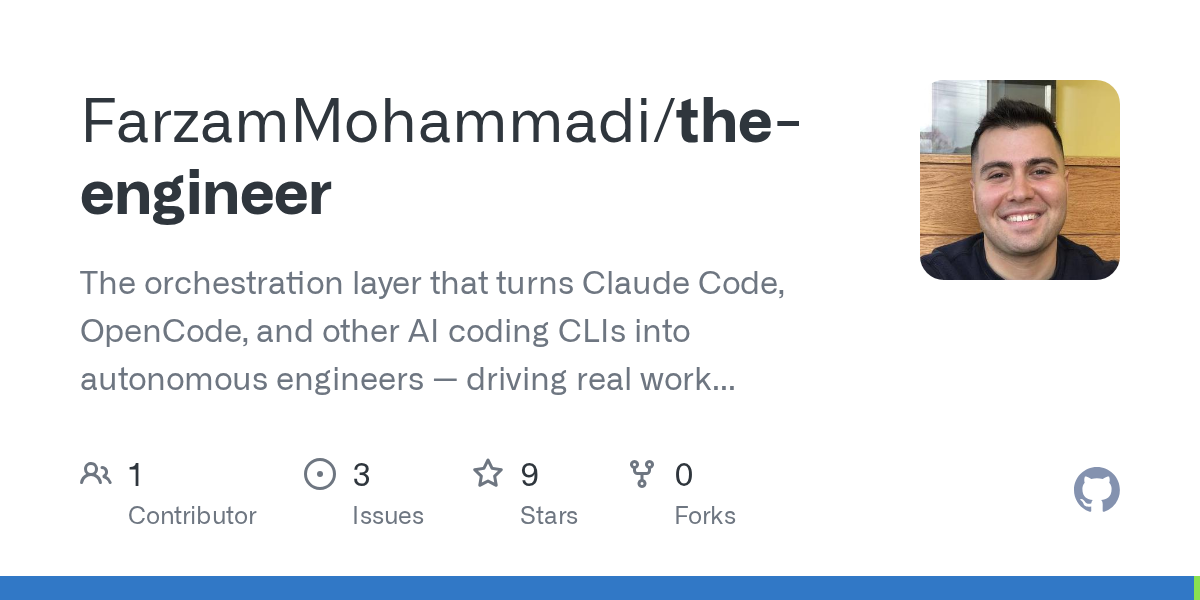
Autonomous orchestration layer for AI coding agents that can drive work from task intake through research, planning, execution, review, pull request iteration, and final merge approval.
AI Project Details
The Engineer review: Autonomous orchestration layer for AI coding agents that can drive work from task intake through research, planning, execution, review, pull request iteration, and final merge approval.
The Engineer is aimed at engineering teams experimenting with long-running coding-agent workflows and looking for a more structured control plane than a single interactive cli session provides. The current product materials describe a workflow built around start the daemon, connect a trigger source such as github issues, let the engineer isolate each task in its own worktree, then move it through requirements, research, execution, review, and delivery with human sign-off at key points. That makes the page easier to read as an operating model, not just a brand claim.
Why it is timely
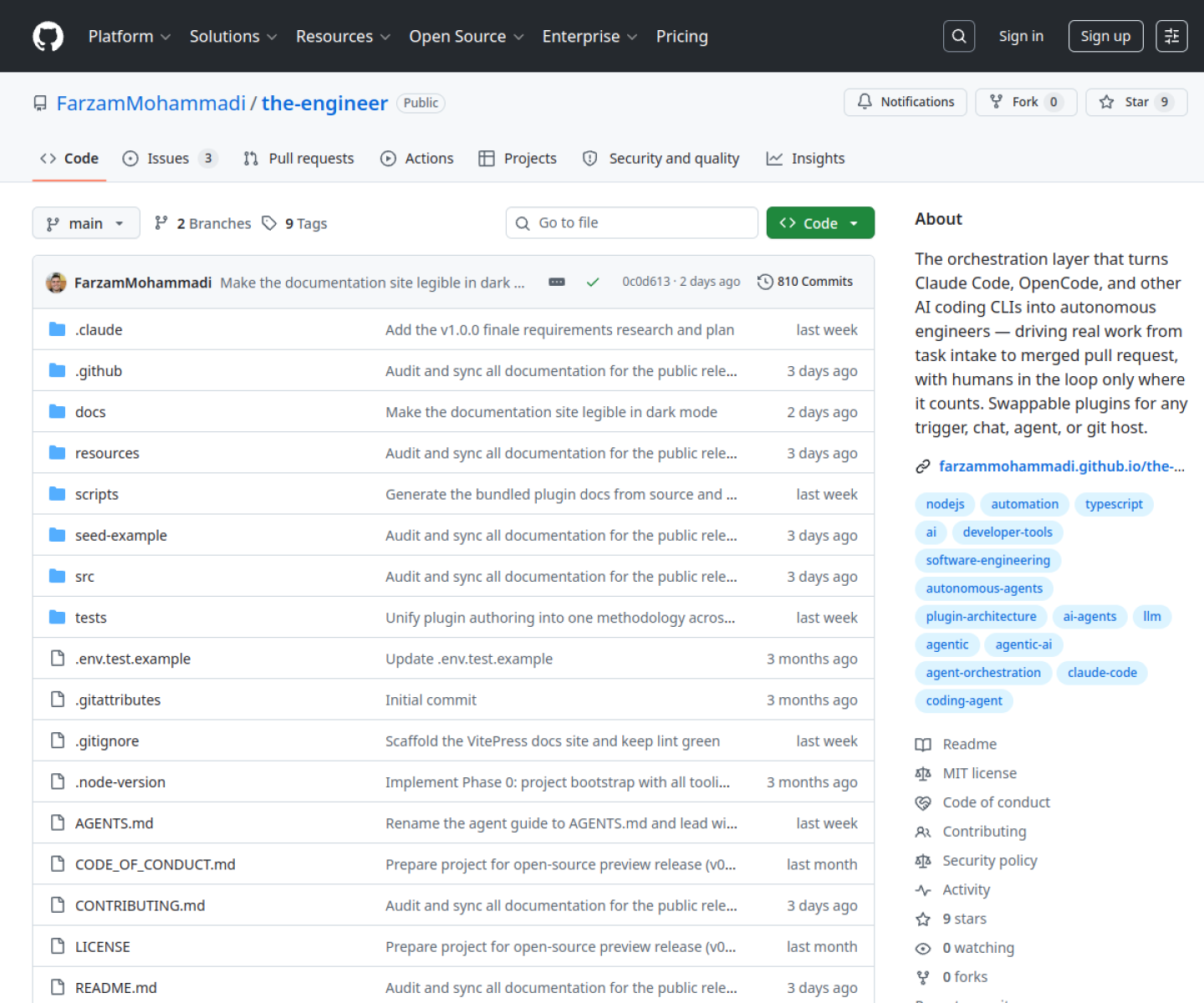
The Engineer is notable because it tries to orchestrate the full engineering lifecycle around existing coding CLIs instead of replacing them. The README is unusually concrete about phases, plugin boundaries, event logging, dashboards, cost ceilings, and worktree isolation, which makes the system design legible. Its plugin-opacity architecture is a meaningful differentiator for teams that expect tooling or agent providers to change underneath the orchestration layer.
How the workflow works in practice
A sensible first pass is to start from the product's main entry point and test the shortest path to value. For The Engineer, that means users should start the daemon, connect a trigger source such as github issues, let the engineer isolate each task in its own worktree, then move it through requirements, research, execution, review, and delivery with human sign-off at key points. If that loop reduces review drag, coordination, or governance work, the product is doing something real.
Where The Engineer stands out
| Evaluation angle | Fit | Why it matters | | --- | --- | --- | | Best-fit user | High | Engineering teams experimenting with long-running coding-agent workflows and looking for a more structured control plane than a single interactive CLI session provides. | | Core workflow clarity | High | Start the daemon, connect a trigger source such as GitHub issues, let The Engineer isolate each task in its own worktree, then move it through requirements, research, execution, review, and delivery with human sign-off at key points. | | Switching cost reducer | Medium to high | The Engineer is notable because it tries to orchestrate the full engineering lifecycle around existing coding CLIs instead of replacing them. | | Adoption risk | Medium | The system is still young and broad in scope, so teams should expect setup effort and rough edges before trusting it with high-value workflows. |
Practical use cases
- Driving a coding task from GitHub issue to reviewed pull request with agent help
- Coordinating long-lived agent workflows across research, build, and review phases
- Adding audit trails, dashboards, and plugin-swappable orchestration around coding CLIs
Limits and buying notes
The system is still young and broad in scope, so teams should expect setup effort and rough edges before trusting it with high-value workflows. A richer orchestration layer also means more policy and operational surface area to manage, especially around cost ceilings, approvals, and plugin quality. Pricing status today: The Engineer is published as an MIT-licensed open-source project, and the reviewed public sources did not show a separate hosted commercial pricing page.
FAQ
What is The Engineer best for?
The Engineer is strongest when driving a coding task from github issue to reviewed pull request with agent help matters more than a generic AI demo. The official product materials position it around a concrete workflow rather than a blank chatbot shell.
Who should try The Engineer first?
Engineering teams experimenting with long-running coding-agent workflows and looking for a more structured control plane than a single interactive CLI session provides. Teams with a real workflow match will get value faster than general curiosity users.
What should buyers verify before adopting The Engineer?
The system is still young and broad in scope, so teams should expect setup effort and rough edges before trusting it with high-value workflows. A richer orchestration layer also means more policy and operational surface area to manage, especially around cost ceilings, approvals, and plugin quality. Pricing, privacy, and workflow fit should be checked directly on the current product before rollout.
Reviewed sources
- https://github.com/FarzamMohammadi/the-engineer
- https://raw.githubusercontent.com/FarzamMohammadi/the-engineer/main/README.md
- https://news.ycombinator.com/item?id=48530127
FAQ
What is The Engineer best for?
The Engineer is strongest when driving a coding task from github issue to reviewed pull request with agent help matters more than a generic AI demo. The official product materials position it around a concrete workflow rather than a blank chatbot shell.
Who should try The Engineer first?
Engineering teams experimenting with long-running coding-agent workflows and looking for a more structured control plane than a single interactive CLI session provides. Teams with a real workflow match will get value faster than general curiosity users.
What should buyers verify before adopting The Engineer?
The system is still young and broad in scope, so teams should expect setup effort and rough edges before trusting it with high-value workflows. A richer orchestration layer also means more policy and operational surface area to manage, especially around cost ceilings, approvals, and plugin quality. Pricing, privacy, and workflow fit should be checked directly on the current product before rollout.