Solarch
Architecture-to-code tool that turns backend diagrams into a validated graph and then generates code to match the approved structure.
AI Project Details
Solarch review: Architecture-to-code tool that turns backend diagrams into a validated graph and then generates code to match the approved structure.
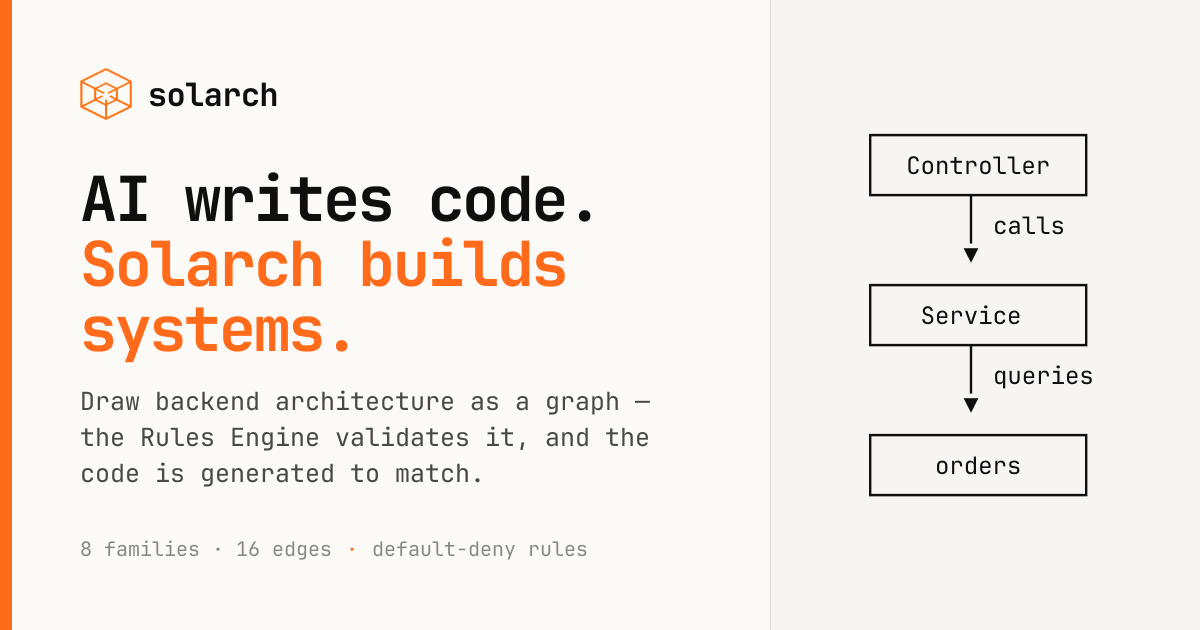
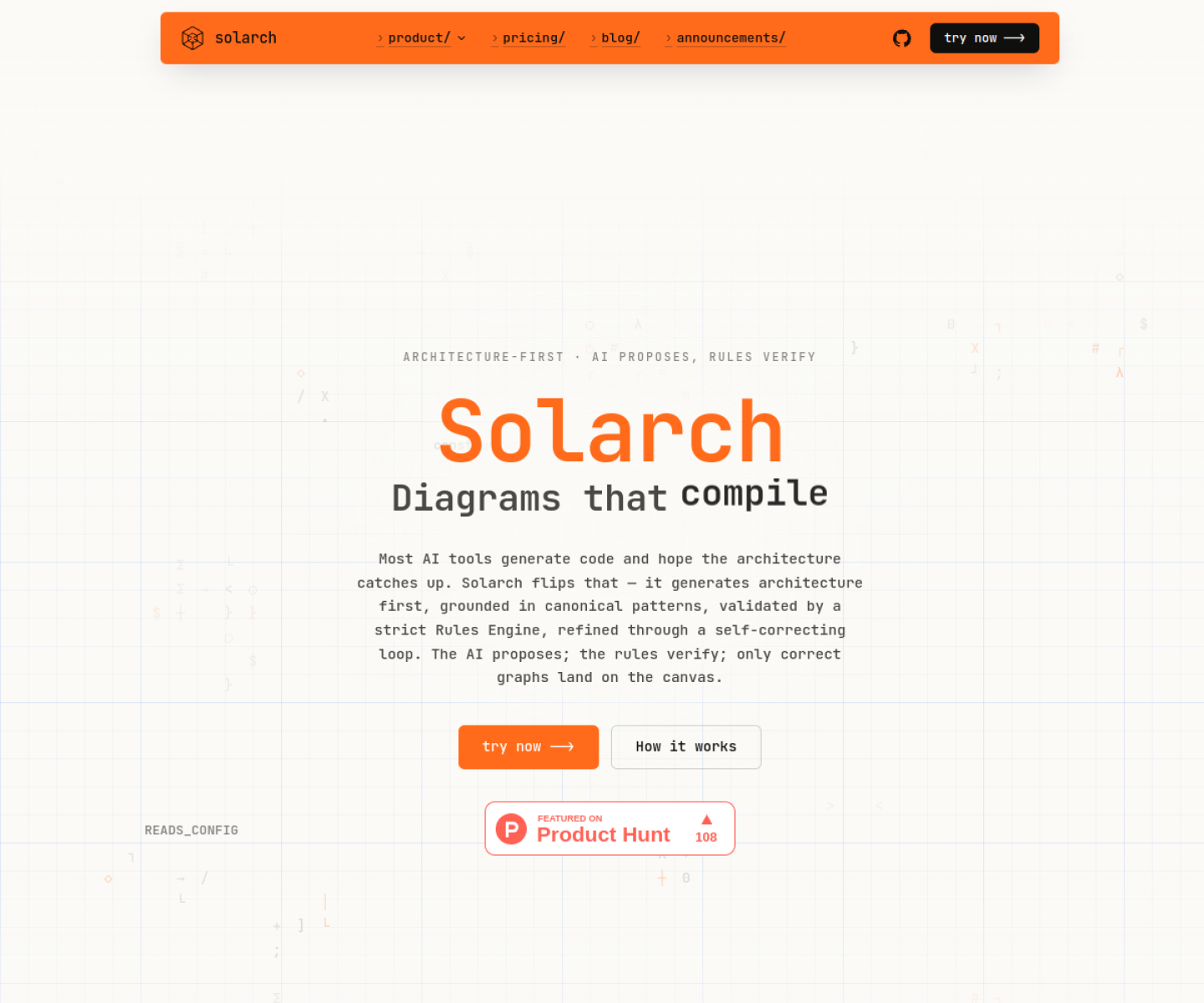
Solarch stands out because it is not just another chat shell. The product materials describe a system centered on draw the system as a node-and-edge graph, let the rules engine block invalid relationships, then export code, diagrams, or ai-readable memory from the validated architecture. That matters because the mechanism is the product, not a thin wrapper around a frontier model.
Why the architecture matters
Solarch's strongest claim is that the architecture comes first and the code is generated from that graph rather than the other way around. The public site clearly explains the rules engine, deterministic skeleton generation, semantic edges, and export targets. Its pricing and FAQ pages are detailed enough for a real evaluation instead of leaving the product in launch-demo territory.
How to evaluate the core loop
Start by testing the narrowest real workflow the product claims to improve. For Solarch, that means users should draw the system as a node-and-edge graph, let the rules engine block invalid relationships, then export code, diagrams, or ai-readable memory from the validated architecture. The result should be easier to inspect, integrate, or control than a direct agent session.
Where it stands out
| Evaluation angle | Fit | Why it matters | | --- | --- | --- | | Best-fit user | High | Backend teams and technical founders who want architecture decisions encoded before code generation starts drifting. | | Core workflow clarity | High | Draw the system as a node-and-edge graph, let the rules engine block invalid relationships, then export code, diagrams, or AI-readable memory from the validated architecture. | | Switching cost reducer | Medium to high | Solarch's strongest claim is that the architecture comes first and the code is generated from that graph rather than the other way around. | | Adoption risk | Medium | The product is best suited to teams that care about explicit backend structure and are willing to model it up front. |
Practical use cases
- Turning validated backend architecture into generated code
- Catching illegal architectural relationships before code is written
- Exporting diagrams and AI-readable architecture memory from one source of truth
Limits and buying notes
The product is best suited to teams that care about explicit backend structure and are willing to model it up front. Users still need to judge whether Solarch's graph model matches their stack and how much of the generated code they want to own long term. Pricing status today: Solarch's public FAQ lists Draw at $5 per month, Build at $20 per month, Code at $100 per month, Team at $30 per seat, and Enterprise on custom pricing, each with a 7-day trial.
FAQ
What is Solarch best for?
Solarch is strongest when turning validated backend architecture into generated code matters more than a generic AI demo. The official product materials position it around a concrete workflow rather than a blank chatbot shell.
Who should try Solarch first?
Backend teams and technical founders who want architecture decisions encoded before code generation starts drifting. Teams with a real workflow match will get value faster than general curiosity users.
What should buyers verify before adopting Solarch?
The product is best suited to teams that care about explicit backend structure and are willing to model it up front. Users still need to judge whether Solarch's graph model matches their stack and how much of the generated code they want to own long term. Pricing, privacy, and workflow fit should be checked directly on the current product before rollout.
Reviewed sources
- https://solarch.dev/
- https://github.com/solarch-dev/solarch
- https://www.producthunt.com/products/solarch
FAQ
What is Solarch best for?
Solarch is strongest when turning validated backend architecture into generated code matters more than a generic AI demo. The official product materials position it around a concrete workflow rather than a blank chatbot shell.
Who should try Solarch first?
Backend teams and technical founders who want architecture decisions encoded before code generation starts drifting. Teams with a real workflow match will get value faster than general curiosity users.
What should buyers verify before adopting Solarch?
The product is best suited to teams that care about explicit backend structure and are willing to model it up front. Users still need to judge whether Solarch's graph model matches their stack and how much of the generated code they want to own long term. Pricing, privacy, and workflow fit should be checked directly on the current product before rollout.