
Skene
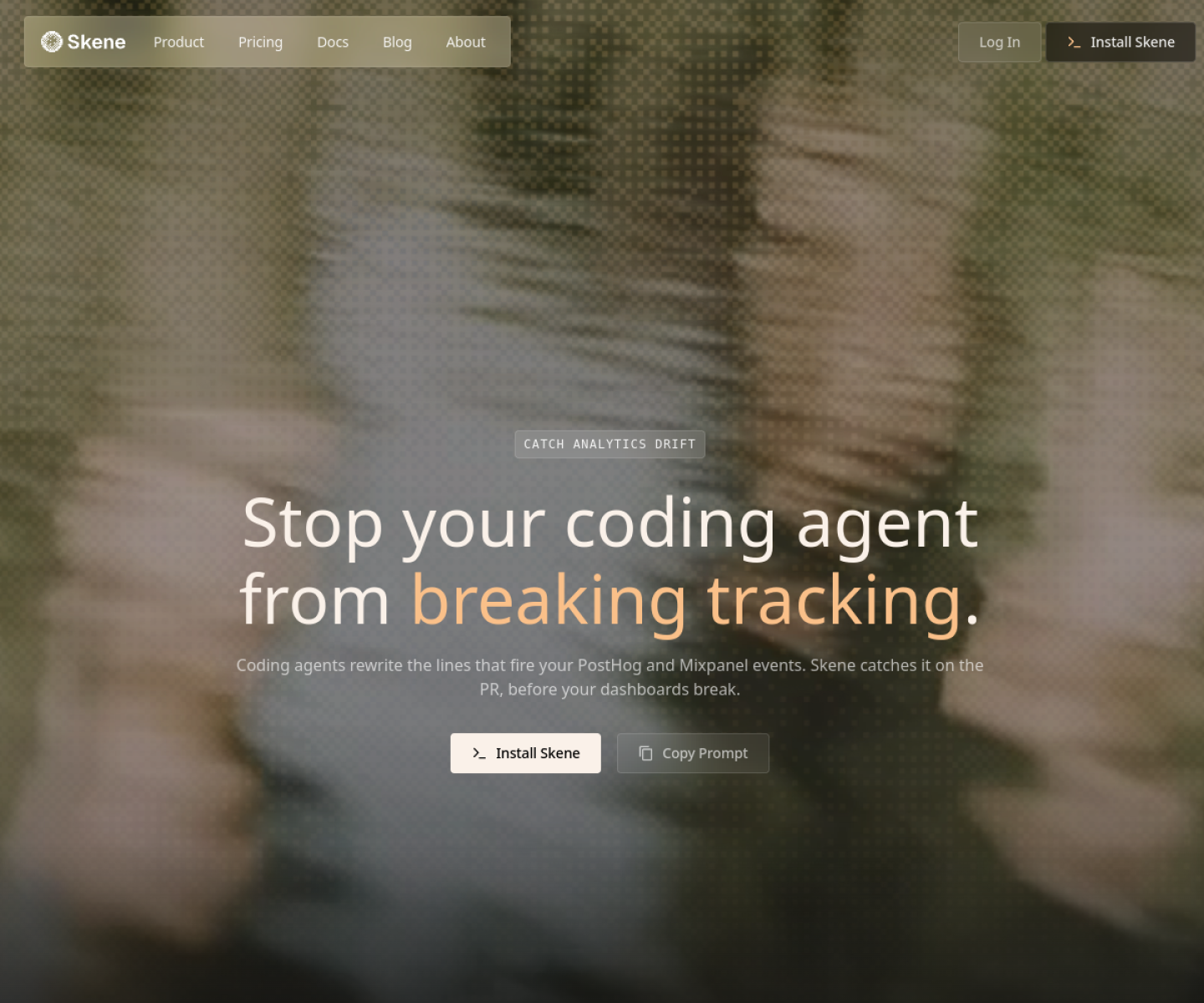
MCP-based guardrail for coding agents focused on protecting product analytics and growth instrumentation before agent-written changes land.
AI Project Details
Skene review: MCP-based guardrail for coding agents focused on protecting product analytics and growth instrumentation before agent-written changes land.
Skene is aimed at growth-minded product and engineering teams that let agents edit user-facing code and need to avoid breaking event tracking. The current product materials describe a workflow built around install skene into an mcp-capable ide or terminal, let it analyze the repository for growth features and instrumentation, then review the plans and protections it applies before commits. That framing matters because many new AI launches still stop at a broad promise. Skene has a clearer job to do.
The stronger reason to care is operational fit. Skene targets a real operational failure mode for coding agents: silently breaking the analytics that roadmap and budget decisions depend on. Its docs are concrete about feature registries, repository analysis, and MCP-based use in tools like Cursor, Claude Code, and Codex. The product stands out by connecting growth instrumentation and agent-assisted implementation rather than treating them as separate workflows.
How the workflow works
A sensible first pass is simple: start from the product's core entry point, validate the main loop on a representative task, and only then judge whether the surrounding automation is real. For Skene, that means users should install skene into an mcp-capable ide or terminal, let it analyze the repository for growth features and instrumentation, then review the plans and protections it applies before commits. If that loop feels shorter, clearer, or easier to control than the alternatives, the product is doing something useful.
Where Skene stands out
| Evaluation angle | Fit | Why it matters | | --- | --- | --- | | Best-fit user | High | Growth-minded product and engineering teams that let agents edit user-facing code and need to avoid breaking event tracking. | | Core workflow clarity | High | Install Skene into an MCP-capable IDE or terminal, let it analyze the repository for growth features and instrumentation, then review the plans and protections it applies before commits. | | Switching cost reducer | Medium to high | Skene targets a real operational failure mode for coding agents: silently breaking the analytics that roadmap and budget decisions depend on. | | Adoption risk | Medium | The fit is narrow if a product has little event tracking or product-led-growth instrumentation. |
Practical use cases
- Protecting analytics events when coding agents ship UI changes
- Analyzing repositories for growth-feature opportunities
- Adding instrumentation-aware checks to AI coding workflows
Limits and buying notes
The fit is narrow if a product has little event tracking or product-led-growth instrumentation. Teams should validate accuracy on their own analytics conventions before trusting any automatic guardrail. Pricing status today: The reviewed public pages explain the product and architecture, but a full public pricing table was not visible during review.
FAQ
What is Skene best for?
Skene is strongest when protecting analytics events when coding agents ship ui changes matters more than a generic AI demo. The official product materials position it around a concrete workflow rather than a blank chatbot shell.
Who should try Skene first?
Growth-minded product and engineering teams that let agents edit user-facing code and need to avoid breaking event tracking. Teams with a real workflow match will get value faster than general curiosity users.
What should buyers verify before adopting Skene?
The fit is narrow if a product has little event tracking or product-led-growth instrumentation. Teams should validate accuracy on their own analytics conventions before trusting any automatic guardrail. Pricing, privacy, and workflow fit should be checked directly on the current product before rollout.
Reviewed sources
- https://www.skene.ai/
- https://www.skene.ai/product/architecture
- https://www.skene.ai/resources/docs/skene
FAQ
What is Skene best for?
Skene is strongest when protecting analytics events when coding agents ship ui changes matters more than a generic AI demo. The official product materials position it around a concrete workflow rather than a blank chatbot shell.
Who should try Skene first?
Growth-minded product and engineering teams that let agents edit user-facing code and need to avoid breaking event tracking. Teams with a real workflow match will get value faster than general curiosity users.
What should buyers verify before adopting Skene?
The fit is narrow if a product has little event tracking or product-led-growth instrumentation. Teams should validate accuracy on their own analytics conventions before trusting any automatic guardrail. Pricing, privacy, and workflow fit should be checked directly on the current product before rollout.