SigmaShake
Policy gate for AI agents that evaluates tool calls before they run, blocks destructive actions with deterministic rules, and keeps signed audit records for teams that need governance.
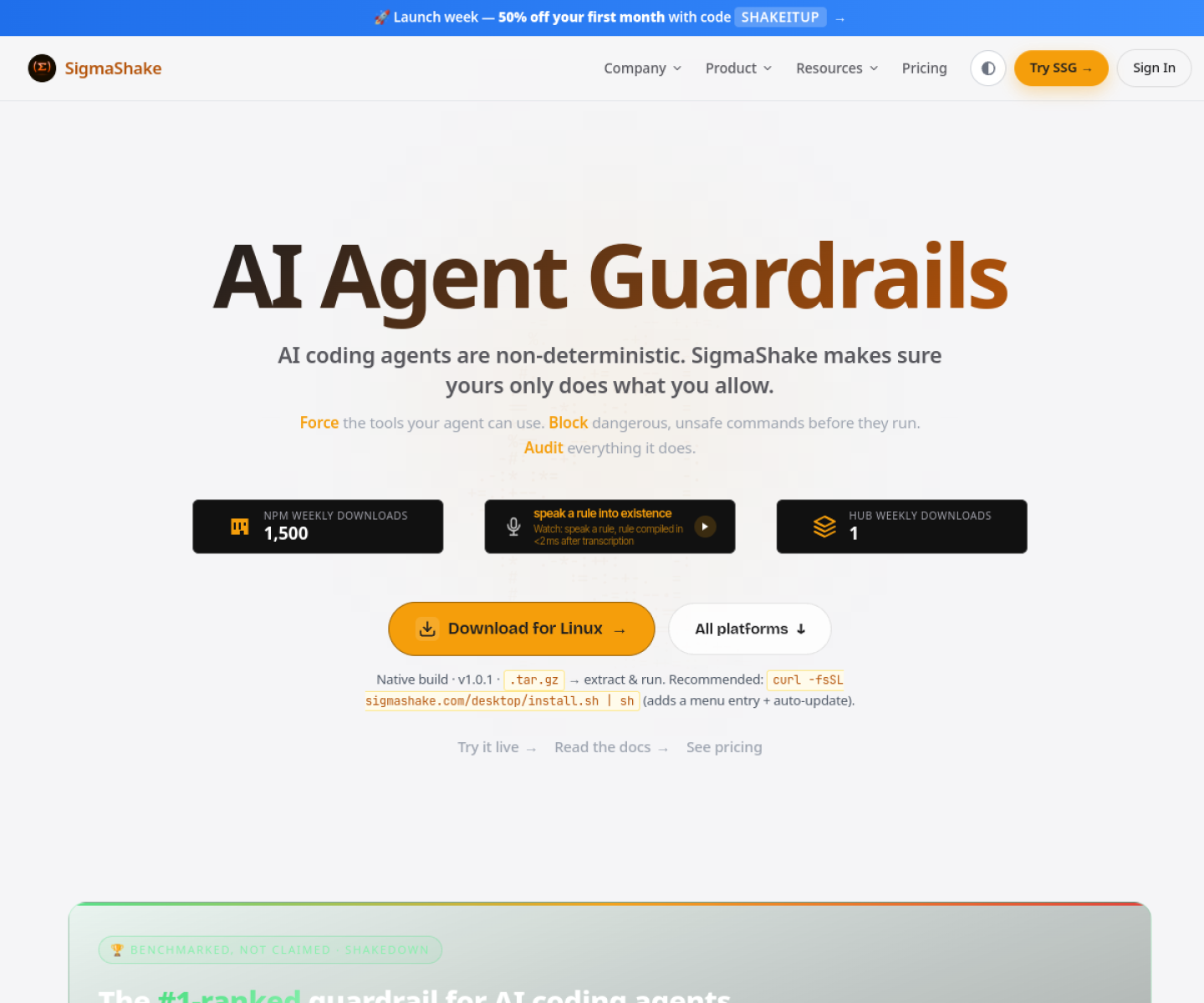
AI Project Details
SigmaShake review: Policy gate for AI agents that evaluates tool calls before they run, blocks destructive actions with deterministic rules, and keeps signed audit records for teams that need governance.
SigmaShake is aimed at teams using coding agents in real repositories who want a stronger safety layer than ad hoc shell hooks and regex scripts. The current product materials describe a workflow built around install the local binary, connect it to claude code, cursor, codex, or another compatible client, define or import rule bundles, then let sigmashake approve, deny, or escalate risky tool calls before execution. That makes the page easier to read as an operating model, not just a brand claim.
Why it is timely
SigmaShake is explicit that it gates actions before execution, which is a materially different control point from output filtering products. The site is strong on concrete implementation details such as sub-2ms evaluation, signed rule bundles, and per-event audit logs. It supports both local-only mode and fleet-style policy sync, which gives it a wider operational range than a one-off hook script.
How the workflow works in practice
A sensible first pass is to start from the product's main entry point and test the shortest path to value. For SigmaShake, that means users should install the local binary, connect it to claude code, cursor, codex, or another compatible client, define or import rule bundles, then let sigmashake approve, deny, or escalate risky tool calls before execution. If that loop reduces review drag, coordination, or governance work, the product is doing something real.
Where SigmaShake stands out
| Evaluation angle | Fit | Why it matters | | --- | --- | --- | | Best-fit user | High | Teams using coding agents in real repositories who want a stronger safety layer than ad hoc shell hooks and regex scripts. | | Core workflow clarity | High | Install the local binary, connect it to Claude Code, Cursor, Codex, or another compatible client, define or import rule bundles, then let SigmaShake approve, deny, or escalate risky tool calls before execution. | | Switching cost reducer | Medium to high | SigmaShake is explicit that it gates actions before execution, which is a materially different control point from output filtering products. | | Adoption risk | Medium | It is a guardrail layer, not a sandbox, so high-assurance environments still need OS-level containment. |
Practical use cases
- Blocking destructive tool calls before an AI coding agent executes them
- Rolling out signed rule bundles across several agent clients
- Keeping an auditable record of governance decisions around agent actions
Limits and buying notes
It is a guardrail layer, not a sandbox, so high-assurance environments still need OS-level containment. The biggest payoff comes when a team is willing to maintain policy rules instead of relying on defaults forever. Pricing status today: SigmaShake's site currently describes a free software application offer and pushes pricing decisions into its product pages, so buyers should verify the latest plan terms directly before adoption.
FAQ
What is SigmaShake best for?
SigmaShake is strongest when blocking destructive tool calls before an ai coding agent executes them matters more than a generic AI demo. The official product materials position it around a concrete workflow rather than a blank chatbot shell.
Who should try SigmaShake first?
Teams using coding agents in real repositories who want a stronger safety layer than ad hoc shell hooks and regex scripts. Teams with a real workflow match will get value faster than general curiosity users.
What should buyers verify before adopting SigmaShake?
It is a guardrail layer, not a sandbox, so high-assurance environments still need OS-level containment. The biggest payoff comes when a team is willing to maintain policy rules instead of relying on defaults forever. Pricing, privacy, and workflow fit should be checked directly on the current product before rollout.
Reviewed sources
- https://sigmashake.com/
- https://sigmashake.com/pricing
- https://news.ycombinator.com/item?id=48558502
FAQ
What is SigmaShake best for?
SigmaShake is strongest when blocking destructive tool calls before an ai coding agent executes them matters more than a generic AI demo. The official product materials position it around a concrete workflow rather than a blank chatbot shell.
Who should try SigmaShake first?
Teams using coding agents in real repositories who want a stronger safety layer than ad hoc shell hooks and regex scripts. Teams with a real workflow match will get value faster than general curiosity users.
What should buyers verify before adopting SigmaShake?
It is a guardrail layer, not a sandbox, so high-assurance environments still need OS-level containment. The biggest payoff comes when a team is willing to maintain policy rules instead of relying on defaults forever. Pricing, privacy, and workflow fit should be checked directly on the current product before rollout.