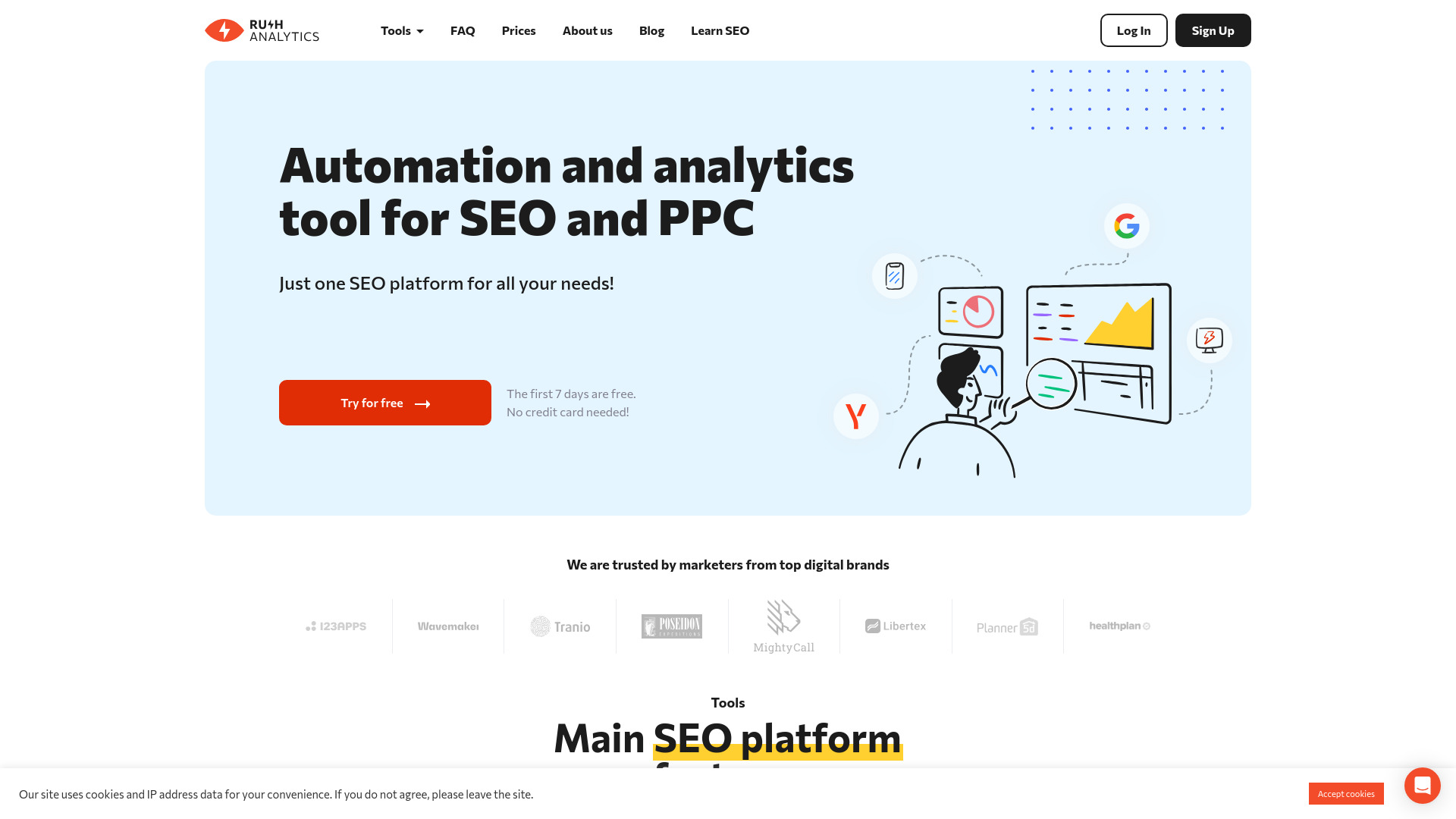
Rush Analytics
Rush Analytics: The Ultimate All-in-One Platform for SEOs, PPC, and Content Marketing Specialists Are you looking for a comprehensive solution to elevate your digital marketing efforts? Look no further than Rush Analytics. This all-in-one platform provides everything you need at the best price on the market. Key Features of Rush Analytics: 1. **Keyword Research**: Discover the most effective keywords to target for your campaigns, ensuring you reach your audience effectively. 2. **Website Change Tracking**: Stay updated with real-time tracking of changes on your website, helping you maintain optimal performance. 3. **AI Text Generator**: Create high-quality content effortlessly with our advanced AI text generator, saving you time and resources. 4. **Content Checker Tool**: Ensure your content is optimized and free of errors with our intuitive content checker. 5. **PBN Tools Suite**: Manage your Private Blog Network (PBN) efficiently with our specialized tools designed for maximum effectiveness. With Rush Analytics, you can streamline your SEO, PPC, and content marketing strategies, all while enjoying the best value available. Enhance your online presence and drive results with our powerful suite of tools tailored for your success.
AI Project Details
Rush Analytics review: SEO rank tracking, audits, and keyword research
Rush Analytics is an SEO platform for rank tracking, site audits, keyword research, and competitor analysis. Its official site positions the product as an all-in-one platform for SEO specialists, agencies, PPC teams, and content marketers. For TakeAI readers, the most useful framing is practical SEO operations: checking rankings, finding keyword opportunities, auditing technical issues, and monitoring search visibility over time.
Rush Analytics is not a content-quality replacement. It can show where opportunities and problems exist, but ranking still depends on content usefulness, technical health, authority, and search intent fit.
Best-fit use cases
| Use case | Rush Analytics fit | Notes | |---|---:|---| | Rank tracking | High | Strong for monitoring keyword movement over time. | | SEO audits | High | Useful for spotting technical and on-page issues. | | Keyword research | Medium to high | Helps prioritize content and landing page work. | | Agency reporting | Medium to high | Useful when many projects need recurring visibility. | | Replacing editorial strategy | Low | Tools do not decide what deserves to rank. |
What teams should verify
Teams should test target country and device coverage, update frequency, keyword limits, export options, crawler limits, audit accuracy, competitor tracking, reporting workflow, and whether the pricing matches the number of tracked projects. SEO tools can produce a lot of data; the value comes from acting on the right signals.
The best use is a weekly operating rhythm: monitor rankings, inspect technical issues, refresh weak pages, and connect insights to content priorities.
Strengths
- Covers several SEO jobs in one platform.
- Useful for recurring rank tracking and agency reporting.
- Site audit and keyword workflows help teams prioritize fixes.
- Good fit for teams managing multiple domains or campaigns.
Limitations
- SEO data still needs interpretation and prioritization.
- Audits can surface issues that are not equally important.
- Content quality, links, and brand trust are outside the tool's direct control.
- Pricing and limits should be checked against project volume.
Bottom line
Rush Analytics should be indexed as an SEO operations platform for rank tracking, audits, keyword research, and competitor monitoring. It is strongest when teams use it to guide ongoing content and technical SEO work, not as a substitute for strategy.
Sources reviewed: Rush Analytics homepage, Rush Analytics pricing, Rush Analytics blog.
FAQ
What is Rush Analytics best for?
Rush Analytics is best for SEO teams that need rank tracking, site audits, keyword research, competitor monitoring, and recurring reporting.
Can Rush Analytics improve rankings by itself?
No. It helps identify problems and opportunities, but teams still need better content, technical fixes, links, and search intent alignment.
What should teams check before using Rush Analytics?
Check location and device coverage, keyword limits, crawler limits, update frequency, audit accuracy, exports, reporting workflow, and project pricing.