ResearchPal
Save time and increase productivity with ResearchPal
AI Project Details
ResearchPal review: AI research assistant for academic writing workflows
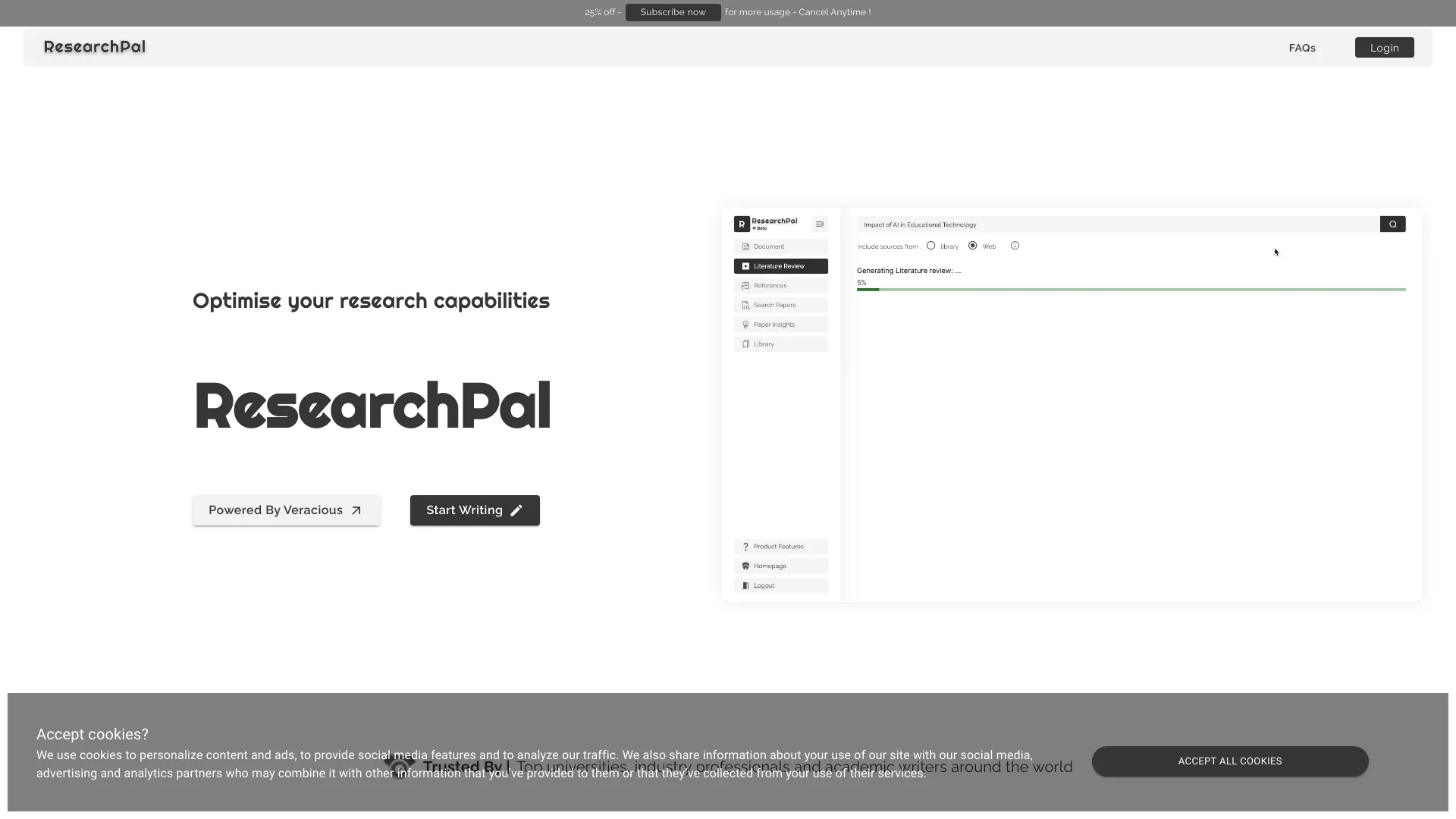
ResearchPal is an AI research assistant for students, academics, and research-heavy writers. Public pages and listings position it around academic writing, literature reviews, paper analysis, reference generation, PDF reading, writing-tone improvement, and reference-manager workflows such as Zotero.
That category needs a careful quality bar. A research assistant can save time, but it should not be treated as an authority source. Literature reviews, citations, summaries, and paper recommendations still need human judgment, source checking, and discipline-specific expertise.
Best-fit use cases
| Use case | ResearchPal fit | Notes | |---|---:|---| | Literature review drafting | Medium to high | Useful for first-pass structure and source organization, not final scholarly judgment. | | Reading and summarizing papers | Medium to high | Helpful for triage, but users must verify claims against the original PDF. | | Citation and reference workflows | Medium | Good productivity layer if citation formats and sources are checked. | | Student writing support | Medium | Useful for learning and drafting when academic integrity rules are followed. | | Systematic review evidence grading | Low to medium | High-stakes reviews need formal methods, inclusion criteria, and manual validation. |
What researchers should verify
Users should check whether every citation exists, whether cited papers actually support the sentence, whether summaries preserve methodology and limitations, whether the tool distinguishes peer-reviewed work from low-quality sources, and whether university or journal AI policies allow the workflow.
The strongest use case is research acceleration: finding angles, organizing sources, drafting outlines, and improving clarity. The weak use case is outsourcing scholarly responsibility. ResearchPal can help produce a draft faster, but the researcher still owns the argument, evidence, and citation accuracy.
Strengths
- Focused on academic and research workflows rather than generic writing.
- Useful for literature review scaffolding, PDF triage, paper insights, and reference work.
- Can reduce blank-page friction for students and early-stage researchers.
Limitations
- AI-generated citations and summaries require strict verification.
- Academic integrity and disclosure rules vary by institution and journal.
- Not a substitute for systematic review methods or domain expertise.
Bottom line
ResearchPal should be indexed as an AI research and academic writing assistant. It is useful when treated as a drafting and organization tool, but high-quality research still requires original reading, citation checks, and transparent use of AI.
Sources reviewed: ResearchPal homepage, ResearchPal blog on literature reviews, ToolMesh ResearchPal listing.
FAQ
What is ResearchPal best for?
ResearchPal is best for academic writing support, literature review drafting, paper summarization, citation workflows, PDF reading, and early research organization.
Can ResearchPal write a final literature review by itself?
No. It can help create drafts and organize sources, but final literature reviews require human reading, synthesis, citation verification, and methodological judgment.
What should users check before submitting work made with ResearchPal?
Check every citation, confirm claims against original papers, review academic integrity rules, disclose AI assistance when required, and make sure the argument is your own.