Openlayer
Openlayer: A Comprehensive Platform for Designing and Evaluating Machine Learning Models In today's data-driven world, machine learning has become an essential tool for businesses and researchers alike. Openlayer stands out as a powerful platform that simplifies the process of designing and evaluating machine learning models. With Openlayer, users can easily create custom models tailored to their specific needs. The platform offers a user-friendly interface that allows both beginners and experienced data scientists to navigate effortlessly. Key Features of Openlayer: - **Model Design**: Create and customize machine learning models with intuitive tools. - **Evaluation Metrics**: Assess model performance using a variety of metrics to ensure accuracy and reliability. - **User-Friendly Interface**: Navigate the platform with ease, making it accessible for all skill levels. - **Comprehensive Support**: Access a wealth of resources and community support to enhance your learning experience. By leveraging Openlayer, users can enhance their machine learning capabilities, leading to more informed decisions and better outcomes. Whether you are developing a new model or refining an existing one, Openlayer provides the tools you need to succeed in the ever-evolving field of machine learning.
AI Project Details
Openlayer review: AI governance, testing, and observability
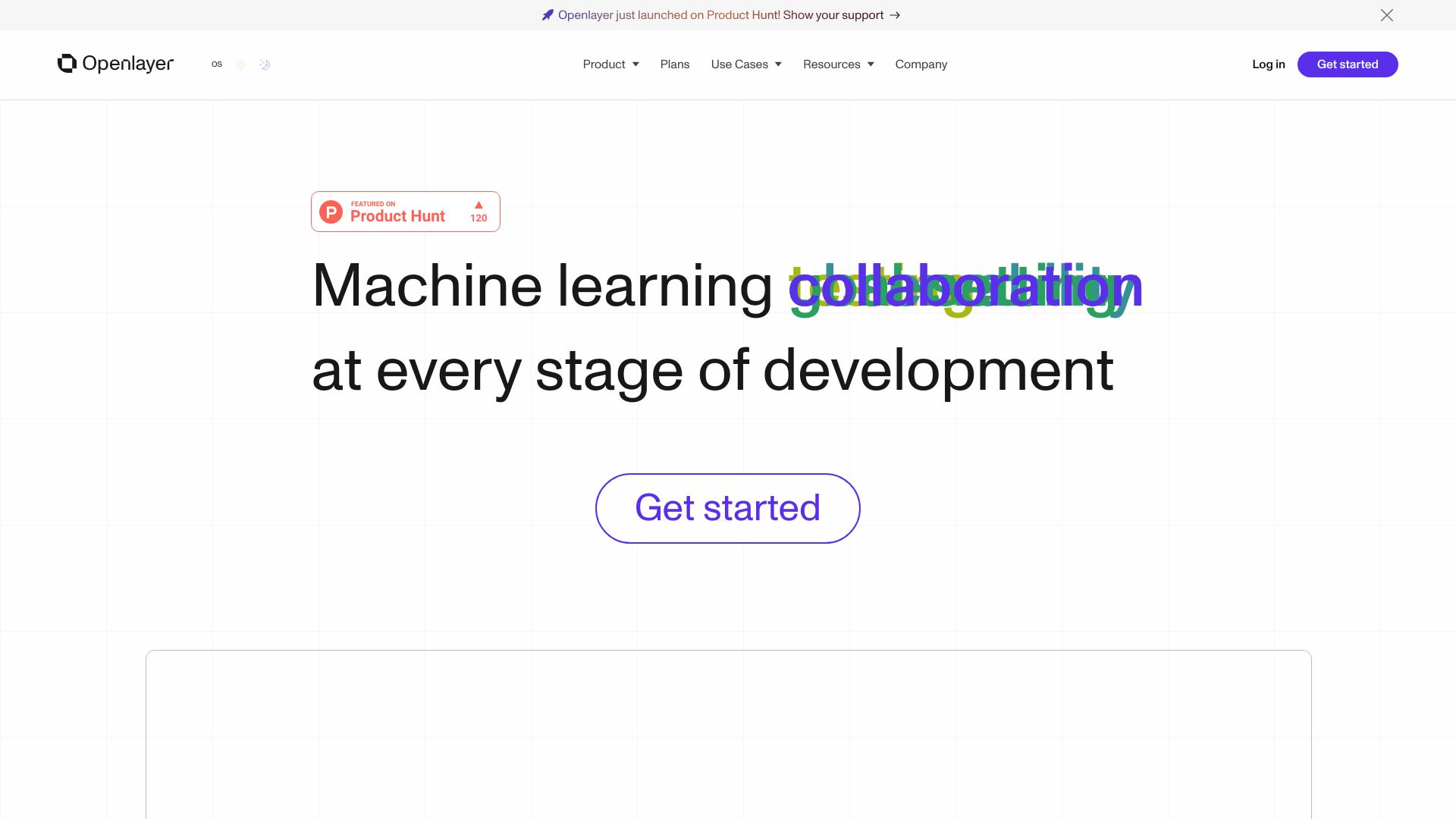
Openlayer is an AI governance and observability platform for teams building machine learning, LLM, and agentic systems. The current homepage emphasizes continuous CI/CD validation, production monitoring, security guardrails, automated compliance aligned to frameworks such as the EU AI Act and NIST, and native integrations with providers and platforms including OpenAI, Anthropic, Copilot, OTel, and Snowflake. The documentation describes workspace setup, governance, observability, offline testing, tests, gateway, data quality monitoring, SAML SSO, MFA, roles, permissions, environment variables, MCP resources, and code examples.
The strongest fit is an engineering or AI platform team that needs a repeatable way to test prompts, models, agents, data quality, latency, safety, and compliance before and after deployment. Openlayer is less relevant for casual chatbot experiments that have no production workflow, compliance owner, or evaluation process. Its value compounds when every model or prompt change must leave an audit trail and pass defined release checks.
Best-fit use cases
| Use case | Fit | Notes | |---|---:|---| | LLM evaluation and CI checks | High | Offline testing and CI/CD validation are core themes. | | Production AI observability | High | Docs include observability and guardrails. | | AI governance and compliance | High | Homepage highlights governance, EU AI Act, and NIST alignment. | | Data quality monitoring | Medium to high | Dedicated docs section exists. | | Simple prototype demos | Low | The platform is more valuable once systems are operational. |
What users should verify
AI teams should test supported integrations, trace enrichment, test catalog coverage, custom metrics, guardrail behavior, prompt-injection checks, PII leakage detection, latency monitoring, budget controls, routing, data retention, SAML SSO, MFA, access groups, compliance reporting, API ergonomics, and how Openlayer fits into existing CI/CD and incident workflows.
Strengths
- Covers both pre-production evaluation and production monitoring.
- Strong governance positioning for teams that must prove AI system quality.
- Documentation is broad enough for platform teams to assess implementation depth.
- Useful for agentic systems where safety, latency, and behavior drift need continuous checks.
Limitations
- Requires teams to define meaningful tests and success criteria.
- Governance workflows need ownership from engineering, product, security, and compliance.
- May be too heavy for small experiments.
- Buyers should validate data handling and enterprise controls before sending sensitive traces.
Bottom line
Openlayer is best for organizations moving AI systems from prototypes into governed production. It does not remove the need to design strong evaluations, but it gives teams a platform for turning those evaluations, guardrails, and monitoring requirements into a repeatable operating process.
Sources reviewed: Openlayer homepage, Openlayer documentation.
FAQ
What is Openlayer best for?
Openlayer is best for AI teams that need evaluation, observability, guardrails, data-quality monitoring, and governance for production ML, LLM, or agentic systems.
Does Openlayer only test prompts?
No. Its documentation covers governance, observability, offline testing, gateway controls, data quality monitoring, security administration, and integrations.
What should teams check before using Openlayer?
Teams should check integrations, test coverage, custom metrics, trace enrichment, guardrails, compliance reporting, SSO, MFA, data retention, and CI/CD fit.