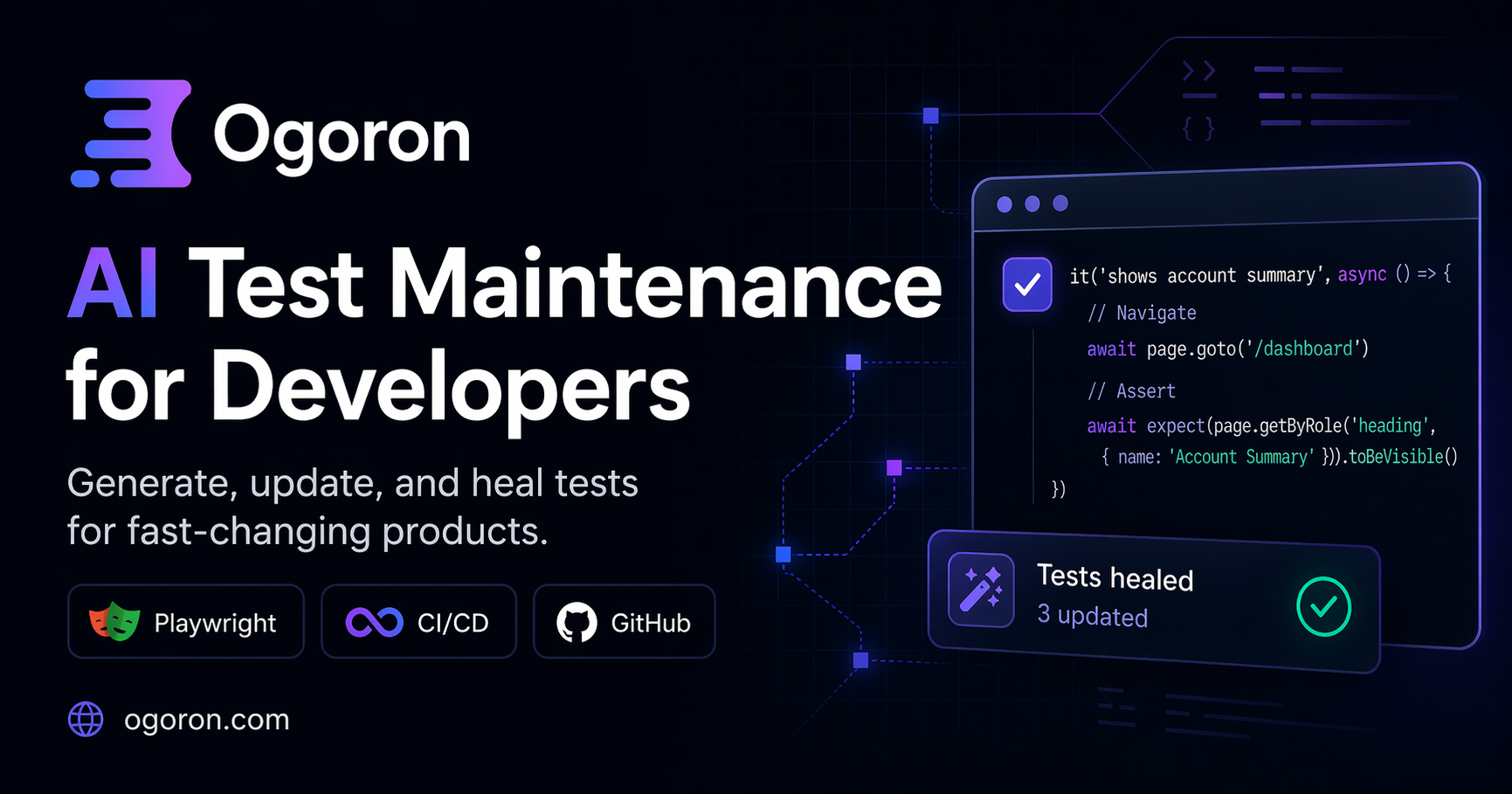
Ogoron
Autonomous test development and maintenance platform that analyzes code structure, UI behavior, and API contracts to generate and update tests continuously.
AI Project Details
Ogoron review: Autonomous test development and maintenance platform that analyzes code structure, UI behavior, and API contracts to generate and update tests continuously.
Ogoron is aimed at development teams that want broader automated qa coverage without manually writing and maintaining large regression suites. The current product materials describe a workflow built around connect a repository, let ogoron analyze the codebase and diffs, generate test plans and scripts, then run the closed-loop testing cycle in the existing delivery pipeline. That makes the page easier to read as an operating model, not just a brand claim.
Why it is timely
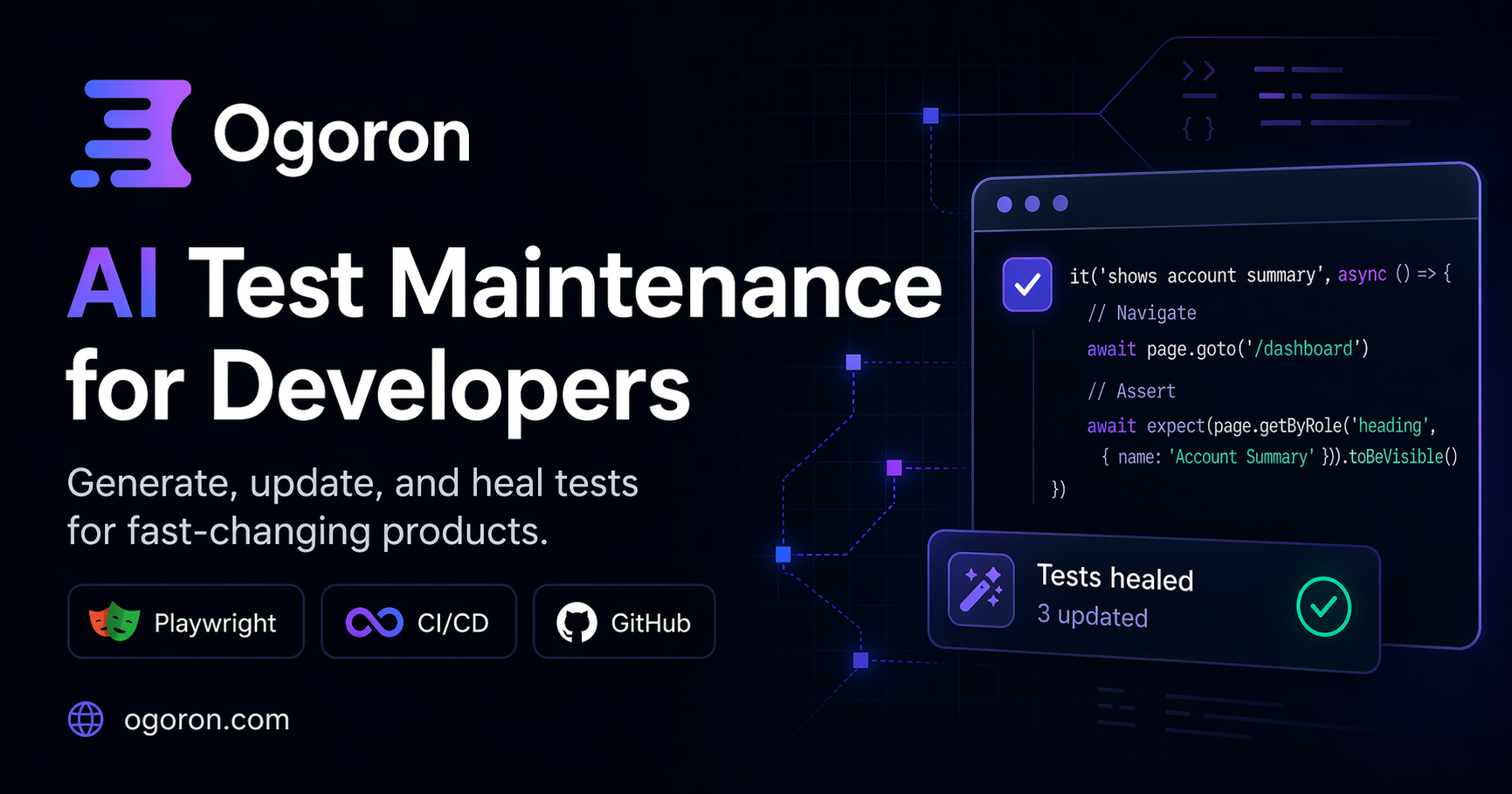
Ogoron positions itself as a maintenance-aware QA system rather than a plain natural-language test generator. The official site emphasizes closed-loop updates from code changes and execution results, which addresses the drift problem that breaks many test tools. Its public messaging around GitHub Actions integration and code-structure awareness is concrete enough to evaluate as a workflow tool, not just a demo.
How the workflow works in practice
A sensible first pass is to start from the product's main entry point and test the shortest path to value. For Ogoron, that means users should connect a repository, let ogoron analyze the codebase and diffs, generate test plans and scripts, then run the closed-loop testing cycle in the existing delivery pipeline. If that loop reduces review drag, coordination, or governance work, the product is doing something real.
Where Ogoron stands out
| Evaluation angle | Fit | Why it matters | | --- | --- | --- | | Best-fit user | High | Development teams that want broader automated QA coverage without manually writing and maintaining large regression suites. | | Core workflow clarity | High | Connect a repository, let Ogoron analyze the codebase and diffs, generate test plans and scripts, then run the closed-loop testing cycle in the existing delivery pipeline. | | Switching cost reducer | Medium to high | Ogoron positions itself as a maintenance-aware QA system rather than a plain natural-language test generator. | | Adoption risk | Medium | Teams still need to validate generated tests against their own release process and failure triage standards. |
Practical use cases
- Generating and maintaining regression tests as the product evolves
- Adding AI-assisted QA to a GitHub Actions release pipeline
- Reducing manual effort in API, UI, and integration test upkeep
Limits and buying notes
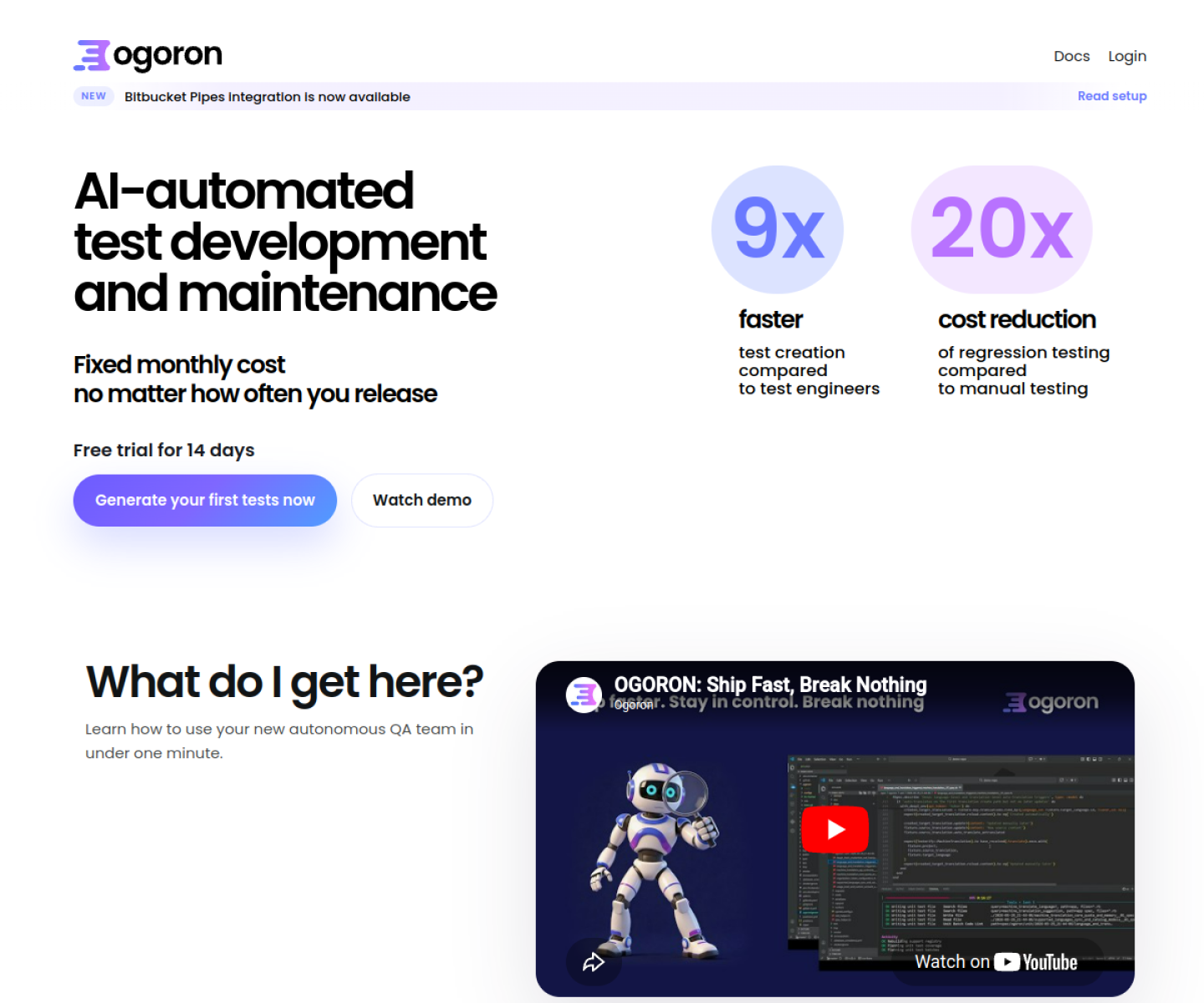
Teams still need to validate generated tests against their own release process and failure triage standards. The commercial value depends on frequent releases and enough regression surface to justify a dedicated autonomous QA layer. Pricing status today: Ogoron's official site describes a fixed monthly cost model with a 14-day free trial, but the reviewed public pages did not expose a stable self-serve price table.
FAQ
What is Ogoron best for?
Ogoron is strongest when generating and maintaining regression tests as the product evolves matters more than a generic AI demo. The official product materials position it around a concrete workflow rather than a blank chatbot shell.
Who should try Ogoron first?
Development teams that want broader automated QA coverage without manually writing and maintaining large regression suites. Teams with a real workflow match will get value faster than general curiosity users.
What should buyers verify before adopting Ogoron?
Teams still need to validate generated tests against their own release process and failure triage standards. The commercial value depends on frequent releases and enough regression surface to justify a dedicated autonomous QA layer. Pricing, privacy, and workflow fit should be checked directly on the current product before rollout.
Reviewed sources
- https://ogoron.com/
- https://docs.ogoron.ai/
FAQ
What is Ogoron best for?
Ogoron is strongest when generating and maintaining regression tests as the product evolves matters more than a generic AI demo. The official product materials position it around a concrete workflow rather than a blank chatbot shell.
Who should try Ogoron first?
Development teams that want broader automated QA coverage without manually writing and maintaining large regression suites. Teams with a real workflow match will get value faster than general curiosity users.
What should buyers verify before adopting Ogoron?
Teams still need to validate generated tests against their own release process and failure triage standards. The commercial value depends on frequent releases and enough regression surface to justify a dedicated autonomous QA layer. Pricing, privacy, and workflow fit should be checked directly on the current product before rollout.