Novus
Product agent that connects to a codebase, auto-instruments product flows, flags usability issues and regressions, and proposes fixes without relying on manual event tagging.
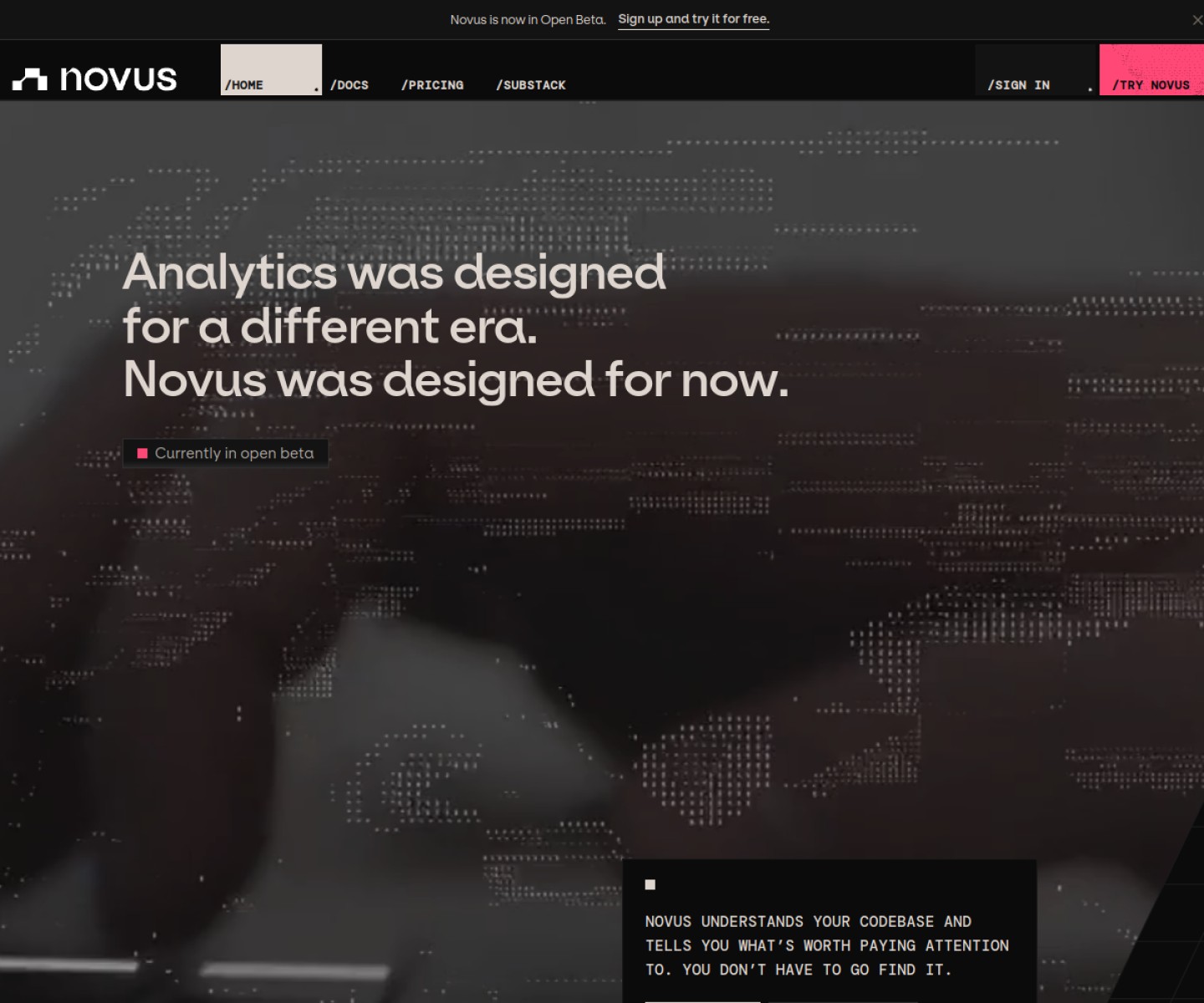
AI Project Details
Novus review: Product agent that connects to a codebase, auto-instruments product flows, flags usability issues and regressions, and proposes fixes without relying on manual event tagging.
Novus is aimed at fast-moving software teams that ship frequently and want product feedback loops that keep pace with ai-assisted release velocity. The current product materials describe a workflow built around connect the repository, let novus scan routes and interaction flows, review the automatically surfaced product issues and session evidence, then inspect the proposed fixes before merging anything. That framing matters because many new AI launches still stop at a broad promise. Novus has a clearer job to do.
The stronger reason to care is operational fit. Novus attacks a real gap in the current AI stack: code is cheaper to ship, but product instrumentation and regression understanding are still slow and manual. The public site is clear that it does not auto-merge changes and instead works through reviewable pull requests, which makes the promise more credible. Its positioning as a product agent built by the Pendo team makes it newly notable beyond a generic analytics launch.
How the workflow works
A sensible first pass is simple: start from the product's core entry point, validate the main loop on a representative task, and only then judge whether the surrounding automation is real. For Novus, that means users should connect the repository, let novus scan routes and interaction flows, review the automatically surfaced product issues and session evidence, then inspect the proposed fixes before merging anything. If that loop feels shorter, clearer, or easier to control than the alternatives, the product is doing something useful.
Where Novus stands out
| Evaluation angle | Fit | Why it matters | | --- | --- | --- | | Best-fit user | High | Fast-moving software teams that ship frequently and want product feedback loops that keep pace with AI-assisted release velocity. | | Core workflow clarity | High | Connect the repository, let Novus scan routes and interaction flows, review the automatically surfaced product issues and session evidence, then inspect the proposed fixes before merging anything. | | Switching cost reducer | Medium to high | Novus attacks a real gap in the current AI stack: code is cheaper to ship, but product instrumentation and regression understanding are still slow and manual. | | Adoption risk | Medium | Teams should verify what data it collects, how well it maps real user flows, and where it fits next to existing analytics investments. |
Practical use cases
- Finding usability regressions without manually tagging events across the app
- Keeping product monitoring aligned with rapid AI-assisted shipping
- Reviewing proposed fixes for broken or underperforming product flows
Limits and buying notes
Teams should verify what data it collects, how well it maps real user flows, and where it fits next to existing analytics investments. Open beta availability does not remove the need to test detection quality before using it in critical release decisions. Pricing status today: The official site states that Novus is currently in open beta and free to use.
FAQ
What is Novus best for?
Novus is strongest when finding usability regressions without manually tagging events across the app matters more than a generic AI demo. The official product materials position it around a concrete workflow rather than a blank chatbot shell.
Who should try Novus first?
Fast-moving software teams that ship frequently and want product feedback loops that keep pace with AI-assisted release velocity. Teams with a real workflow match will get value faster than general curiosity users.
What should buyers verify before adopting Novus?
Teams should verify what data it collects, how well it maps real user flows, and where it fits next to existing analytics investments. Open beta availability does not remove the need to test detection quality before using it in critical release decisions. Pricing, privacy, and workflow fit should be checked directly on the current product before rollout.
Reviewed sources
- https://www.novus.ai/
- https://www.novus.ai/faq/
- https://www.producthunt.com/products/novus-4
FAQ
What is Novus best for?
Novus is strongest when finding usability regressions without manually tagging events across the app matters more than a generic AI demo. The official product materials position it around a concrete workflow rather than a blank chatbot shell.
Who should try Novus first?
Fast-moving software teams that ship frequently and want product feedback loops that keep pace with AI-assisted release velocity. Teams with a real workflow match will get value faster than general curiosity users.
What should buyers verify before adopting Novus?
Teams should verify what data it collects, how well it maps real user flows, and where it fits next to existing analytics investments. Open beta availability does not remove the need to test detection quality before using it in critical release decisions. Pricing, privacy, and workflow fit should be checked directly on the current product before rollout.