Maia
AI data automation platform with role-based agents for validation, analysis, and repetitive data-team work across the data lifecycle.
AI Project Details
Maia review: AI data automation platform with role-based agents for validation, analysis, and repetitive data-team work across the data lifecycle.
Maia is aimed at data teams that want ai help with quality checks, pipeline review, and analyst workflows rather than another general-purpose chat interface. The current product materials describe a workflow built around connect maia to the data environment, assign the right agent to a validation or analysis task, review the output, and keep the workflow tied to real data-team roles. That matters because many new AI launches still sound broad until you try to map them to an actual job.
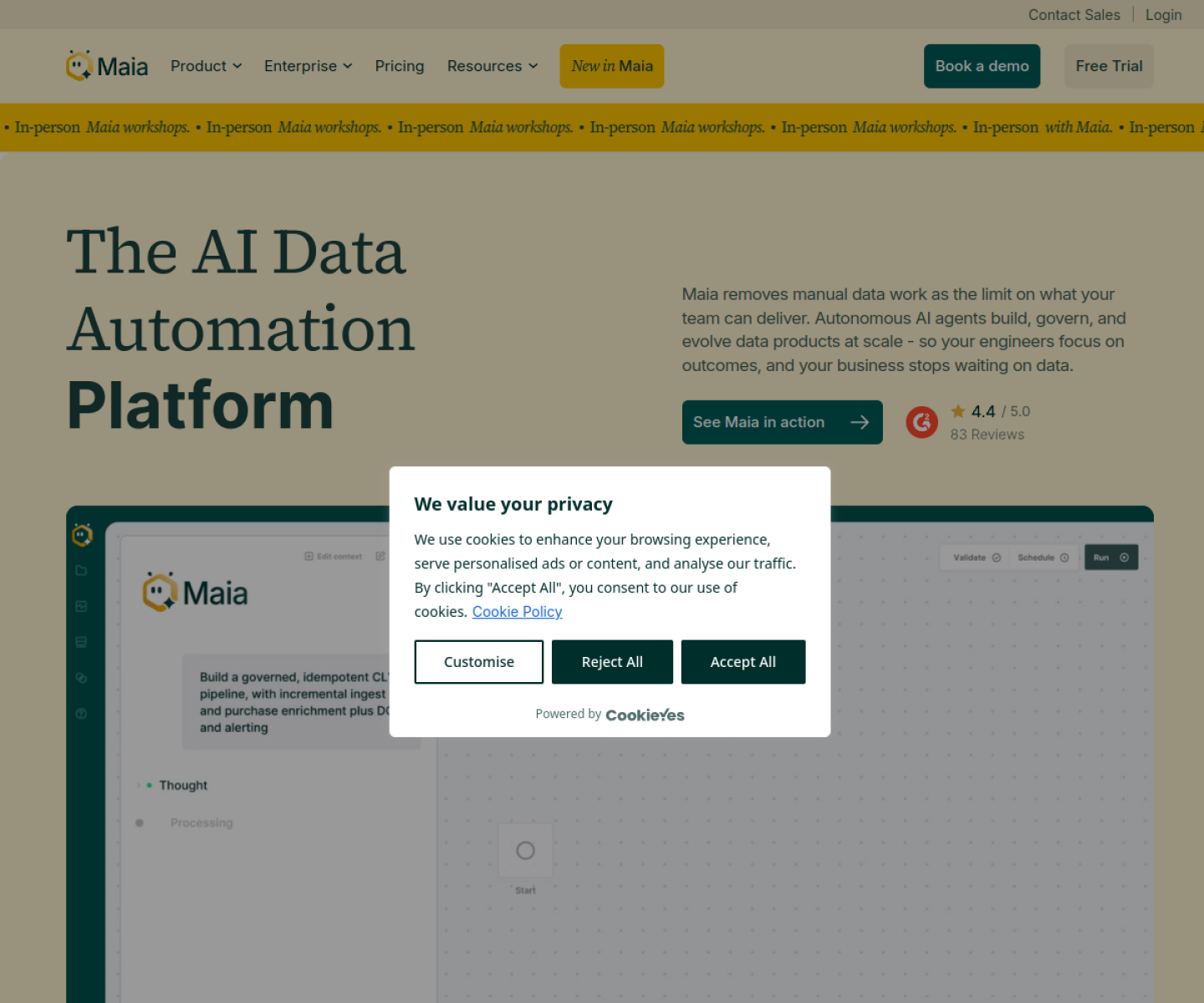
The reason this tool stands out is practical fit. The product is role-specific about data work, which makes the pitch more concrete than a generic enterprise agent layer. The official site shows agent workflows against realistic pipeline and analytics examples instead of empty dashboard mockups. Its pricing language points to data automation usage rather than seat-based AI chat, which matches how data teams often buy tools.
How the workflow works
The fastest way to judge Maia is to walk the main loop on one real task. For this product, users should connect maia to the data environment, assign the right agent to a validation or analysis task, review the output, and keep the workflow tied to real data-team roles. If that loop feels clearer, more controllable, or easier to repeat than the alternatives, the product is doing useful work.
Where Maia stands out
| Evaluation angle | Fit | Why it matters | | --- | --- | --- | | Best-fit user | High | Data teams that want AI help with quality checks, pipeline review, and analyst workflows rather than another general-purpose chat interface. | | Core workflow clarity | High | Connect Maia to the data environment, assign the right agent to a validation or analysis task, review the output, and keep the workflow tied to real data-team roles. | | Switching cost reducer | Medium to high | The product is role-specific about data work, which makes the pitch more concrete than a generic enterprise agent layer. | | Adoption risk | Medium | Teams should validate connector depth, governance fit, and how much manual analyst work the agents really remove in practice. |
Practical use cases
- Checking data pipelines and analytics outputs with AI agents mapped to team roles
- Reducing repetitive validation work in analytics and BI workflows
- Adding an AI review layer to enterprise data operations
Limits and buying notes
Teams should validate connector depth, governance fit, and how much manual analyst work the agents really remove in practice. The product is better suited to structured data operations than to ad hoc knowledge work outside the data stack. Pricing status today: The official pricing page describes usage-based pricing and positions Maia Foundation as the enterprise AI and data management layer behind the agents.
FAQ
What is Maia best for?
Maia works best when checking data pipelines and analytics outputs with ai agents mapped to team roles matters more than using a generic assistant. The official materials point to a more concrete workflow than a blank AI shell.
Who should try Maia first?
Data teams that want AI help with quality checks, pipeline review, and analyst workflows rather than another general-purpose chat interface. Teams with that exact workflow will learn faster than broad curiosity users.
What should users verify before adopting Maia?
Teams should validate connector depth, governance fit, and how much manual analyst work the agents really remove in practice. The product is better suited to structured data operations than to ad hoc knowledge work outside the data stack. Users should also check the current docs, pricing, and release status before rollout.
Reviewed sources
- https://www.maia.ai/
- https://www.maia.ai/pricing
FAQ
What is Maia best for?
Maia works best when checking data pipelines and analytics outputs with ai agents mapped to team roles matters more than using a generic assistant. The official materials point to a more concrete workflow than a blank AI shell.
Who should try Maia first?
Data teams that want AI help with quality checks, pipeline review, and analyst workflows rather than another general-purpose chat interface. Teams with that exact workflow will learn faster than broad curiosity users.
What should users verify before adopting Maia?
Teams should validate connector depth, governance fit, and how much manual analyst work the agents really remove in practice. The product is better suited to structured data operations than to ad hoc knowledge work outside the data stack. Users should also check the current docs, pricing, and release status before rollout.