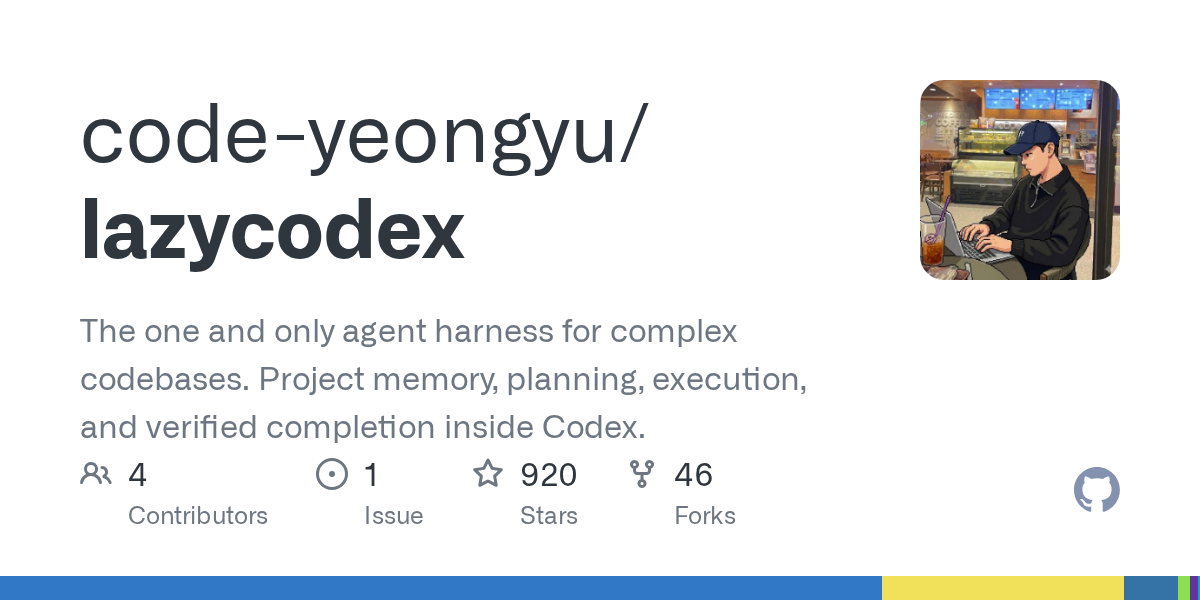
LazyCodex
Agent harness for complex codebases that adds project memory, planning, execution flow, and verified completion around Codex work.
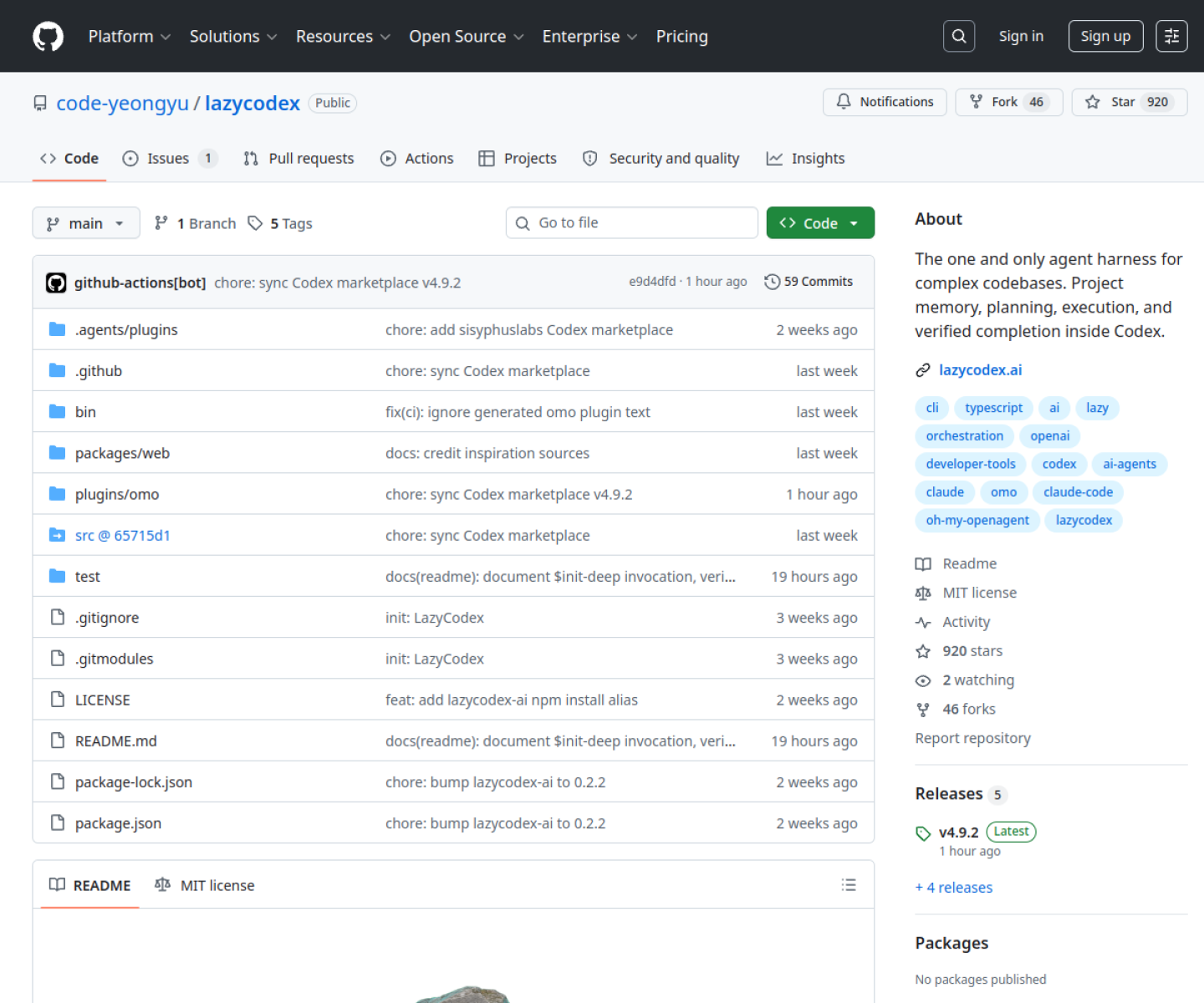
AI Project Details
LazyCodex review: Agent harness for complex codebases that adds project memory, planning, execution flow, and verified completion around Codex work.
LazyCodex is built for developers using codex on large or messy repositories who want more structure than a bare prompt-and-reply coding loop. Instead of asking users to replace their whole toolchain, the product wraps a familiar workflow around connect lazycodex to a codebase, let it maintain project memory and planning state, then move tasks through execution and verification before marking work complete. That makes it easier to judge on practical fit rather than hype.
What the product changes day to day
The real question is whether the workspace removes enough friction to matter. LazyCodex is focused on the operational gaps around Codex usage rather than pretending the model alone solves large-repo workflows. The official description is clear about the lifecycle it covers: memory, planning, execution, and verified completion. It is a useful category because many coding-agent failures come from poor task structure rather than raw generation quality.
What the workflow feels like
For a serious evaluation, start with one active project instead of a synthetic demo. In practice that means users should connect lazycodex to a codebase, let it maintain project memory and planning state, then move tasks through execution and verification before marking work complete. If the product keeps context visible and cuts down tool hopping, the value shows up quickly.
Where it earns attention
| Evaluation angle | Fit | Why it matters | | --- | --- | --- | | Best-fit user | High | Developers using Codex on large or messy repositories who want more structure than a bare prompt-and-reply coding loop. | | Core workflow clarity | High | Connect LazyCodex to a codebase, let it maintain project memory and planning state, then move tasks through execution and verification before marking work complete. | | Switching cost reducer | Medium to high | LazyCodex is focused on the operational gaps around Codex usage rather than pretending the model alone solves large-repo workflows. | | Adoption risk | Medium | The project is most relevant for developers already committed to Codex-heavy workflows rather than users wanting a neutral multi-agent shell. |
Practical use cases
- Adding memory and planning around Codex work on large repos
- Running a more structured execution-and-verification flow for coding tasks
- Reducing task drift in complex codebase work
Limits and buying notes
The project is most relevant for developers already committed to Codex-heavy workflows rather than users wanting a neutral multi-agent shell. A harness can improve discipline, but teams still need to verify whether its planning model fits their own engineering process. Pricing status today: LazyCodex is presented as an open-source agent harness in the reviewed official sources, and those sources did not expose a separate public pricing plan.
FAQ
What is LazyCodex best for?
LazyCodex is strongest when adding memory and planning around codex work on large repos matters more than a generic AI demo. The official product materials position it around a concrete workflow rather than a blank chatbot shell.
Who should try LazyCodex first?
Developers using Codex on large or messy repositories who want more structure than a bare prompt-and-reply coding loop. Teams with a real workflow match will get value faster than general curiosity users.
What should buyers verify before adopting LazyCodex?
The project is most relevant for developers already committed to Codex-heavy workflows rather than users wanting a neutral multi-agent shell. A harness can improve discipline, but teams still need to verify whether its planning model fits their own engineering process. Pricing, privacy, and workflow fit should be checked directly on the current product before rollout.
Reviewed sources
- https://lazycodex.ai/
- https://github.com/code-yeongyu/lazycodex
FAQ
What is LazyCodex best for?
LazyCodex is strongest when adding memory and planning around codex work on large repos matters more than a generic AI demo. The official product materials position it around a concrete workflow rather than a blank chatbot shell.
Who should try LazyCodex first?
Developers using Codex on large or messy repositories who want more structure than a bare prompt-and-reply coding loop. Teams with a real workflow match will get value faster than general curiosity users.
What should buyers verify before adopting LazyCodex?
The project is most relevant for developers already committed to Codex-heavy workflows rather than users wanting a neutral multi-agent shell. A harness can improve discipline, but teams still need to verify whether its planning model fits their own engineering process. Pricing, privacy, and workflow fit should be checked directly on the current product before rollout.