Future AGI
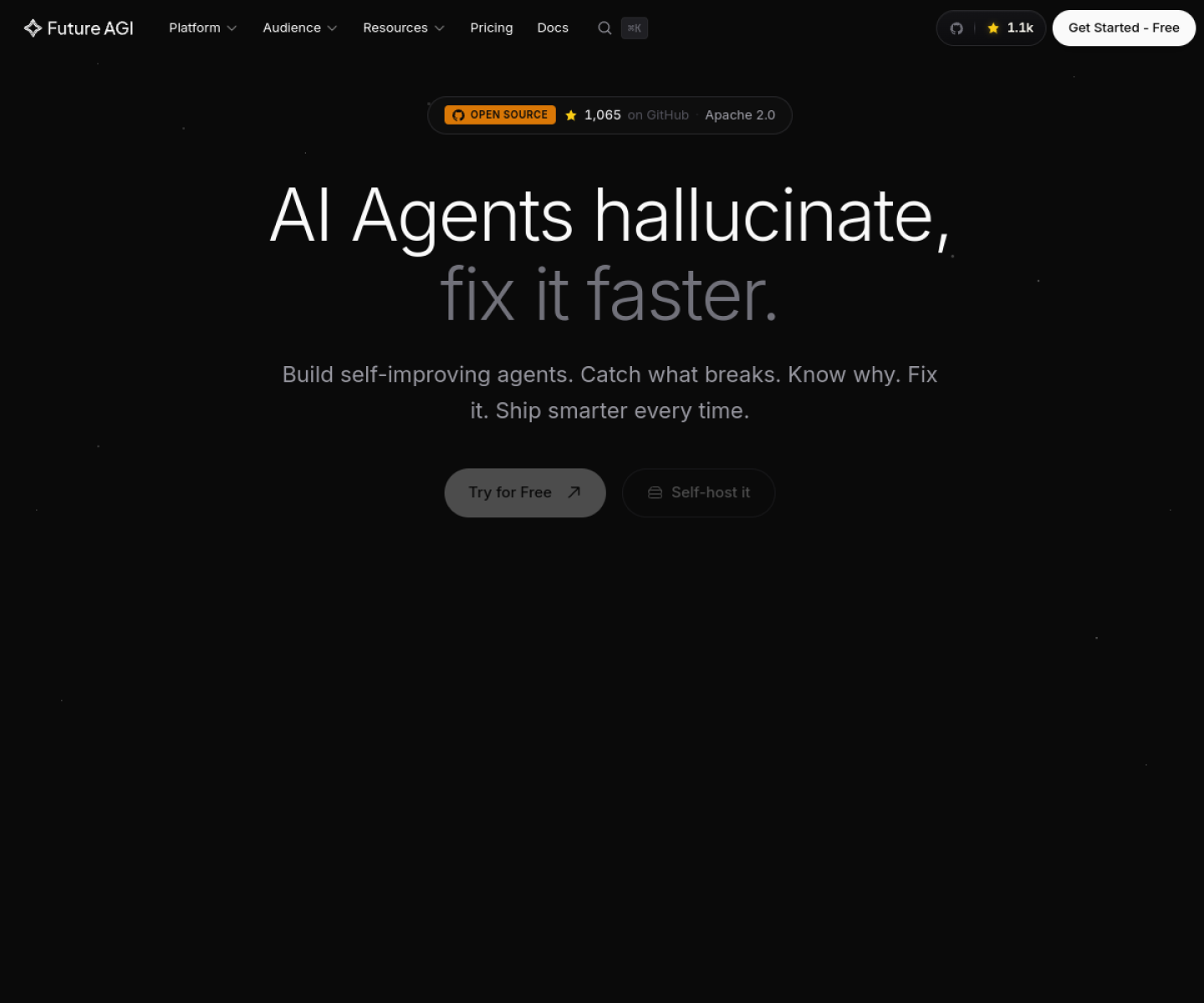
Open-source agent engineering platform that combines simulation, evaluation, optimization, observability, gateway, and guardrails in one stack.
AI Project Details
Future AGI review: Open-source agent engineering platform that combines simulation, evaluation, optimization, observability, gateway, and guardrails in one stack.
Future AGI is aimed at teams building production ai or voice agents that need a tighter loop from failure analysis to evaluation and rollout control. The current product materials describe a workflow built around simulate scenarios, inspect traces and dashboards, run evaluations, apply protections, and iterate agent versions with feedback from observed failures. That framing matters because many new AI launches still stop at a broad promise. Future AGI has a clearer job to do.
The stronger reason to care is operational fit. The public product framing is unusually complete: simulation, evals, optimization, tracing, and gateway are shown as one lifecycle instead of separate add-ons. It has both hosted and self-hosted signals, which is useful for teams that want observability and guardrails without full SaaS lock-in. The docs expose concrete modules and integrations, making the tool easier to verify than vague 'agent platform' launches.
How the workflow works
A sensible first pass is simple: start from the product's core entry point, validate the main loop on a representative task, and only then judge whether the surrounding automation is real. For Future AGI, that means users should simulate scenarios, inspect traces and dashboards, run evaluations, apply protections, and iterate agent versions with feedback from observed failures. If that loop feels shorter, clearer, or easier to control than the alternatives, the product is doing something useful.
Where Future AGI stands out
| Evaluation angle | Fit | Why it matters | | --- | --- | --- | | Best-fit user | High | Teams building production AI or voice agents that need a tighter loop from failure analysis to evaluation and rollout control. | | Core workflow clarity | High | Simulate scenarios, inspect traces and dashboards, run evaluations, apply protections, and iterate agent versions with feedback from observed failures. | | Switching cost reducer | Medium to high | The public product framing is unusually complete: simulation, evals, optimization, tracing, and gateway are shown as one lifecycle instead of separate add-ons. | | Adoption risk | Medium | It is a large platform surface, so smaller teams may find the stack heavy if they only need one narrow capability. |
Practical use cases
- Tracing and evaluating production AI agents
- Simulation-driven testing before rollout
- Self-hosted or hybrid guardrails for AI application teams
Limits and buying notes
It is a large platform surface, so smaller teams may find the stack heavy if they only need one narrow capability. Buyers should verify which modules they will actually operationalize before taking on a broad all-in-one agent tooling layer. Pricing status today: Official site shows a free starting path and a pricing page; commercial tiers are presented through the app and sales flow.
FAQ
What is Future AGI best for?
Future AGI is strongest when tracing and evaluating production ai agents matters more than a generic AI demo. The official product materials position it around a concrete workflow rather than a blank chatbot shell.
Who should try Future AGI first?
Teams building production AI or voice agents that need a tighter loop from failure analysis to evaluation and rollout control. Teams with a real workflow match will get value faster than general curiosity users.
What should buyers verify before adopting Future AGI?
It is a large platform surface, so smaller teams may find the stack heavy if they only need one narrow capability. Buyers should verify which modules they will actually operationalize before taking on a broad all-in-one agent tooling layer. Pricing, privacy, and workflow fit should be checked directly on the current product before rollout.
Reviewed sources
- https://futureagi.com/
- https://docs.futureagi.com/home
- https://futureagi.com/pricing/
- https://github.com/future-agi/future-agi
FAQ
What is Future AGI best for?
Future AGI is strongest when tracing and evaluating production ai agents matters more than a generic AI demo. The official product materials position it around a concrete workflow rather than a blank chatbot shell.
Who should try Future AGI first?
Teams building production AI or voice agents that need a tighter loop from failure analysis to evaluation and rollout control. Teams with a real workflow match will get value faster than general curiosity users.
What should buyers verify before adopting Future AGI?
It is a large platform surface, so smaller teams may find the stack heavy if they only need one narrow capability. Buyers should verify which modules they will actually operationalize before taking on a broad all-in-one agent tooling layer. Pricing, privacy, and workflow fit should be checked directly on the current product before rollout.