DeepMotion
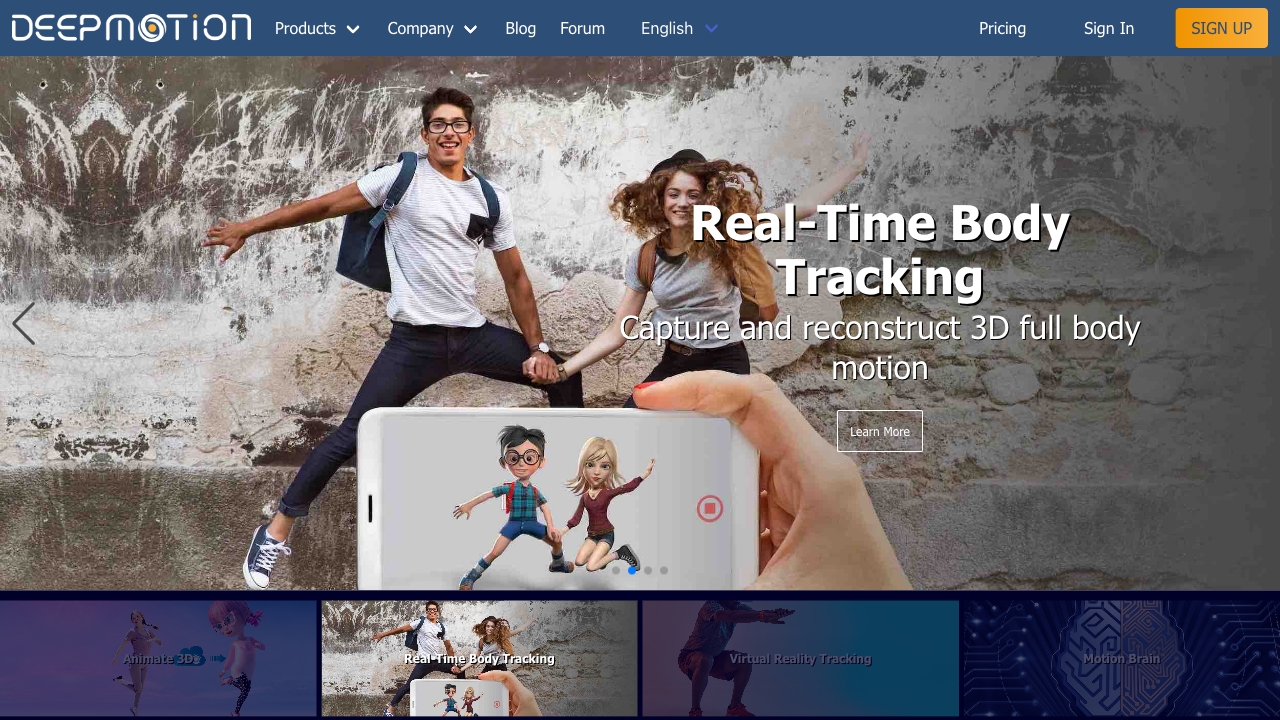
DeepMotion leverages artificial intelligence to transform video footage into high-quality 3D character animations through advanced motion capture technology.
AI Project Details
DeepMotion review: AI motion capture from ordinary video
DeepMotion's Animate 3D is an AI motion capture platform that converts video into 3D animation. Official materials describe markerless full-body tracking, hand and face tracking, physics simulation, foot locking, motion smoothing, multi-person tracking, custom character retargeting, and exports such as FBX, BVH, MP4, and GLB. DeepMotion also offers REST API access for teams that need motion capture inside their own applications.
That makes DeepMotion different from text-to-3D asset generators. Its main job is not creating a static mesh. It turns human movement from ordinary video into animation data that can be retargeted to characters for games, film, virtual production, Roblox, and interactive experiences.
Best-fit use cases
| Use case | DeepMotion fit | Notes | |---|---:|---| | Video-to-animation mocap | High | Strong fit when teams have usable human performance footage. | | Indie game animation | High | Useful for prototyping character movement without a suit or studio setup. | | Roblox and avatar animation | Medium to high | Works well when retargeting and export settings match the target rig. | | Batch or app-integrated mocap | Medium to high | REST API is relevant for platforms and production pipelines. | | Non-human creature animation | Low | Official guidance focuses on humanoid motion capture. |
Strengths
- Markerless capture lowers the hardware barrier compared with suit-based mocap.
- Supports practical export formats for animation pipelines, including FBX and BVH.
- Custom character workflows allow animation preview and retargeting onto uploaded or generated avatars.
- API access can help studios and tool builders automate motion capture at scale.
Limitations
- Output quality depends heavily on input video framing, occlusion, camera movement, lighting, and subject visibility.
- Generated animation often still needs cleanup in Blender, Maya, Unity, Unreal, or a similar DCC pipeline.
- Humanoid characters are the natural fit; unusual rigs or creature movement may need manual work.
- Sensitive production workflows should validate data handling, retention, and API access terms before uploading footage.
TakeAI verdict
DeepMotion is a strong option when the bottleneck is affordable human motion capture, not mesh generation. It is best evaluated with the exact footage, character rigs, and export formats a team plans to use. A useful pilot should compare raw output against cleaned animation, measure cleanup minutes per animation second, and test whether face, hand, foot locking, and smoothing controls reduce downstream work.
Sources reviewed: DeepMotion Animate 3D, DeepMotion FAQ, Animate 3D API, custom character guide.
FAQ
What does DeepMotion Animate 3D do?
It converts video of human movement into 3D animation data that can be previewed, exported, and retargeted to characters.
Does DeepMotion require a motion capture suit?
No. DeepMotion is markerless and works from video, though good framing, visibility, and lighting are still important for better results.
What should a DeepMotion pilot measure?
Measure capture quality, cleanup time, foot sliding, hand and face fidelity, export compatibility, retargeting accuracy, and API workflow fit.