Data Observability v2 by Metaplane
Ensure Trust in Critical Data In today's digital landscape, ensuring trust in critical data is paramount for businesses and organizations. With the increasing reliance on data-driven decision-making, the integrity and accuracy of data must be prioritized. 1. Establish Robust Data Governance - Implement clear policies and procedures for data management. - Assign data stewards to oversee data quality and compliance. 2. Utilize Advanced Data Security Measures - Employ encryption and access controls to protect sensitive information. - Regularly update security protocols to combat emerging threats. 3. Foster a Culture of Data Literacy - Provide training for employees on data handling and analysis. - Encourage open communication about data sources and methodologies. 4. Regularly Audit Data Sources - Conduct periodic reviews of data collection processes. - Validate data accuracy through cross-referencing with reliable sources. By focusing on these strategies, organizations can enhance the trustworthiness of their critical data, leading to more informed decision-making and improved outcomes.
AI Project Details
Metaplane review: data observability for modern analytics teams
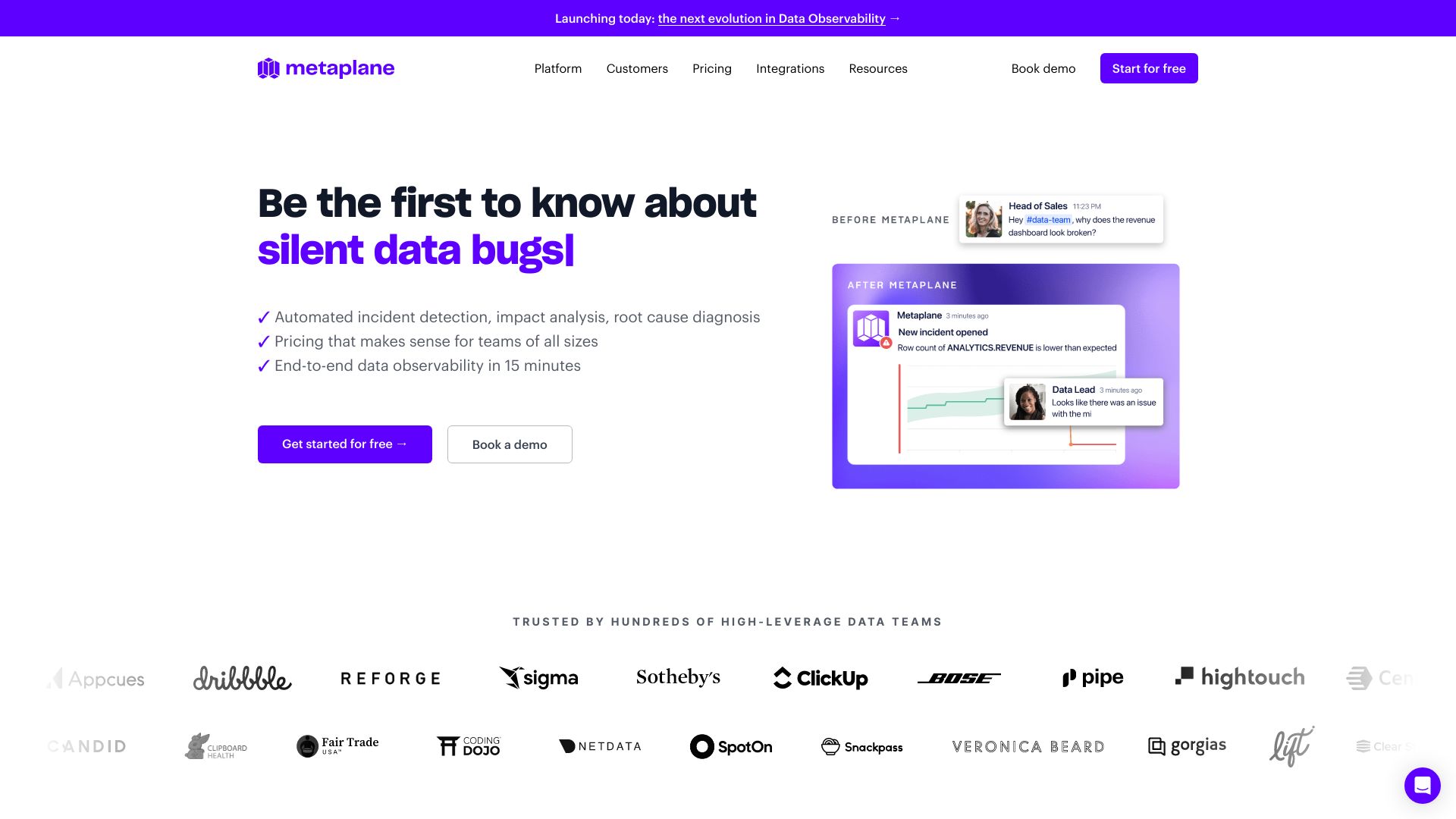
Metaplane is a data observability platform for teams that need to trust warehouse, pipeline, and analytics data. Its product pages and documentation describe monitoring, anomaly detection, lineage, root-cause workflows, alerting, schema and freshness checks, metric monitoring, and collaboration around data incidents. The current positioning is practical: detect bad data before it reaches dashboards, customers, or business decisions.
This is a high-trust category. A data observability tool is not valuable because it says "AI"; it is valuable if it reduces the time between a data issue appearing and the right owner fixing it.
Best-fit use cases
| Use case | Metaplane fit | Notes | |---|---:|---| | Analytics warehouse monitoring | High | Strong for teams using modern data stacks. | | Data freshness and volume alerts | High | Useful for catching broken pipelines early. | | Schema and lineage awareness | High | Helps understand blast radius when data changes. | | Small teams with few tables | Medium | May be more platform than needed at first. | | Replacing data ownership | Low | Alerts still need accountable owners. |
What teams should verify
Teams should test warehouse support, integration setup, alert quality, false positives, lineage accuracy, freshness checks, schema change detection, Slack or incident workflows, owner mapping, and whether analysts can understand the alerts without reading every pipeline. Alert fatigue is the main risk: if every small fluctuation creates noise, teams will stop trusting the system.
The best rollout usually starts with critical tables, executive dashboards, product metrics, and customer-facing data before expanding to the whole warehouse.
Strengths
- Clear focus on data quality, data observability, and analytics trust.
- Useful checks for freshness, volume, schema, lineage, and anomalies.
- Helps teams identify owners and root causes faster during data incidents.
- Good fit for companies where broken data creates business or customer impact.
Limitations
- Requires thoughtful monitor configuration to avoid alert fatigue.
- Lineage and ownership are only useful if the data stack is connected properly.
- Teams still need data contracts, testing, and accountable data owners.
- Smaller teams may not need a full observability layer yet.
Bottom line
Metaplane should be indexed as a data observability platform for analytics and data engineering teams. It is strongest when teams have enough critical data workflows that early detection, lineage, and incident ownership materially reduce business risk.
Sources reviewed: Metaplane homepage, Metaplane platform overview, Metaplane documentation.
FAQ
What is Metaplane best for?
Metaplane is best for analytics and data engineering teams that need data observability across warehouses, pipelines, metrics, lineage, and business-critical tables.
Does Metaplane fix data quality issues automatically?
No. It helps detect and route data issues, but teams still need owners, pipeline fixes, tests, and data contracts.
What should teams monitor first in Metaplane?
Start with executive dashboards, customer-facing data, revenue tables, product metrics, freshness-sensitive pipelines, and tables with known downstream dependencies.