consult-llm
CLI and skill package for getting a second opinion from another model inside an existing coding-agent workflow, with support for API backends, local CLIs, threads, git diff context, and a monitoring TUI.
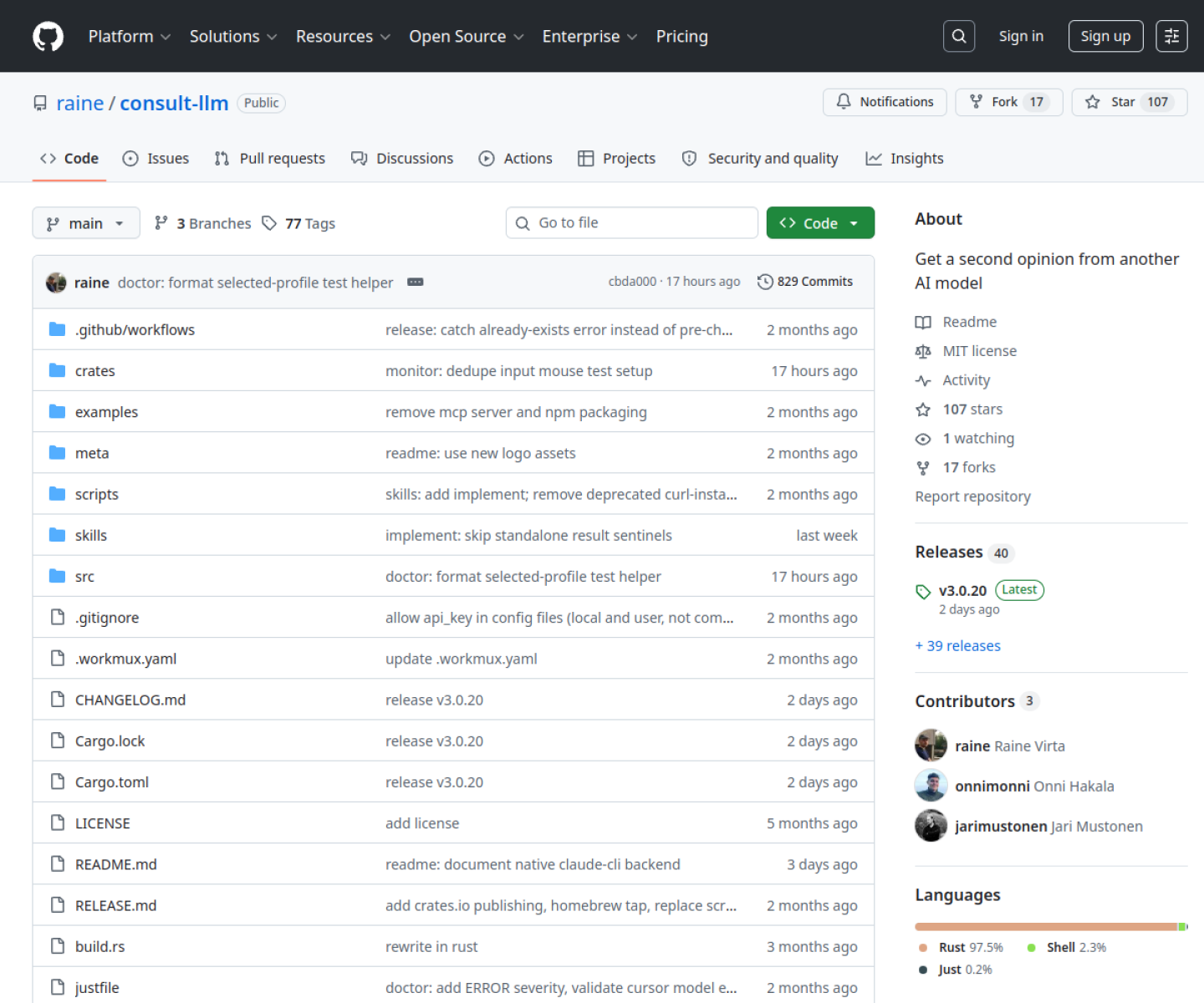
AI Project Details
consult-llm review: CLI and skill package for getting a second opinion from another model inside an existing coding-agent workflow, with support for API backends, local CLIs, threads, git diff context, and a monitoring TUI.
consult-llm is built for developers who already work inside claude code, codex, gemini, cursor, or similar agents and want a fast way to cross-check tricky reasoning with another model before committing to a path. Instead of asking users to replace their whole toolchain, the product wraps a familiar workflow around install the tool, configure one or more model backends, invoke a consult or debate command from the current agent workflow, then compare or synthesize the second model's response before continuing the task. That makes it easier to judge on practical fit rather than hype.
What the product changes day to day
The real question is whether the workspace removes enough friction to matter. consult-llm is practical because it lives inside an existing coding workflow instead of asking users to leave for a separate chat app. The README is direct about supported backends, skill commands, thread continuity, and the argument for model disagreement as a useful signal. Its live monitor and diff-aware consultation flow make it more operational than a generic prompt copier for other models.
What the workflow feels like
For a serious evaluation, start with one active project instead of a synthetic demo. In practice that means users should install the tool, configure one or more model backends, invoke a consult or debate command from the current agent workflow, then compare or synthesize the second model's response before continuing the task. If the product keeps context visible and cuts down tool hopping, the value shows up quickly.
Where it earns attention
| Evaluation angle | Fit | Why it matters | | --- | --- | --- | | Best-fit user | High | Developers who already work inside Claude Code, Codex, Gemini, Cursor, or similar agents and want a fast way to cross-check tricky reasoning with another model before committing to a path. | | Core workflow clarity | High | Install the tool, configure one or more model backends, invoke a consult or debate command from the current agent workflow, then compare or synthesize the second model's response before continuing the task. | | Switching cost reducer | Medium to high | consult-llm is practical because it lives inside an existing coding workflow instead of asking users to leave for a separate chat app. | | Adoption risk | Medium | The value depends on teams being willing to pay the latency and cost of a second model pass when a question is ambiguous enough to justify it. |
Practical use cases
- Asking another model to review an architecture or debugging path mid-task
- Running model debates before accepting a risky code change
- Reusing existing model subscriptions through one consult workflow
Limits and buying notes
The value depends on teams being willing to pay the latency and cost of a second model pass when a question is ambiguous enough to justify it. More opinions do not guarantee better decisions, so teams still need a clear rule for when consultation adds signal instead of noise. Pricing status today: The reviewed sources expose install methods and backend configuration rather than a hosted SaaS plan; actual usage cost depends on the model backends or subscriptions a team connects.
FAQ
What is consult-llm best for?
consult-llm is strongest when asking another model to review an architecture or debugging path mid-task matters more than a generic AI demo. The official product materials position it around a concrete workflow rather than a blank chatbot shell.
Who should try consult-llm first?
Developers who already work inside Claude Code, Codex, Gemini, Cursor, or similar agents and want a fast way to cross-check tricky reasoning with another model before committing to a path. Teams with a real workflow match will get value faster than general curiosity users.
What should buyers verify before adopting consult-llm?
The value depends on teams being willing to pay the latency and cost of a second model pass when a question is ambiguous enough to justify it. More opinions do not guarantee better decisions, so teams still need a clear rule for when consultation adds signal instead of noise. Pricing, privacy, and workflow fit should be checked directly on the current product before rollout.
Reviewed sources
- https://github.com/raine/consult-llm
- https://raw.githubusercontent.com/raine/consult-llm/main/README.md
- https://news.ycombinator.com/item?id=48525017
FAQ
What is consult-llm best for?
consult-llm is strongest when asking another model to review an architecture or debugging path mid-task matters more than a generic AI demo. The official product materials position it around a concrete workflow rather than a blank chatbot shell.
Who should try consult-llm first?
Developers who already work inside Claude Code, Codex, Gemini, Cursor, or similar agents and want a fast way to cross-check tricky reasoning with another model before committing to a path. Teams with a real workflow match will get value faster than general curiosity users.
What should buyers verify before adopting consult-llm?
The value depends on teams being willing to pay the latency and cost of a second model pass when a question is ambiguous enough to justify it. More opinions do not guarantee better decisions, so teams still need a clear rule for when consultation adds signal instead of noise. Pricing, privacy, and workflow fit should be checked directly on the current product before rollout.