Antigravity CLI
Google's terminal-first agent surface for Antigravity, built around lightweight local use, background subagents, shared agent settings, and plugin or MCP extensibility.
AI Project Details
Antigravity CLI review: Google's terminal-first agent surface for Antigravity, built around lightweight local use, background subagents, shared agent settings, and plugin or MCP extensibility.
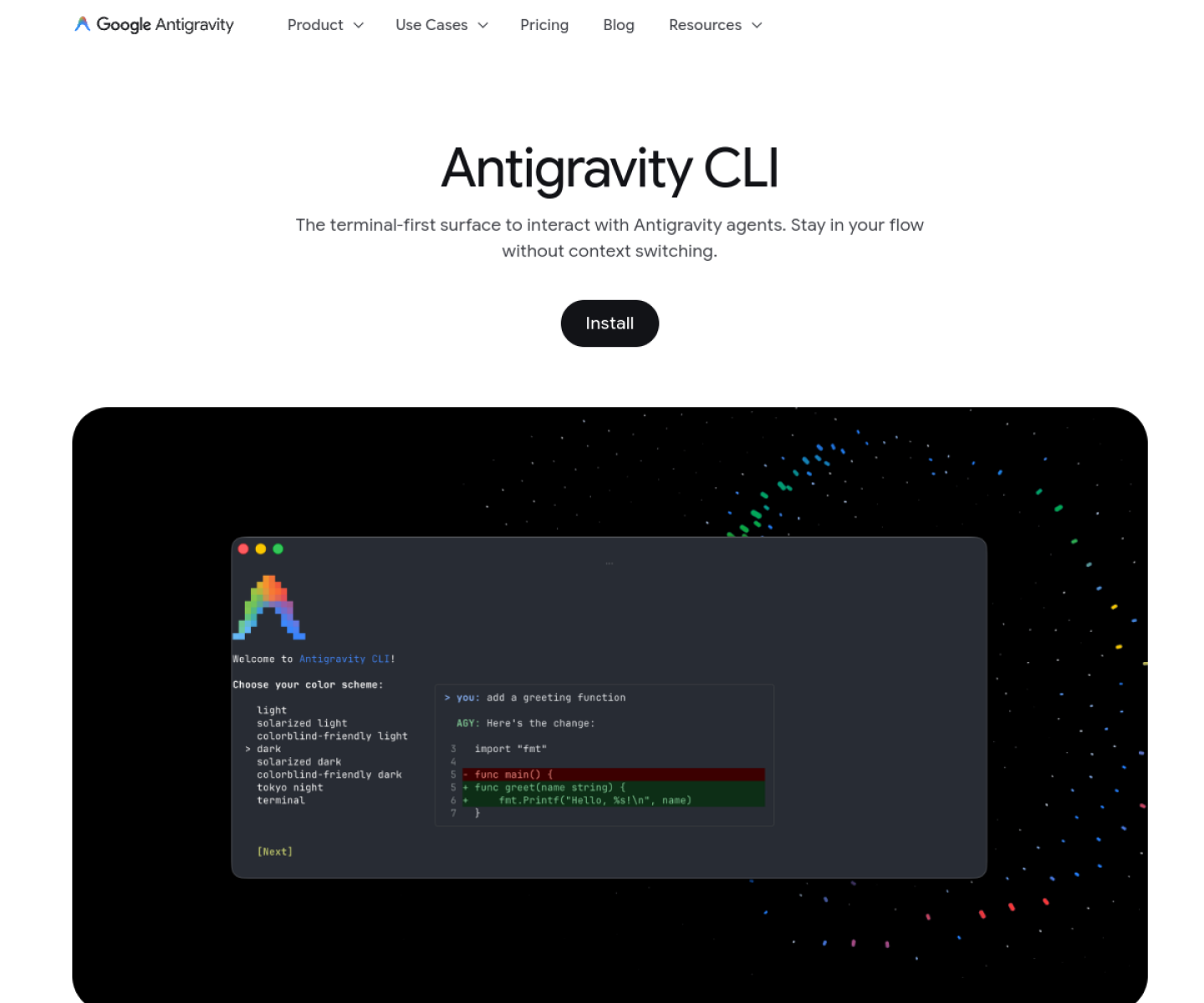
Antigravity CLI is aimed at developers who want google's broader antigravity platform in a keyboard-first workflow rather than a heavier desktop surface. The current product materials describe a workflow built around install the cli, authenticate with google, open a repository or shell task, delegate work to background subagents, then approve tools, inspect artifacts, and tune permissions from the terminal. That framing matters because many new AI launches still stop at a broad promise. Antigravity CLI has a clearer job to do.
The stronger reason to care is operational fit. Google positions the CLI as a first-class surface of the same shared Antigravity harness rather than a stripped-down sidecar. The public docs are specific about subagents, slash-command configuration, plugins, and SSH-friendly usage, which makes the workflow easier to evaluate. Its pricing and migration materials make the product notable right now because Google is consolidating more agent work around Antigravity.
How the workflow works
A sensible first pass is simple: start from the product's core entry point, validate the main loop on a representative task, and only then judge whether the surrounding automation is real. For Antigravity CLI, that means users should install the cli, authenticate with google, open a repository or shell task, delegate work to background subagents, then approve tools, inspect artifacts, and tune permissions from the terminal. If that loop feels shorter, clearer, or easier to control than the alternatives, the product is doing something useful.
Where Antigravity CLI stands out
| Evaluation angle | Fit | Why it matters | | --- | --- | --- | | Best-fit user | High | Developers who want Google's broader Antigravity platform in a keyboard-first workflow rather than a heavier desktop surface. | | Core workflow clarity | High | Install the CLI, authenticate with Google, open a repository or shell task, delegate work to background subagents, then approve tools, inspect artifacts, and tune permissions from the terminal. | | Switching cost reducer | Medium to high | Google positions the CLI as a first-class surface of the same shared Antigravity harness rather than a stripped-down sidecar. | | Adoption risk | Medium | Teams should validate how well the current CLI maps to their preferred coding workflow before replacing an established agent setup. |
Practical use cases
- Running Google agent workflows from a terminal instead of a desktop IDE
- Delegating parallel coding and research tasks to background subagents
- Managing plugins, skills, and MCP connections in one CLI surface
Limits and buying notes
Teams should validate how well the current CLI maps to their preferred coding workflow before replacing an established agent setup. The product is tied to Google's account and platform model, so buyers should review provider flexibility and migration costs up front. Pricing status today: Google's official pricing page shows an Individual plan at $0 per month, with higher-access Pro, Ultra, and Google Cloud organization options.
FAQ
What is Antigravity CLI best for?
Antigravity CLI is strongest when running google agent workflows from a terminal instead of a desktop ide matters more than a generic AI demo. The official product materials position it around a concrete workflow rather than a blank chatbot shell.
Who should try Antigravity CLI first?
Developers who want Google's broader Antigravity platform in a keyboard-first workflow rather than a heavier desktop surface. Teams with a real workflow match will get value faster than general curiosity users.
What should buyers verify before adopting Antigravity CLI?
Teams should validate how well the current CLI maps to their preferred coding workflow before replacing an established agent setup. The product is tied to Google's account and platform model, so buyers should review provider flexibility and migration costs up front. Pricing, privacy, and workflow fit should be checked directly on the current product before rollout.
Reviewed sources
- https://antigravity.google/product/antigravity-cli
- https://antigravity.google/docs/cli-overview
- https://antigravity.google/pricing?app=antigravity
FAQ
What is Antigravity CLI best for?
Antigravity CLI is strongest when running google agent workflows from a terminal instead of a desktop ide matters more than a generic AI demo. The official product materials position it around a concrete workflow rather than a blank chatbot shell.
Who should try Antigravity CLI first?
Developers who want Google's broader Antigravity platform in a keyboard-first workflow rather than a heavier desktop surface. Teams with a real workflow match will get value faster than general curiosity users.
What should buyers verify before adopting Antigravity CLI?
Teams should validate how well the current CLI maps to their preferred coding workflow before replacing an established agent setup. The product is tied to Google's account and platform model, so buyers should review provider flexibility and migration costs up front. Pricing, privacy, and workflow fit should be checked directly on the current product before rollout.