Replicas
Background coding-agent platform that runs Claude Code, Codex, and similar agents inside isolated cloud workspaces with issue, PR, and automation hooks.
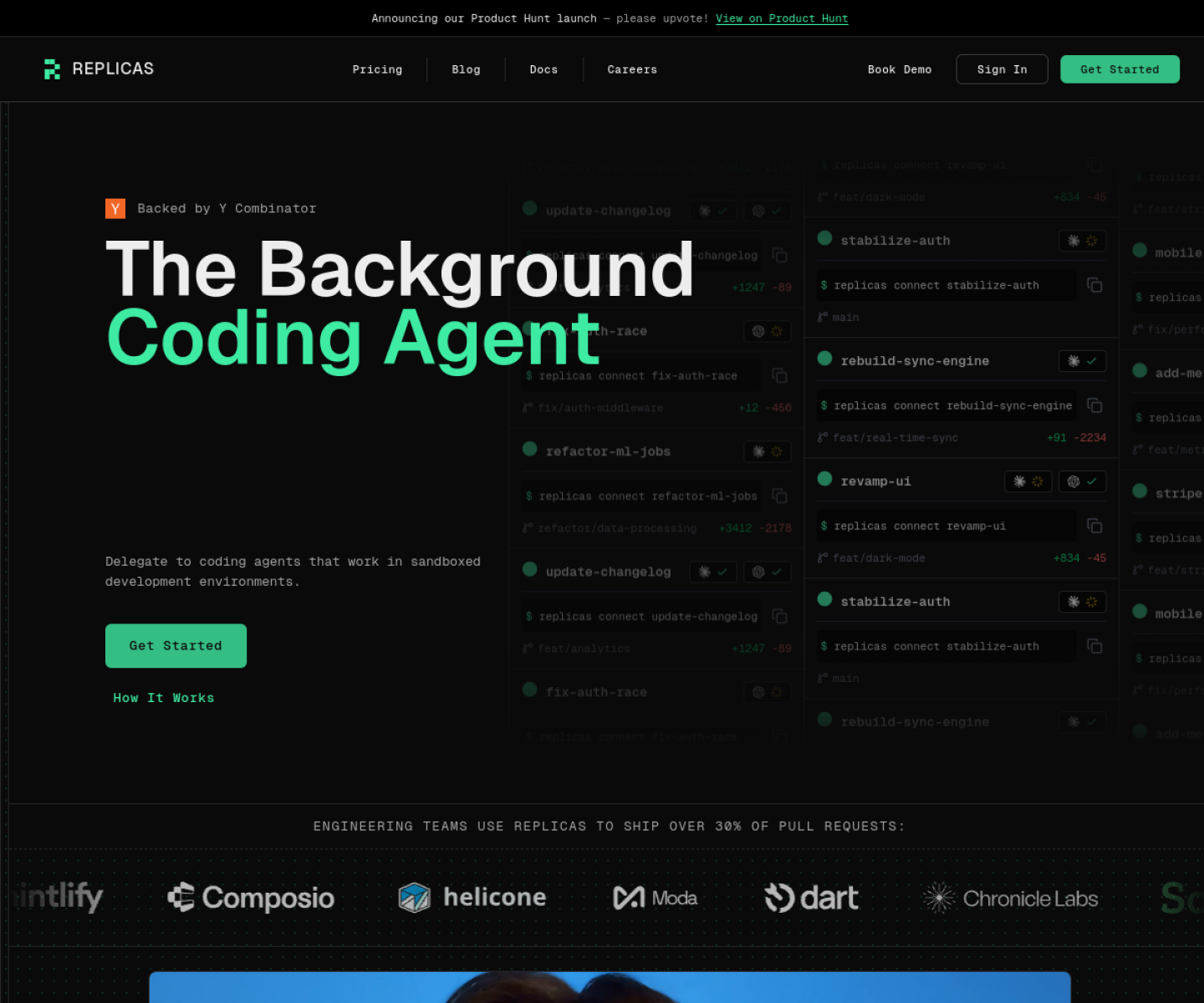
AI Project Details
Replicas review: Background coding-agent platform that runs Claude Code, Codex, and similar agents inside isolated cloud workspaces with issue, PR, and automation hooks.
Replicas is aimed at engineering teams that want coding agents to keep working in real dev environments after the developer closes a laptop. The current product materials describe a workflow built around connect a repository and coding agent, trigger work from the dashboard or tools like github and linear, let replicas spin up a vm workspace with code and dependencies, then review the resulting changes or pull request. That framing matters because many new AI launches still stop at a broad promise. Replicas has a clearer job to do.
The stronger reason to care is operational fit. The official docs go well beyond marketing copy by detailing workspaces, integrations, billing surfaces, and MCP support. Replicas is built for background execution in configured environments rather than just wrapping a local terminal session in a UI. The platform supports both interactive use and automation metering, which signals a more production-oriented design than many new agent shells.
How the workflow works
A sensible first pass is simple: start from the product's core entry point, validate the main loop on a representative task, and only then judge whether the surrounding automation is real. For Replicas, that means users should connect a repository and coding agent, trigger work from the dashboard or tools like github and linear, let replicas spin up a vm workspace with code and dependencies, then review the resulting changes or pull request. If that loop feels shorter, clearer, or easier to control than the alternatives, the product is doing something useful.
Where Replicas stands out
| Evaluation angle | Fit | Why it matters | | --- | --- | --- | | Best-fit user | High | Engineering teams that want coding agents to keep working in real dev environments after the developer closes a laptop. | | Core workflow clarity | High | Connect a repository and coding agent, trigger work from the dashboard or tools like GitHub and Linear, let Replicas spin up a VM workspace with code and dependencies, then review the resulting changes or pull request. | | Switching cost reducer | Medium to high | The official docs go well beyond marketing copy by detailing workspaces, integrations, billing surfaces, and MCP support. | | Adoption risk | Medium | The product adds cloud execution and repository access concerns that teams should review carefully before broad rollout. |
Practical use cases
- Running coding agents in cloud sandboxes for background tasks
- Assigning Linear or GitHub work directly to an autonomous agent workspace
- Keeping repository-aware AI work running outside the local laptop
Limits and buying notes
The product adds cloud execution and repository access concerns that teams should review carefully before broad rollout. Costs and operational value depend heavily on whether a team actually benefits from remote, sandboxed, always-available agent work. Pricing status today: Replicas documents both a free hobby grant and paid per-seat plus metered automation pricing on its official billing docs.
FAQ
What is Replicas best for?
Replicas is strongest when running coding agents in cloud sandboxes for background tasks matters more than a generic AI demo. The official product materials position it around a concrete workflow rather than a blank chatbot shell.
Who should try Replicas first?
Engineering teams that want coding agents to keep working in real dev environments after the developer closes a laptop. Teams with a real workflow match will get value faster than general curiosity users.
What should buyers verify before adopting Replicas?
The product adds cloud execution and repository access concerns that teams should review carefully before broad rollout. Costs and operational value depend heavily on whether a team actually benefits from remote, sandboxed, always-available agent work. Pricing, privacy, and workflow fit should be checked directly on the current product before rollout.
Reviewed sources
- https://www.replicas.dev/
- https://docs.replicas.dev/
- https://www.producthunt.com/categories/ai-coding-agents?order=recent_launches
FAQ
What is Replicas best for?
Replicas is strongest when running coding agents in cloud sandboxes for background tasks matters more than a generic AI demo. The official product materials position it around a concrete workflow rather than a blank chatbot shell.
Who should try Replicas first?
Engineering teams that want coding agents to keep working in real dev environments after the developer closes a laptop. Teams with a real workflow match will get value faster than general curiosity users.
What should buyers verify before adopting Replicas?
The product adds cloud execution and repository access concerns that teams should review carefully before broad rollout. Costs and operational value depend heavily on whether a team actually benefits from remote, sandboxed, always-available agent work. Pricing, privacy, and workflow fit should be checked directly on the current product before rollout.