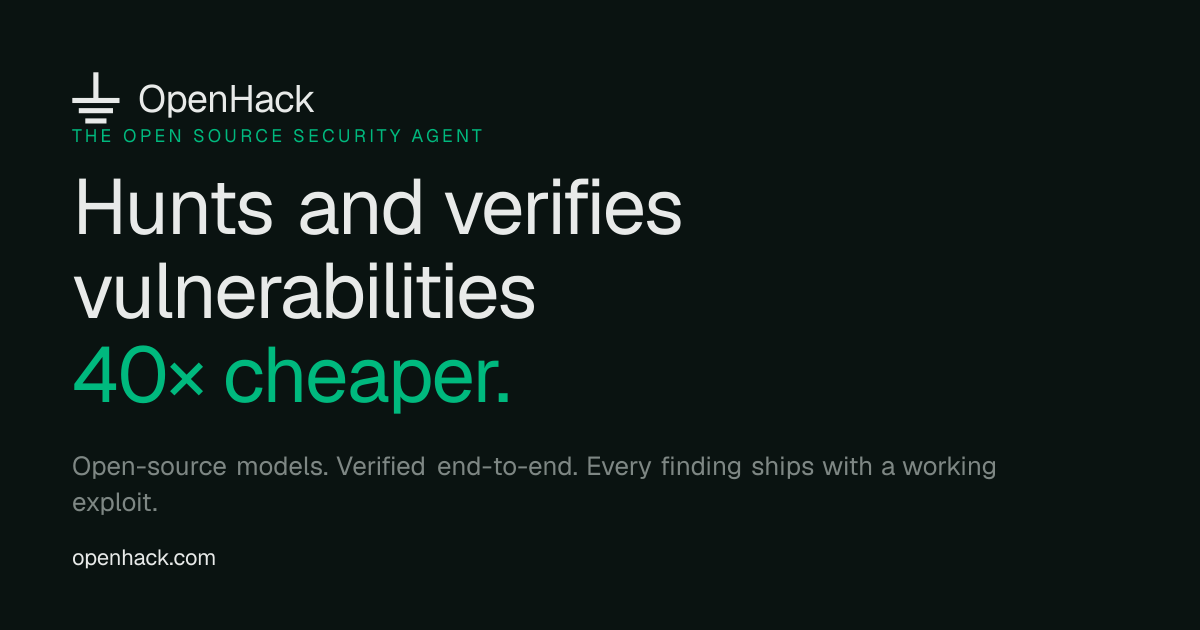
OpenHack
Open-source agentic security scanner designed to inspect codebases and surface application security issues with an autonomous workflow.
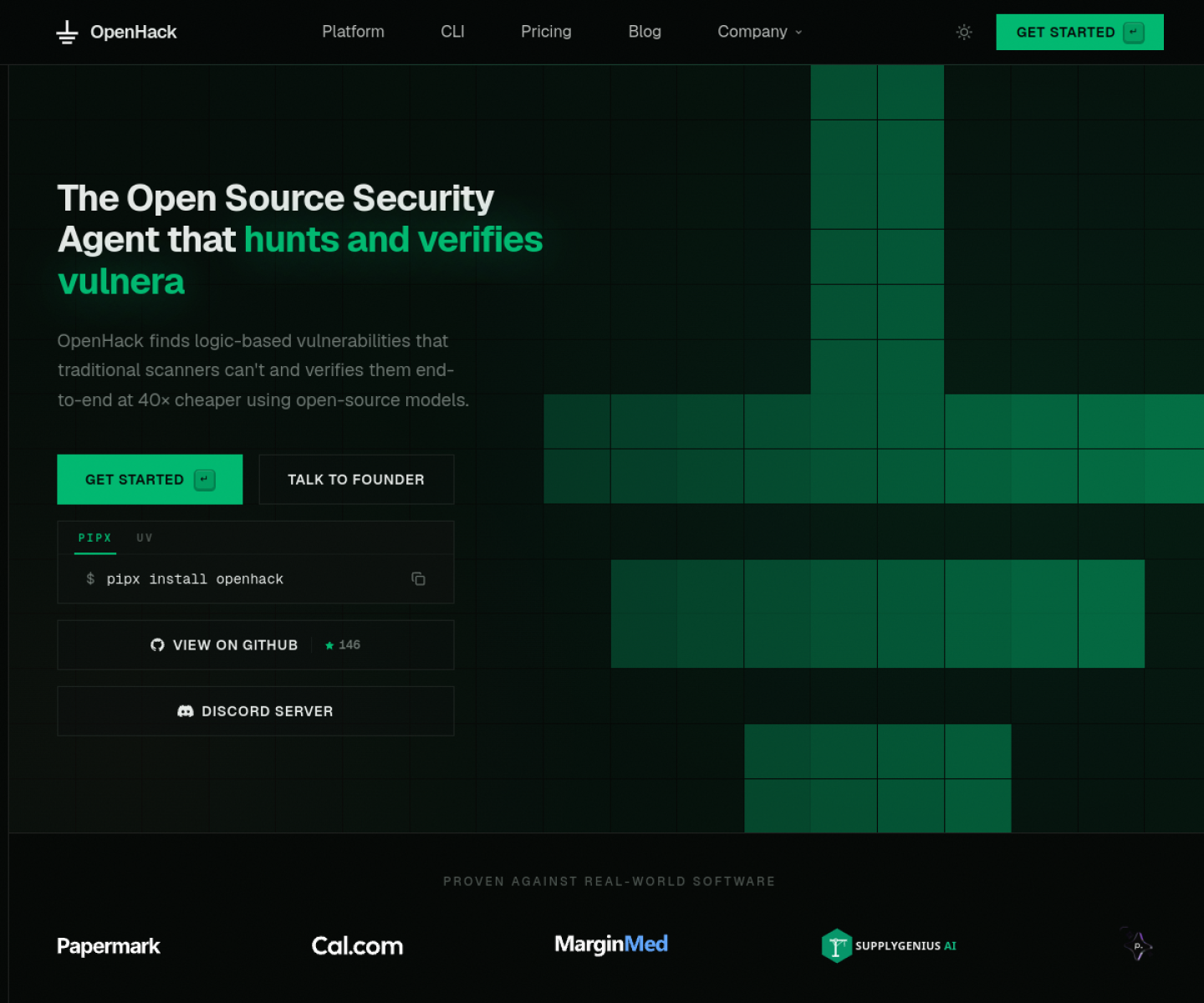
AI Project Details
OpenHack review: Open-source agentic security scanner designed to inspect codebases and surface application security issues with an autonomous workflow.
OpenHack is aimed at developers and security teams that want a transparent security scanner shaped for agent workflows instead of a black-box hosted review tool. The current product materials describe a workflow built around connect openhack to a target codebase, let the scanner inspect the project with its agentic workflow, then review the findings and use them inside broader engineering or security remediation work. That makes the page easier to read as an operating model, not just a brand claim.
Why it is timely
OpenHack positions itself as an open-source agentic security scanner rather than a generic code quality bot. The official project gives buyers a more inspectable path than closed security-agent claims that hide how findings are produced. It sits in an interesting middle ground between static security tooling and general-purpose coding agents.
How the workflow works in practice
A sensible first pass is to start from the product's main entry point and test the shortest path to value. For OpenHack, that means users should connect openhack to a target codebase, let the scanner inspect the project with its agentic workflow, then review the findings and use them inside broader engineering or security remediation work. If that loop reduces review drag, coordination, or governance work, the product is doing something real.
Where OpenHack stands out
| Evaluation angle | Fit | Why it matters | | --- | --- | --- | | Best-fit user | High | Developers and security teams that want a transparent security scanner shaped for agent workflows instead of a black-box hosted review tool. | | Core workflow clarity | High | Connect OpenHack to a target codebase, let the scanner inspect the project with its agentic workflow, then review the findings and use them inside broader engineering or security remediation work. | | Switching cost reducer | Medium to high | OpenHack positions itself as an open-source agentic security scanner rather than a generic code quality bot. | | Adoption risk | Medium | Security teams still need to validate finding quality, scope coverage, and false-positive behavior before relying on it heavily. |
Practical use cases
- Running an open-source security scanner on software projects
- Adding agentic review to application-security workflows
- Inspecting codebases without handing security review to a closed vendor
Limits and buying notes
Security teams still need to validate finding quality, scope coverage, and false-positive behavior before relying on it heavily. The strongest fit is for users who actually want open-source control over their security workflow rather than a managed service contract. Pricing status today: OpenHack is presented as an open-source security project in the reviewed official sources, and those sources did not show separate SaaS pricing.
FAQ
What is OpenHack best for?
OpenHack is strongest when running an open-source security scanner on software projects matters more than a generic AI demo. The official product materials position it around a concrete workflow rather than a blank chatbot shell.
Who should try OpenHack first?
Developers and security teams that want a transparent security scanner shaped for agent workflows instead of a black-box hosted review tool. Teams with a real workflow match will get value faster than general curiosity users.
What should buyers verify before adopting OpenHack?
Security teams still need to validate finding quality, scope coverage, and false-positive behavior before relying on it heavily. The strongest fit is for users who actually want open-source control over their security workflow rather than a managed service contract. Pricing, privacy, and workflow fit should be checked directly on the current product before rollout.
Reviewed sources
- https://openhack.com/
- https://github.com/openhackai/OpenHack
FAQ
What is OpenHack best for?
OpenHack is strongest when running an open-source security scanner on software projects matters more than a generic AI demo. The official product materials position it around a concrete workflow rather than a blank chatbot shell.
Who should try OpenHack first?
Developers and security teams that want a transparent security scanner shaped for agent workflows instead of a black-box hosted review tool. Teams with a real workflow match will get value faster than general curiosity users.
What should buyers verify before adopting OpenHack?
Security teams still need to validate finding quality, scope coverage, and false-positive behavior before relying on it heavily. The strongest fit is for users who actually want open-source control over their security workflow rather than a managed service contract. Pricing, privacy, and workflow fit should be checked directly on the current product before rollout.