Handler
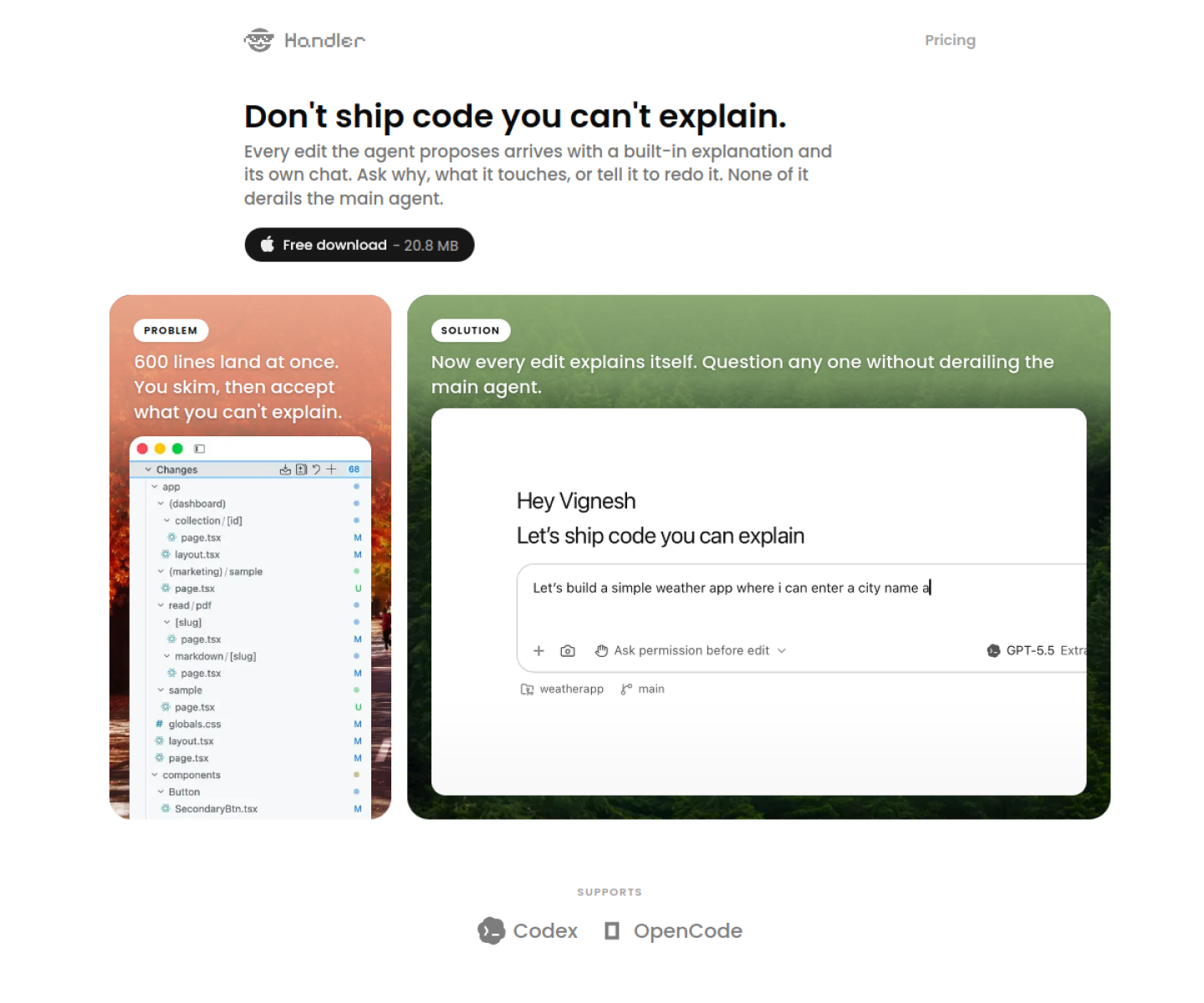
Mac app that breaks AI-generated code into reviewable edits with per-edit explanations and side chats before the diff becomes too large to inspect.
AI Project Details
Handler review: Mac app that breaks AI-generated code into reviewable edits with per-edit explanations and side chats before the diff becomes too large to inspect.
Handler is aimed at developers using codex or opencode who want tighter human review control while an agent is still generating code. The current product materials describe a workflow built around run handler alongside an existing coding-agent setup, review each proposed edit as it streams in, ask follow-up questions on a specific change, then accept or reject edits before merging the full output. That framing matters because many new AI launches still stop at a broad promise. Handler has a clearer job to do.
The stronger reason to care is operational fit. Handler moves review earlier in the workflow by explaining edits at generation time instead of after the whole diff lands. Its side-chat model is specific and practical: challenge one change without derailing the main agent run. The launch materials connect the product directly to a real pain point in AI coding, namely losing the mental model on large diffs.
How the workflow works
A sensible first pass is simple: start from the product's core entry point, validate the main loop on a representative task, and only then judge whether the surrounding automation is real. For Handler, that means users should run handler alongside an existing coding-agent setup, review each proposed edit as it streams in, ask follow-up questions on a specific change, then accept or reject edits before merging the full output. If that loop feels shorter, clearer, or easier to control than the alternatives, the product is doing something useful.
Where Handler stands out
| Evaluation angle | Fit | Why it matters | | --- | --- | --- | | Best-fit user | High | Developers using Codex or OpenCode who want tighter human review control while an agent is still generating code. | | Core workflow clarity | High | Run Handler alongside an existing coding-agent setup, review each proposed edit as it streams in, ask follow-up questions on a specific change, then accept or reject edits before merging the full output. | | Switching cost reducer | Medium to high | Handler moves review earlier in the workflow by explaining edits at generation time instead of after the whole diff lands. | | Adoption risk | Medium | The product is closely tied to agent-assisted coding, so teams not already reviewing AI-generated code will get less value from it. |
Practical use cases
- Reviewing AI-generated code before it turns into one large diff
- Keeping human understanding intact during agent-driven edits
- Adding per-edit approval gates to Codex or OpenCode workflows
Limits and buying notes
The product is closely tied to agent-assisted coding, so teams not already reviewing AI-generated code will get less value from it. Prospective users should verify how much review overhead it adds on routine edits before adopting it as a default layer. Pricing status today: Product Hunt marks Handler with free options, but a fuller public pricing breakdown was not visible during review.
FAQ
What is Handler best for?
Handler is strongest when reviewing ai-generated code before it turns into one large diff matters more than a generic AI demo. The official product materials position it around a concrete workflow rather than a blank chatbot shell.
Who should try Handler first?
Developers using Codex or OpenCode who want tighter human review control while an agent is still generating code. Teams with a real workflow match will get value faster than general curiosity users.
What should buyers verify before adopting Handler?
The product is closely tied to agent-assisted coding, so teams not already reviewing AI-generated code will get less value from it. Prospective users should verify how much review overhead it adds on routine edits before adopting it as a default layer. Pricing, privacy, and workflow fit should be checked directly on the current product before rollout.
Reviewed sources
- https://handler.team/
- https://www.producthunt.com/products/handler
- https://showhn.buzzing.cc/lite/
FAQ
What is Handler best for?
Handler is strongest when reviewing ai-generated code before it turns into one large diff matters more than a generic AI demo. The official product materials position it around a concrete workflow rather than a blank chatbot shell.
Who should try Handler first?
Developers using Codex or OpenCode who want tighter human review control while an agent is still generating code. Teams with a real workflow match will get value faster than general curiosity users.
What should buyers verify before adopting Handler?
The product is closely tied to agent-assisted coding, so teams not already reviewing AI-generated code will get less value from it. Prospective users should verify how much review overhead it adds on routine edits before adopting it as a default layer. Pricing, privacy, and workflow fit should be checked directly on the current product before rollout.