Ctx
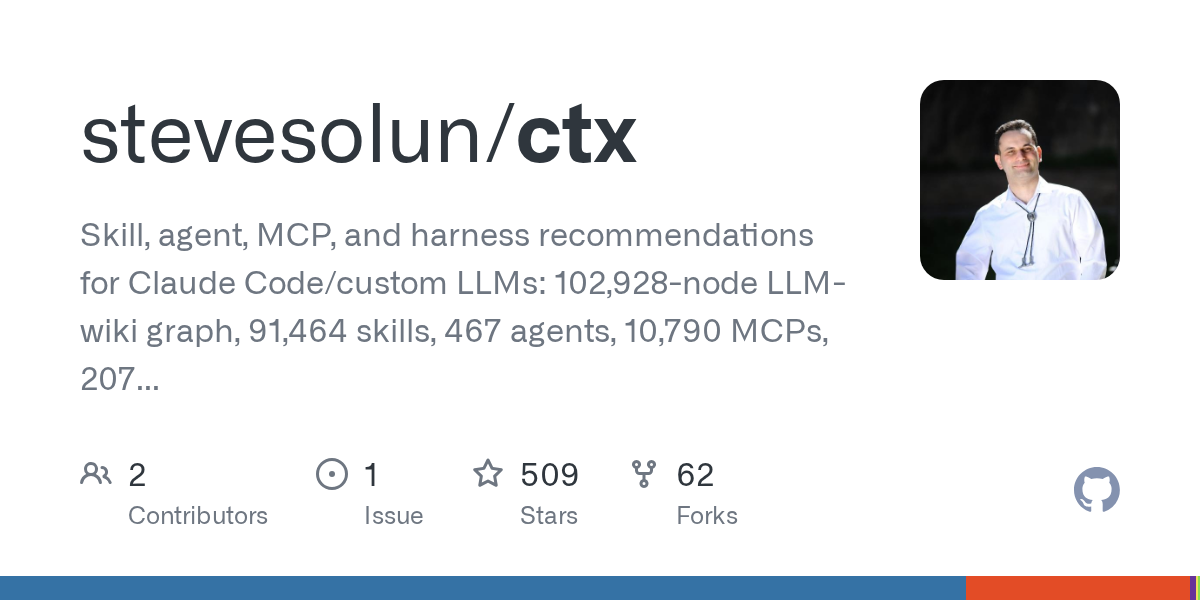
Recommendation and loading layer for agent tooling that maps skills, MCP servers, agents, and harnesses into a graph so a model can load only the most relevant context.
AI Project Details
Ctx review: Recommendation and loading layer for agent tooling that maps skills, MCP servers, agents, and harnesses into a graph so a model can load only the most relevant context.
Ctx stands out because it is not just another chat shell. The product materials describe a system centered on index the available skills, agents, mcp servers, and harnesses, let ctx score what is relevant for the current build, then load a capped subset instead of the full catalog into the active session. That matters because the mechanism is the product, not a thin wrapper around a frontier model.
Why the architecture matters
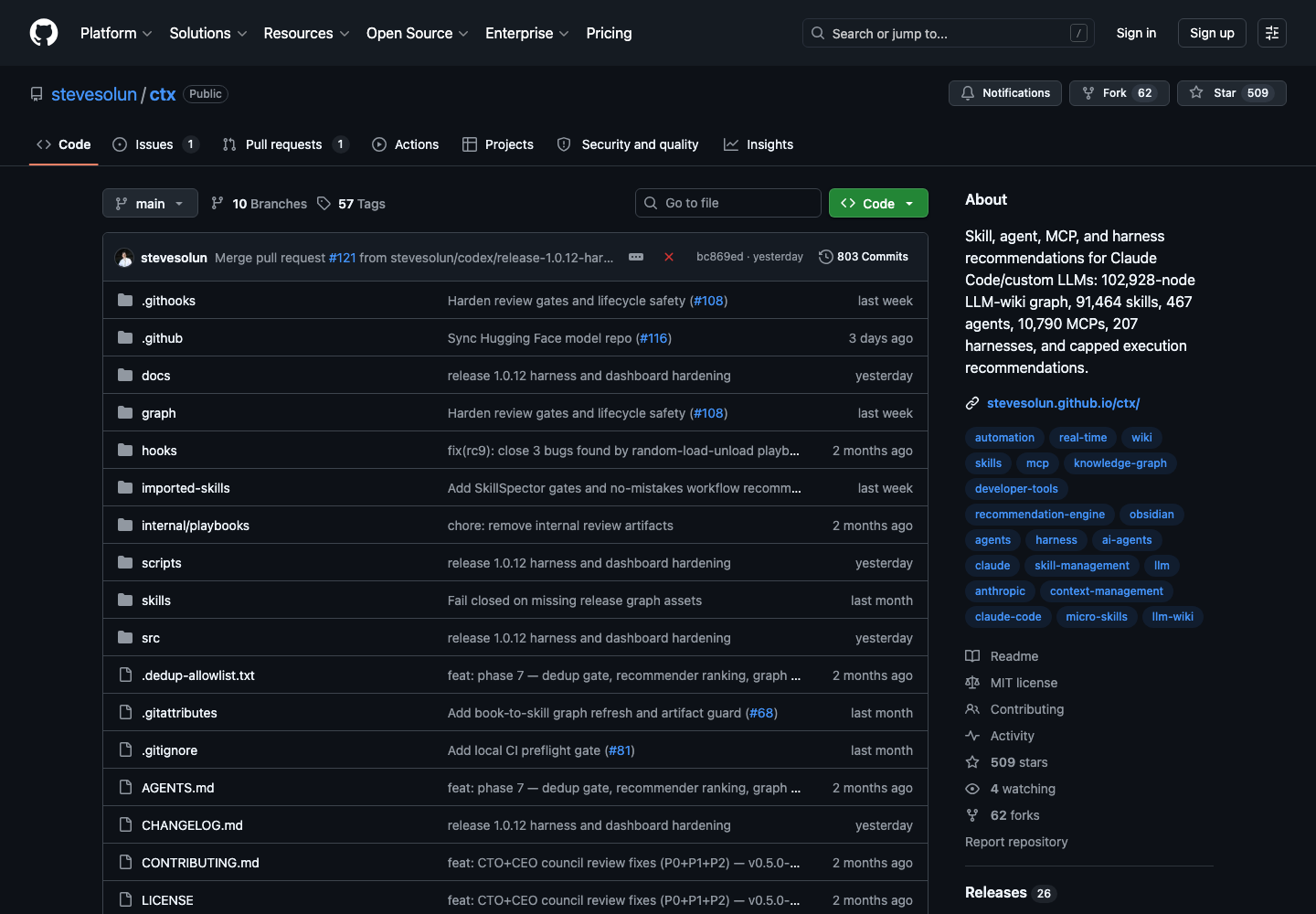
Ctx is built around context selection, which is one of the least glamorous but most practical problems in agent engineering. The repository publishes unusually concrete scale numbers for nodes, edges, skills, and MCPs, which makes the project easier to judge. Its recommendation model is more interesting than a plain search tool because it tries to narrow execution context before the agent starts thrashing.
How to evaluate the core loop
Start by testing the narrowest real workflow the product claims to improve. For Ctx, that means users should index the available skills, agents, mcp servers, and harnesses, let ctx score what is relevant for the current build, then load a capped subset instead of the full catalog into the active session. The result should be easier to inspect, integrate, or control than a direct agent session.
Where it stands out
| Evaluation angle | Fit | Why it matters | | --- | --- | --- | | Best-fit user | High | Developers who are struggling with overloaded tool catalogs, huge skill folders, or agent contexts that keep getting bloated before the real task starts. | | Core workflow clarity | High | Index the available skills, agents, MCP servers, and harnesses, let Ctx score what is relevant for the current build, then load a capped subset instead of the full catalog into the active session. | | Switching cost reducer | Medium to high | Ctx is built around context selection, which is one of the least glamorous but most practical problems in agent engineering. | | Adoption risk | Medium | The strongest value appears when a team already has substantial tool or skill sprawl; smaller setups may not need an extra recommendation layer. |
Practical use cases
- Loading only the most relevant tools and skills into a coding-agent session
- Reducing token waste from oversized MCP or skill catalogs
- Adding a graph-backed recommendation layer before an agent starts work
Limits and buying notes
The strongest value appears when a team already has substantial tool or skill sprawl; smaller setups may not need an extra recommendation layer. Teams still need to trust but verify the ranking logic, because a missed tool can be as costly as an overloaded context window. Pricing status today: Ctx is distributed as an MIT-licensed open-source project with PyPI packaging, and the reviewed public sources did not show a separate hosted pricing plan.
FAQ
What is Ctx best for?
Ctx is strongest when loading only the most relevant tools and skills into a coding-agent session matters more than a generic AI demo. The official product materials position it around a concrete workflow rather than a blank chatbot shell.
Who should try Ctx first?
Developers who are struggling with overloaded tool catalogs, huge skill folders, or agent contexts that keep getting bloated before the real task starts. Teams with a real workflow match will get value faster than general curiosity users.
What should buyers verify before adopting Ctx?
The strongest value appears when a team already has substantial tool or skill sprawl; smaller setups may not need an extra recommendation layer. Teams still need to trust but verify the ranking logic, because a missed tool can be as costly as an overloaded context window. Pricing, privacy, and workflow fit should be checked directly on the current product before rollout.
Reviewed sources
- https://github.com/stevesolun/ctx
- https://stevesolun.github.io/ctx/
- https://news.ycombinator.com/item?id=48558167
FAQ
What is Ctx best for?
Ctx is strongest when loading only the most relevant tools and skills into a coding-agent session matters more than a generic AI demo. The official product materials position it around a concrete workflow rather than a blank chatbot shell.
Who should try Ctx first?
Developers who are struggling with overloaded tool catalogs, huge skill folders, or agent contexts that keep getting bloated before the real task starts. Teams with a real workflow match will get value faster than general curiosity users.
What should buyers verify before adopting Ctx?
The strongest value appears when a team already has substantial tool or skill sprawl; smaller setups may not need an extra recommendation layer. Teams still need to trust but verify the ranking logic, because a missed tool can be as costly as an overloaded context window. Pricing, privacy, and workflow fit should be checked directly on the current product before rollout.