Babel
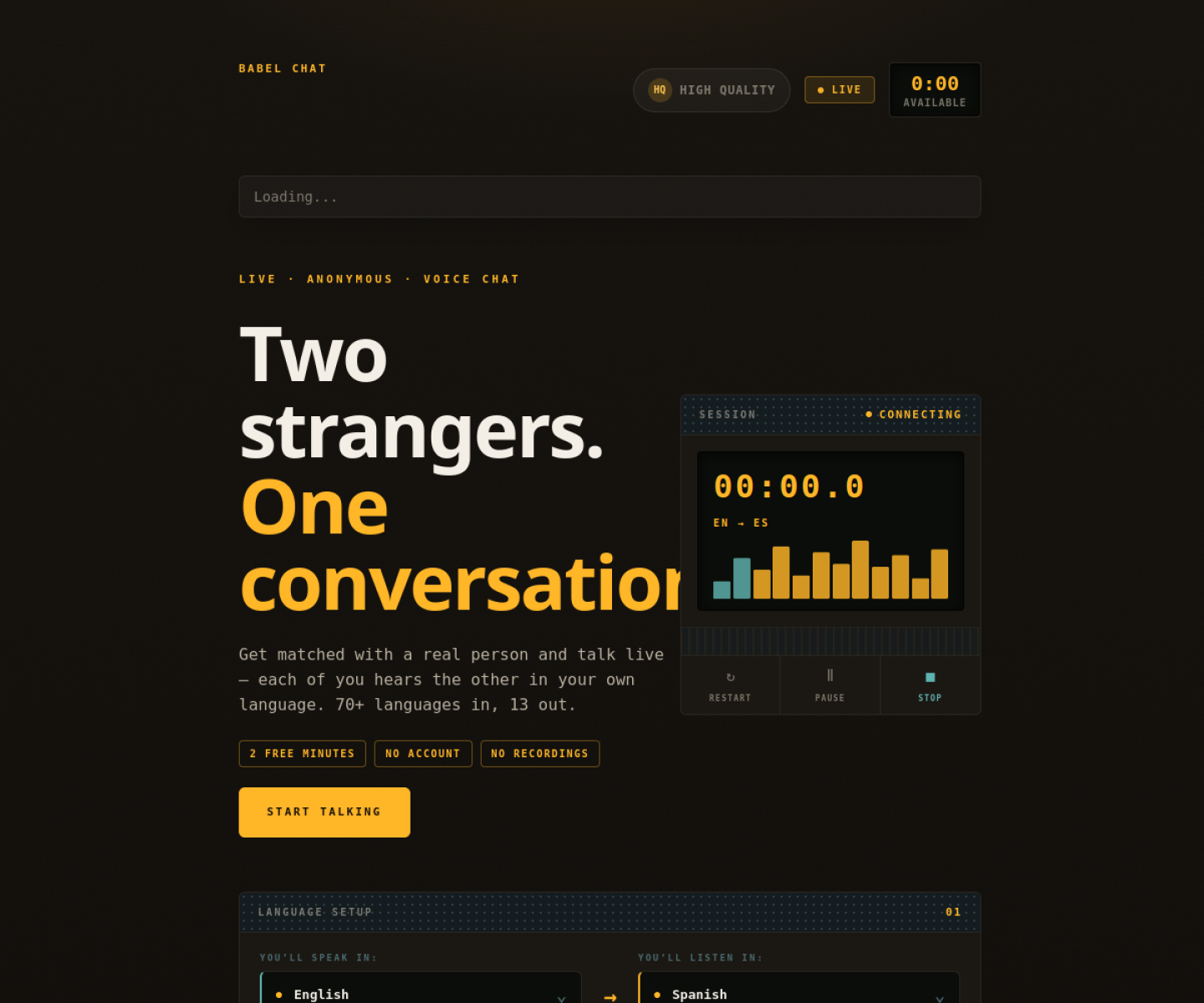
Realtime voice-call product that lets two people speak different languages and hear interpreter-style AI translation over a live conversation.
AI Project Details
Babel review: Realtime voice-call product that lets two people speak different languages and hear interpreter-style AI translation over a live conversation.
Babel is built for people who need live multilingual conversations to feel more natural than message translation or turn-based transcription tools allow. Instead of asking users to replace their whole toolchain, the product wraps a familiar workflow around start a voice call, choose what you speak and what you want to hear, then let the system overlay live translation while preserving the feel of a real conversation. That makes it easier to judge on practical fit rather than hype.
What the product changes day to day
The real question is whether the workspace removes enough friction to matter. Babel is focused on live cross-language conversation instead of post-call transcription or message translation. The launch description is concrete about simultaneous interpreter-style translation layered over the original voice rather than a simple transcript UX. Its value is easiest to judge in real multilingual calls, where latency and conversational feel matter more than generic AI-copy claims.
What the workflow feels like
For a serious evaluation, start with one active project instead of a synthetic demo. In practice that means users should start a voice call, choose what you speak and what you want to hear, then let the system overlay live translation while preserving the feel of a real conversation. If the product keeps context visible and cuts down tool hopping, the value shows up quickly.
Where it earns attention
| Evaluation angle | Fit | Why it matters | | --- | --- | --- | | Best-fit user | High | People who need live multilingual conversations to feel more natural than message translation or turn-based transcription tools allow. | | Core workflow clarity | High | Start a voice call, choose what you speak and what you want to hear, then let the system overlay live translation while preserving the feel of a real conversation. | | Switching cost reducer | Medium to high | Babel is focused on live cross-language conversation instead of post-call transcription or message translation. | | Adoption risk | Medium | This kind of product rises or falls on latency, translation quality, and conversational handoff, so teams should test it on the languages and accents they actually use. |
Practical use cases
- Holding live voice conversations across language barriers
- Testing interpreter-style translation instead of turn-based subtitles
- Reducing friction in multilingual calls where speed matters more than transcript archiving
Limits and buying notes
This kind of product rises or falls on latency, translation quality, and conversational handoff, so teams should test it on the languages and accents they actually use. The current public materials are lighter on pricing and enterprise controls than the strongest SaaS launches, so those details still need verification before rollout. Pricing status today: The reviewed public pages did not expose a stable pricing table, so buyers should verify current access terms directly on the live site.
FAQ
What is Babel best for?
Babel is strongest when holding live voice conversations across language barriers matters more than a generic AI demo. The official product materials position it around a concrete workflow rather than a blank chatbot shell.
Who should try Babel first?
People who need live multilingual conversations to feel more natural than message translation or turn-based transcription tools allow. Teams with a real workflow match will get value faster than general curiosity users.
What should buyers verify before adopting Babel?
This kind of product rises or falls on latency, translation quality, and conversational handoff, so teams should test it on the languages and accents they actually use. The current public materials are lighter on pricing and enterprise controls than the strongest SaaS launches, so those details still need verification before rollout. Pricing, privacy, and workflow fit should be checked directly on the current product before rollout.
Reviewed sources
- https://itsbabel.com/
- https://news.ycombinator.com/item?id=48512047
FAQ
What is Babel best for?
Babel is strongest when holding live voice conversations across language barriers matters more than a generic AI demo. The official product materials position it around a concrete workflow rather than a blank chatbot shell.
Who should try Babel first?
People who need live multilingual conversations to feel more natural than message translation or turn-based transcription tools allow. Teams with a real workflow match will get value faster than general curiosity users.
What should buyers verify before adopting Babel?
This kind of product rises or falls on latency, translation quality, and conversational handoff, so teams should test it on the languages and accents they actually use. The current public materials are lighter on pricing and enterprise controls than the strongest SaaS launches, so those details still need verification before rollout. Pricing, privacy, and workflow fit should be checked directly on the current product before rollout.